Why the demand for timed practices removes equity to learn in football

In the world of football coaching, there is a growing concern that the pursuit of highly organised sessions with timed and blocked practices may inadvertently hinder the learning process and limit the development of players. The belief that fast-paced, blocked practices are the key to success can undermine the equity needed to nurture a player’s skills effectively. In this article, we will explore why the demand for timed practices can remove equity from the learning process and how a more ecological approach can foster true development in football through understanding modern research and how society has shaped our expectations.
Equity vs. Equality
To achieve true player development, we must distinguish between equity and equality. While equality means providing everyone with the same resources or opportunities, equity recognises that each player has different circumstances and requires unique resources to reach a similar outcome. In football, this means tailoring coaching methods to suit individual needs, rather than applying a one-size-fits-all approach.
Taking time is better than time taking
Blocked and timed practices removes the equitable development of players. Each player is unique and progresses at their own pace. Some players may grasp a concept quickly and require additional challenges, while others may need more time to explore and understand. Timed practices fail to account for these differences in player development. Too often coaches have a highly organised session plan with clear timings for each section and they will follow this no matter where the players are in their learning. The skill of the coach is to know their players to a level where they can see and identify where they are in their understanding, noticing knowledge about vs knowledge in (of).
Below is one of our article where @jacobeliotpickles explores this topic:

When a practice or section has a predetermined start and end, coaches often feel compelled to cram as much information as possible. The success of a session is often judged by the amount of instruction provided. However, this approach does not allow players the opportunity to explore and learn independently. We cannot control when players will grasp a concept, and forcing information upon them can be counterproductive. Creating an exhilarating and complex environment for players to interact with will be enough for each player to develop their understanding and improve their skills, the role of the coach is to guide, facilitate and shine a light on positive examples.
Revisiting practices not only aids in consolidating and securing knowledge but also fosters a collaborative and empowering learning environment within the team. When players return to a familiar drill or scenario, it allows those who have a strong grasp of the concepts to step into the role of mentors. This peer-to-peer teaching and sharing of solutions is incredibly powerful for several reasons such as – enhance understanding, build leadership skills, and empowerment plus many more.
Revisiting practices and encouraging players to teach and share their solutions with their peers can significantly enhance the learning process. It not only strengthens players’ understanding of the game but also cultivates leadership, teamwork, and empowerment. The practice design can also increase in complexity with new constraints and challenges for unit, team and individual.
Where can the stopwatch shine?
Incorporating time constraints into coaching is an invaluable strategy that mirrors the dynamics of a football match. These time-bound scenarios compel players to make decisions that adapt to the evolving context of the game. They force teams to adjust their objectives and intentions in response to the time remaining in the match. This coaching strategy should be a key element to improve performance, and the advantages of integrating it into our training sessions are obvious.
Training sessions that simulate game scenarios under time constraints create a high-pressure environment for both teams and individual players to sharpen their problem-solving skills. For instance, consider a scenario where Team A is leading 1-0 with only 10 minutes left in the ‘World Cup’ final. Do they opt to sit back and defend deep to protect their lead? How will Team B strategise to score and level the game? How can Team A maintain effective possession and control the tempo while managing the clock? These challenges and questions naturally emerge in this environment due to the time constraint and score line, providing an opportunity for players and teams to think independently to find success.
Focusing on intentions, not outcomes
In football, maintaining high standards is crucial, but the focus should shift from outcomes to intentions. Coaches should prioritise understanding the intentions of the team and individual players rather than obsessing over perceived “good” outcomes. This approach will foster real problem solving while empowering each player to explore a range of ideas and solutions, we know there is not one way to play football so let the players explore that.
Society’s influence: Taylorism
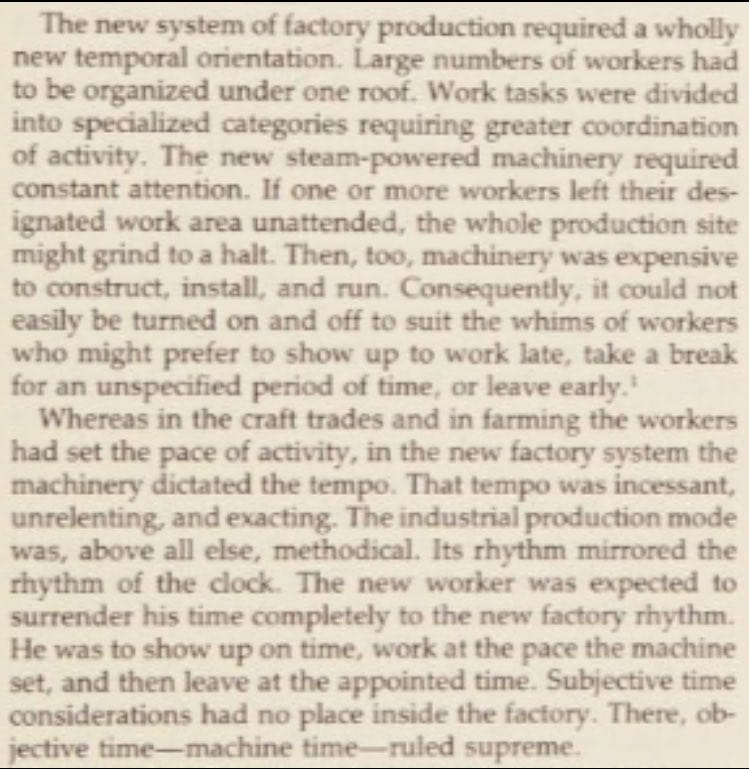
Society often influences our expectations of what is considered “good” and football is no different. Efficiency, speed, and standardisation are highly valued, leading coaches to demand fast-paced, repetitive practices with set repetitions and strict time limits. This approach aligns with Taylorism, which emphasises efficiency and productivity but does not necessarily promote effective learning. Taylorism, also known as scientific management, was developed in the early 20th century and focused on breaking down tasks into their simplest components, standardising them, and rigorously measuring efficiency. How often do we see this in academy football?
Players are not products on the assembly line. Each player is a unique individual with distinct skills, strengths, weaknesses, and potential. The one-size-fits-all coaching ignores these differences which can lead to players feeling overlooked, stifled, and demotivated. It is essential to acknowledge that youth footballers come from various backgrounds, and their experiences, capabilities, and motivations differ widely.
Coaches are not factory workers. They are not simply responsible for ensuring that players fit a particular mold. Instead, coaches are mentors, motivators, and educators. Their role is to guide young athletes toward self-improvement, to foster a love for the game, and to help them develop both as players and as individuals.

But ecological coaching takes too long…
There are arguments that the constraints-led approach is a long-term learning pedagogy. However, studies have shown there is better development in learning and performance using ecological approaches compared to traditional prescriptive training methods over a short period of time.
The study by Deuker et al compared repetitive, decomposed training (linear coaching) when learning the “fundamentals” of dribbling and passing in football against an ecological approach using small sided games with relevant constraints (non-linear coaching) over a 5 week training period in 30 minute practices by UEFA B qualified coaches. After the 5 week training period results showed that the ecological training group improved more effectively even though the study used a decontextualised and isolated linear practice for testing.
“Train as you play”: Improving effectiveness of training in youth soccer players. (Deuker et al, 2023)
The major finding of this study indicates that even a “technical skill” can be improved more effectively by nonlinear training than by isolated technical drills.
Deuker et al, 2023
Without focusing on the benefits of learning a ‘technical skill’ in a ‘repetition without repetition’ ecological practice when many coaches will be adamant this is most effective in a ‘repetition after repetition’ isolated practice, the study was over a 5 week time period which would be considered short-term when learning and developing skills in football. In addition, the study using 30 minute periods to develop ‘technical skills’ is realistic to the contact time coaches will have to their players within their environments.
Conclusion
Achieving true player improvement involves distinguishing between equality and equity, recognising that each player is unique and may progress at their own pace. The allure of high-tempo training sessions is undeniable, but the emphasis on speed and standardisation can undermine the complexity of learning in football. Blocked and timed practices, often governed by the clock and overlook the individualised needs of players, hindering their development.
Revisiting practices and peer-to-peer teaching can provide an environment that encourages player empowerment and leadership. However, there are instances where incorporating time constraints is valuable. These constraints simulate real game dynamics, compelling players to adapt to evolving contexts, fostering problem-solving skills.
In football coaching, it’s essential to shift focus from outcomes to intentions. Coaches should prioritise understanding the intentions of players and the team rather than obsessing over predefined outcomes from their own expectations. Emphasising efficiency, speed, and standardisation in coaching may align with traditional management principles like Taylorism, but it doesn’t necessarily promote effective learning. Players are not products on an assembly line; each player is unique, with distinct skills, backgrounds, and motivations.
The study by Deuker et al dispels the notion that ecological approaches are only for long term development even when developing ‘technical skills’. It’s important to note that this research suggests a shift in focus towards the ecological approach can yield better results within a short period, challenging the conventional wisdom of repetitive isolated training.
In the world of football coaching, it is crucial to understand the need for equitable player development and how our practice and session design can either promote or diminish an individual’s learning. Be patient, be observant and allow for difference.
Bibliography
Deuker, Albert & Braunstein, Bjoern & Chow, Jia & Fichtl, Maximilian & Kim, Hyoek & Koerner, Swen & Rein, Robert. (2023). “Train as you play”: Improving effectiveness of training in youth soccer players. International Journal of Sports Science & Coaching. 174795412311727. 10.1177/17479541231172702.
 the Raumdeuter.
It’s much content I support and see relevance. However football can never be an “ academic solution” only for players or Coaches the variety of outcomes can not come from training alone . Isolation detracts from the purpose the game experience with opponents.
LikeLike