In 2011, Thomas Müller gave an interview on a German talk show, where he was asked by the host to describe his role on the pitch. He responded with the word ‘Raumdeuter’. While not particularly strong, fast or technically gifted compared to other players of his calibre, this newly coined description of Müller’s role characterises a type of player unable to be seen by the untrained eye. It would seem even an experienced professional would struggle to pinpoint what makes Müller great. Pundits and coaches alike seem unable to fully understand the Raumdeuter’s elusive traits and one simple question arises: do we value what we can not see?
Our mission is to search, explore and understand human development in football. We will look to connect science, theory and practice. We will navigate the winding road of development together, unpacking the myths and truths of the football world. We will bring together the experience of industry professionals and new ideas from the pioneers of youth development. We will discern both opinion and fact, successes and failures, past, present and future ideologies; all in the name of constructive discourse that will evidentially lead us to learn and improve, and create an environment where our players can thrive.
And in true, Raumdeuter style, we will look to uncover the secrets of what makes people great within the game that we all love.
the Raumdeuter is here to create a positive discourse among all coaches, players and football lovers from all over the world, we hope you enjoy and actively encourage you to challenge any ideas conflicting with your own, regardless of what level of the game you find yourself to be a part of.
Rethinking the Rondo: The hidden cost of positional practice in football development
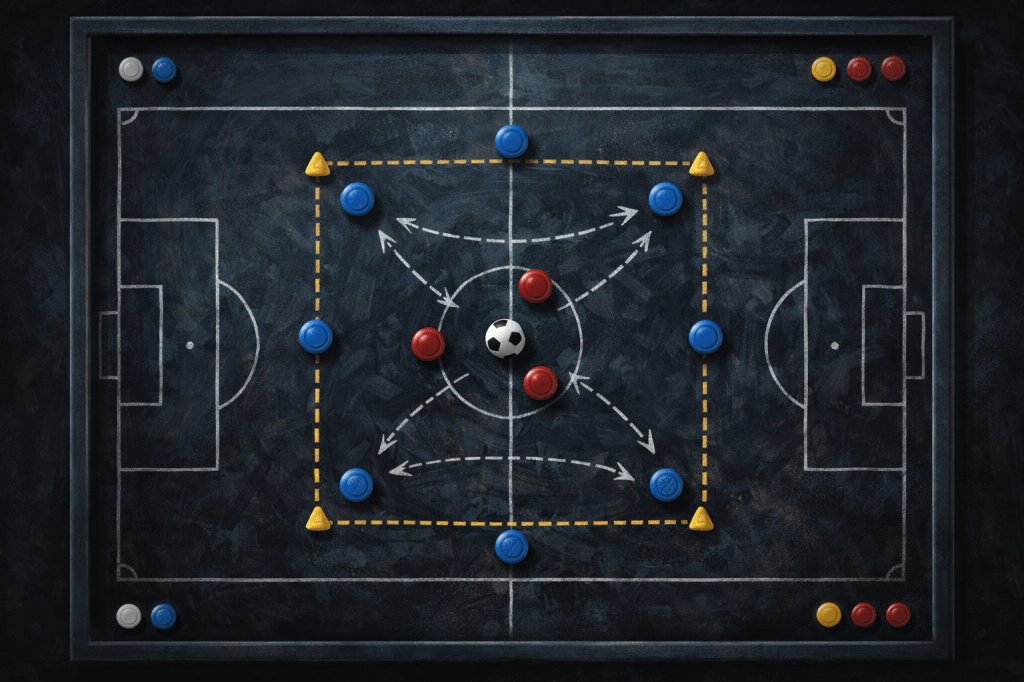
Rondo, rondo, rondo…
The rondo, a training concept employed by nearly every coach from grassroots to the pro leagues. We’ve all used them, I have and most likely, you have too. Gaining worldwide popularity after Pep’s 2008-2012 positional Barcelona team, the rondo has been central to the positional game ever since.
Fixing players to specific positions, mirroring the structure of a positional game model, and encouraging quick, short passing against limited opposition clearly has its benefits in a well structured positional team. However, as the game continues to evolve, we must ask: what is the cost of such conformity when it comes to the individual development of our players? And are there alternative approaches that offer players greater freedom? Approaches that allow a broader, more complete picture of the game?
Xavi Hernandez, Barcelona legend and former head coach, reflects on its foundational role in the club’s style:
“Our model was imposed by Cruyff … It’s all about rondos. Rondo, rondo, rondo. Every single day. It is the best exercise there is.”
Johan Cruyff himself, perhaps even more famously, expressed the value of the practice by saying:
“Everything that goes on in a match, except shooting, you can do in a rondo.”
As we drift ever closer to netball-like constraints within a sport that is inherently dynamic, the development of our players demands far more than static positioning, structured passing and rehearsed pattern play. If we maintain this trajectory, positional practices like the rondo will continue to quietly erode expression and marginalise uniquely talented players whose skill in perceiving, interpreting and acting through dynamic interactions allows them to generate solutions in moments where structured play alone cannot.
As the game evolves and players are asked to reclaim their agency—adapting, creating and solving problems in real time. Where does the rondo, and positional practice in general, fit in the development of perceptive, self-organising and adaptable footballers?
The Limits of Control
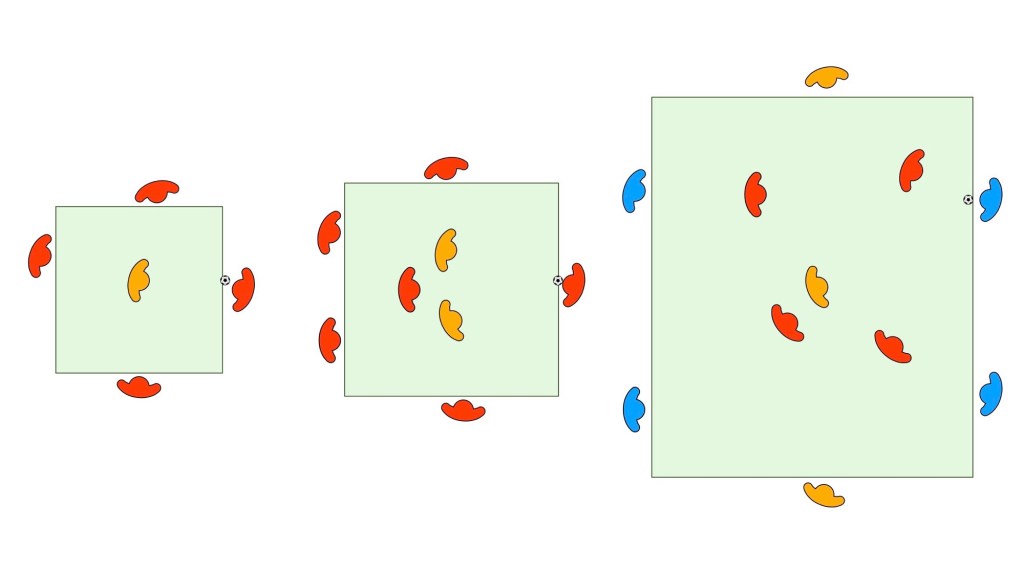
The classic rondo, as seen in the image above, usually positions players around the edge of an area, with one or more in the middle attempting to regain possession.
Rondo’s do have some benefit: designed to improve quick, short passing, anticipation, and a degree of realistic defensive pressure. In possession our players must read and play around the opposition; out of possession, they must anticipate and intercept. Even allowing creativity and disguise, such as, players faking passes or pressure to mislead the opposition.
However these benefits come with significant limitations. Reducing freedom of movement not only diminishes the quality of deception—as players only have pre-defined options from which to choose their pass, but their overall perception is constrained. Never needing to scan 360 degrees, fixed positioning leads to our players losing the need to pick up new information. Ultimately, the rondo directly contributes to diminishing the need to observe and make decisions in an ever-changing environment.
And despite Cruyff’s admittance, shooting isn’t the only skill absent in positional possession drills. Dribbling and ball carrying are rarely encouraged. When positional exercises prioritise structured possession, players are subtly conditioned to avoid the use of these skills all together, limiting the development of those abilities which allow them to break lines, create space and exploit opportunities in unpredictable ways, when these are integral skills for high level possession play. In short, the rondo reinforces conformity at the expense of adaptability and individual expression.
More subtly, and perhaps insidiously, the rondo rewards obedience. Success within the practice is defined by strict rules, maintaining your position, body shape and role. Players who comply are praised as being ‘coachable’; and players who deviate are corrected. Players who follow the movements the coach instills are considered ‘intelligent’, whereas leaving a position to search for new solutions; carrying the ball into unfamiliar space, or disrupting the team structure, is often framed as ‘poor play’, rather than exploration.
Over time, this silently conditions players to associate ‘good football’ with doing what they are told. Rather than discovering what the game is asking of them, and how to answer in their own unique way. The long term cost is significant: players stop searching. They wait for instruction. Creativity becomes ‘risk’, and agency is replaced by compliance. This is not a failure of the modern player—it is a predictable outcome of the environments we design.
And this is the core flaw of positional-led practice, regardless of area size or team configuration—the aim is clear: ignore unique skillsets and relationships between players in favour of minimising mistakes. Every player must perceive the game in the same way and act upon it accordingly. This is not football development. It is simply conditioning our players by imposing one single perception of the game.
Positional practices like the rondo do not merely condition a player tactically, they condition a behavioural state. When repeated daily, this becomes the player’s default state, shaping not only how they play, but how they think.
We must be careful when designing practices to ensure we do not condition players into something they are not. True development is about empowerment—empowering players to be who they are. Taking this away destroys any chance of helping players reach their full potential; for it is unreasonable to expect someone to realise their potential by becoming a vision from another’s mind.
From Predictable to Perceptive
Some argue that rondos are merely warm-ups, designed to ease players into a session or a game. While they can provide a relaxed entry into the training or performance environment; restrictive, positional practices do not prepare players for the chaos and unpredictability of the game. If anything, a warm-up should be harder than the game itself.
They shouldn’t gradually warm up perceptual cognition like cold water in a pan; but like food hitting hot oil—sudden, intense and awakening the senses. Players should be alert, perceptually and cognitively primed and biomechanically ready to seek and find unique solutions.
These practices should not exist just to prepare the body, they must prime the mind. Beginning a session in static, organised and predictable environments places players into a controlled behavioural state before the game has even begun. Movement becomes cautious, decision-making becomes conservative, and responsibility is subtly outsourced to the structure. When players are then asked to perform in chaotic, high-speed match environments, we should not be surprised when they struggle to adapt. We trained them to be compliant.
In short, warm-ups should be extreme versions of the game. (It is important to clarify that age specific physical preparation remains essential to reduce the risk of injury before any practice.)
We can also rethink the order of session design to maximise learning through play. Traditionally we design our sessions with a slow and small area warm up, a skill practice with smaller numbers, and then leading into the main game-like practice. The problem here is similar to positional exercises—we are conditioning the players to play slow or in reduced area size and then ramp up the intensity and area size as we go along. This, again, is not confluent of the performance environment.
There are, however, alternatives. Starting with a game, moving into a focused practice, and returning to the game can be highly effective. This “whole-part-whole” approach, widely referenced in theory, can be applied in a way that challenges perception and adaptability. Beginning with the game immediately immerses players in complexity and unpredictability; the practice then provides space to explore and refine solutions, before returning to the chaotic, real-world context of the match. This structure keeps players cognitively engaged and perceptually primed throughout.
And why not run sessions where the same game lasts the whole session, with multiple constraints and adaptations applied throughout. Players remain cognitively and perceptually challenged, constantly problem-solving and adjusting, without ever becoming passive or predictable. By embracing extremes and unpredictability in both warm-ups and practice, we prepare players to act perceptively, creatively, and decisively in the moments that matter most on the pitch.
Finally, for true 360-degree perception in practice, players need to experience a constantly changing environment, which the traditional positional practice does not provide; as they are far too stable and controlled. While positional practices do offer some benefits, as noted above, there are other ways to combine tight spaces, quick decision-making, deception, and perceptual awareness—all without conditioning players to expect fixed patterns or limiting their freedom of movement and reinforcing predictable decision-making.
Principles > Instruction
If our aim is to develop perceptive, adaptable and self-organising players, then practice design must move beyond instructive game models and positional drills. Instead of prescribing where players stand, we should design environments that demand continuous searching, adjustment and interaction.
This means building practices around principles such as:
– No fixed positions
– No guaranteed passing options
– Direction that appears and reappears
– Numerical balance and imbalance that constantly changes
– Space that expands and collapses
Below, is a three team practice that can be used as an alternative to a positional practice or warm up (all constraints are to be adjusted, added or removed depending on what you observe—and be sure to allow periods of free play):
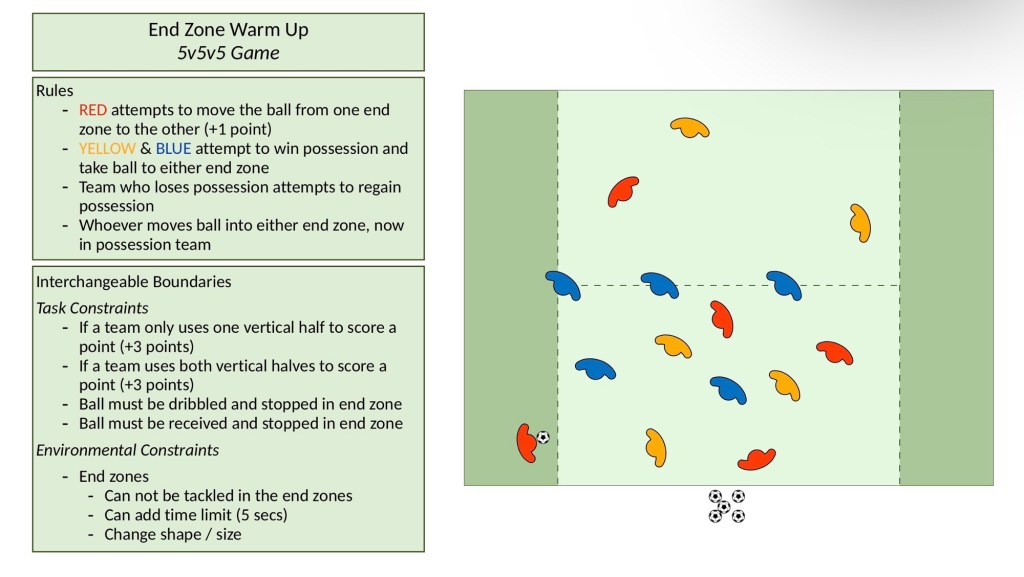
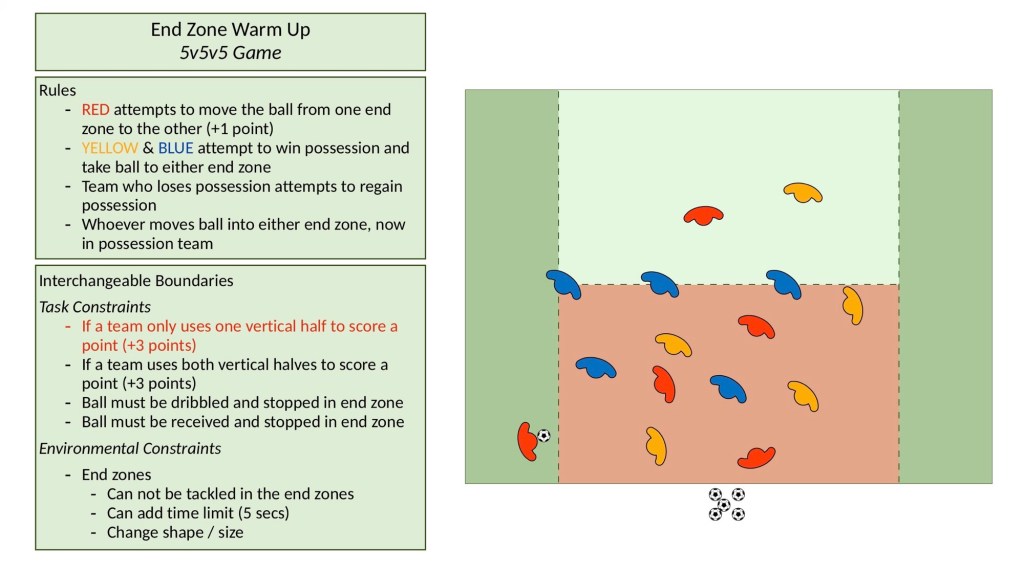
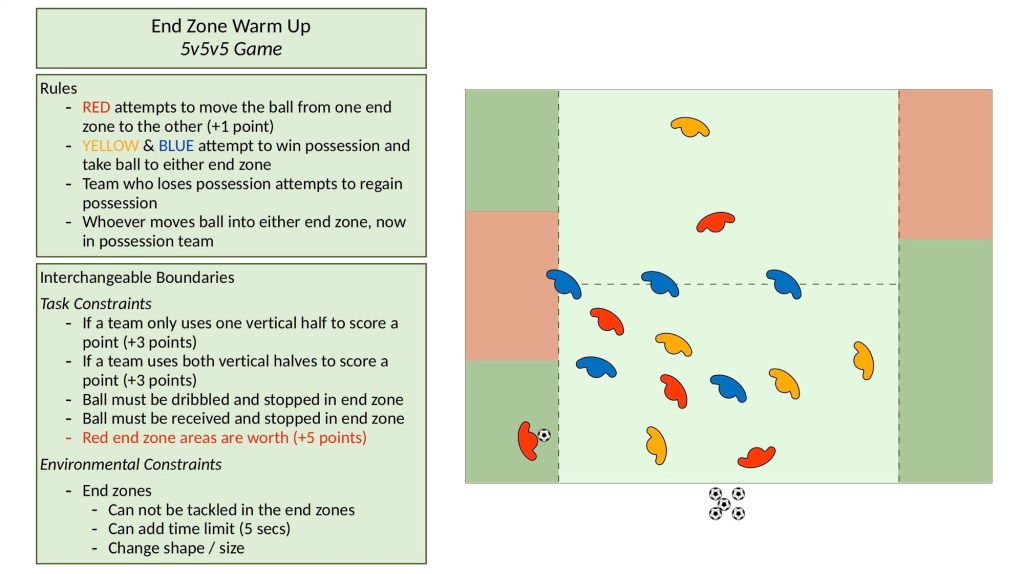
Three teams share a common space, but the boundaries, objectives and numerical relationships are never fixed. At times the area expands, inviting players to carry the ball foward; moments later it compresses, forcing tight combinations or individual escapes. Direction can emerge through scoring incentives, then disappear entirely, requiring players to reorganise possession without reference points.
Players are encouraged to abandon roles in search of solutions; dropping in deep to overload, stepping forward to break lines or carrying the ball when no pass exists. No player owns a position for long, and no solution remains optimal for more than a few seconds. The game organises itself, and the players learn to organise with it.
A New Lens
If we are to support the development of creative, unique and adaptable players, we must design everchanging environments rich in opportunity. We need to give players the space to explore, make decisions and discover their own solutions.
Amid a sea of control and predictability, it is up to us as coaches to break with tradition and design practices in which players can truly evolve. There is so much more out there when we stop looking at development through a positional lens and begin to embrace the chaotic nature of human development.
If we continue to prioritise control over curiosity, structure over exploration, and compliance over perception, we should not be surprised when players struggle to adapt beyond the environments in which they were conditioned. Development is not about producing identical interpretations of the game, but about nurturing individuals capable of navigating uncertainty with composure and intent.
Maybe it’s not time to rethink the rondo after all, maybe it’s time to let it go.
Boxed in: How the thirds of play impact creativity in football development

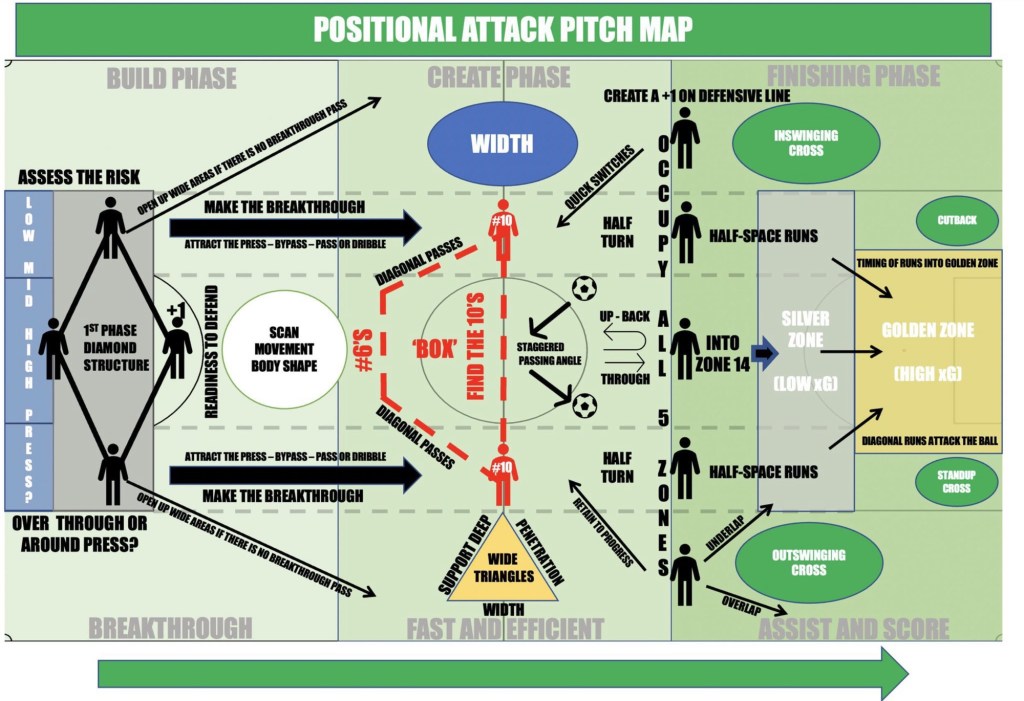
If you’ve ever worked in football development, you’re probably familiar with the concept of the pitch divided into thirds: Build, Create, and Finish. These three words have been drilled into us for decades, forming the backbone of countless game models, curriculums, and footballing philosophies. Often viewed through a positional lens, even the England DNA framework leans heavily on these principles.
But is this approach actually stifling the development of our young players?
The idea that a player can only “create” once the ball reaches the midfield or “build” solely within their defensive third is, in my opinion, deeply flawed. It curbs the potential of creative defenders who thrive on making bold plays from the back, as well as attackers who relish opportunities to contribute deeper in the field.
Take a closer look at most academy sides in England, and you’ll see defenders endlessly recycling possession in their own third, missing clear opportunities to bypass lines and exploit space. The rigid adherence to this linear model does more than limit creativity—it dulls the game.
If we must simplify an inherently complex and dynamic game for ease of understanding, we should rethink the current model. A player’s decisions shouldn’t be dictated by where they are located on the pitch, but by the unfolding realities of the game itself. Players are often given one set of answers through a positional game model, and are unable to explore the game in their own unique ways.
As coaches, we need to recognise the difference between how we see the game and how players experience it. Development isn’t about forcing players into our perception of how the game should be played and if we truly want to produce world-class players and coaches, we must begin to see their version of the game, through their eyes. We must view them as individuals—not as positions within a rigid game model.
The Price of Conformity
Most of a coach’s time on the pitch seems to be spent creating patterns and helping the team to build an attack. But every game model I’ve seen misses one crucial step: Identification. Who are the individual players on my team? Who are the individuals on the opposing team? And how can we exploit weaknesses to score and win the game?
This integral step is glaringly absent from most game models and philosophies. Instead, it’s replaced with a rigid, fixed team identity that takes little account of how the opposition plays or what the unique qualities of individuals on both sides bring to the game.
Take, for example, the England DNA model for coaching players out of possession. The first thing you see is press. All good and well—until a player like Harry Kane comes along. So now what? These linear breakdowns of football philosophies lead to forcing square pegs into round holes. If this structure can’t support the qualities of England’s all-time leading goal scorer and current captain, what other talents are slipping through the cracks?
We’ve all heard the excuses: “He can’t get around the pitch,” or “She can’t press.” How many exceptional footballers have had their development stunted simply because they didn’t fit into a rigid game model? On the flip side, how many players have been given opportunities—not because they’re great footballers, but because they can run around and press, just as the game model demands?
These frameworks destroy more than they create. It’s painful to think about how many quality players with unique skillsets we may have lost.
So how do we go about making sure we support the development of all types of players, not just one type created by rigid game model.
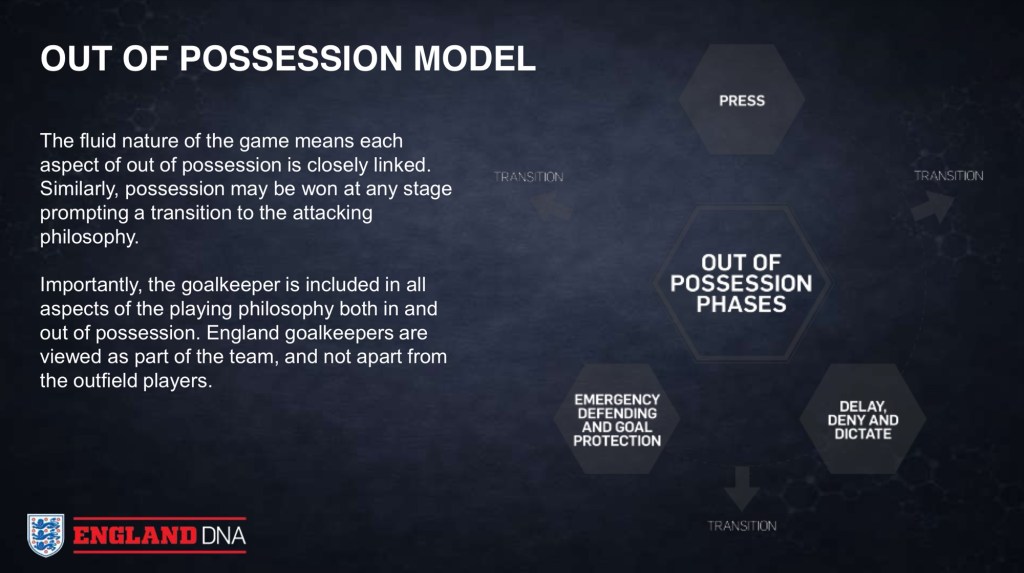
The FA’s England DNA ‘Out of Possession’ Model
Build, Create, Finish
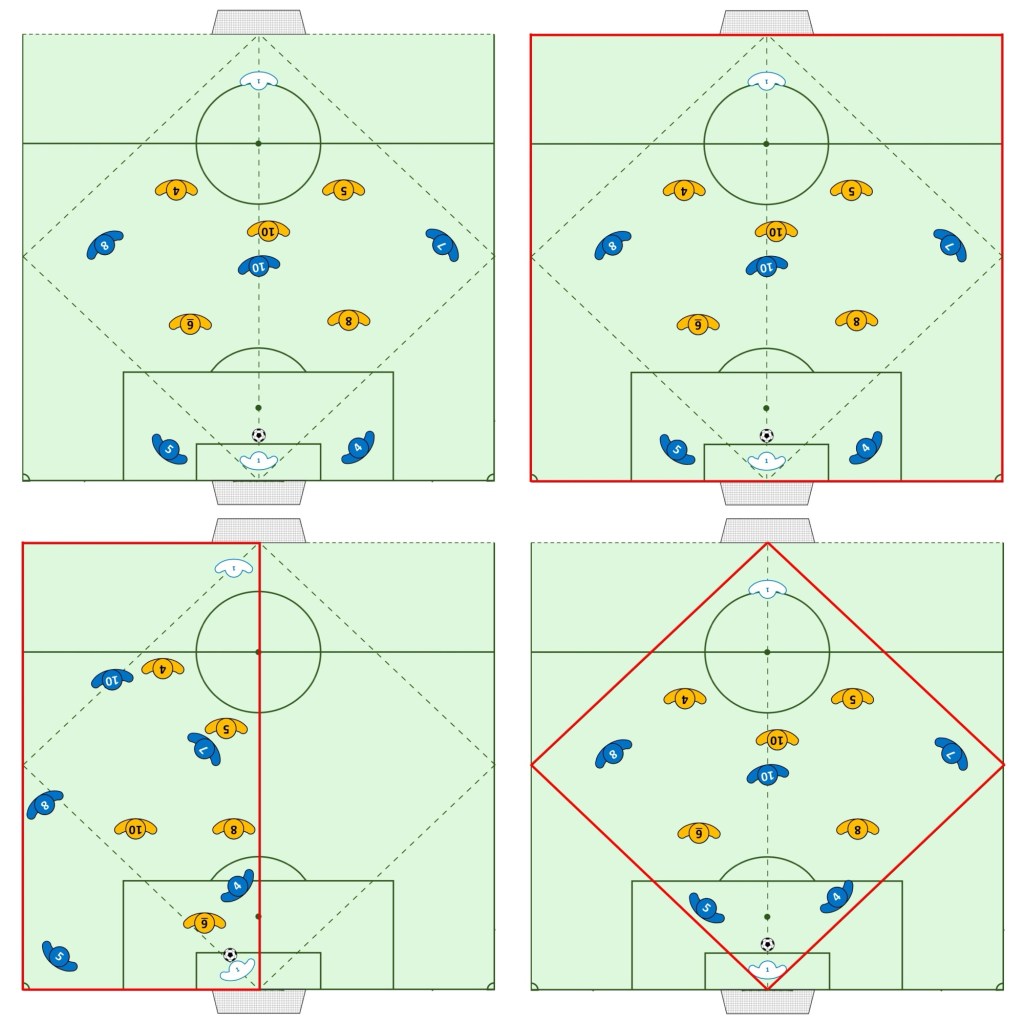
One way we can do this is with our session design. When we typically design a practice, we will look at what we want the team to learn, and fit an area size which is deemed relevant—often using relative pitch dimensions. Now this seems logical, however if we look closer, this will often lead to players attempting to exploit static space in the same ways over and over.
What I suggest is to constantly move the area boundaries of the practice. So players have to continuously problem solve working in different spaces on the pitch. When we say that the pitch is a particular size, so we’ll work in a similar area size in training, we forget that there are often moments in the game where, despite the full size of the pitch, the full use of this area is not available for the the players around the ball to use.
The game is so dynamic and variable that spaces open and close continuously, so with that in mind, do we recreate these ever-changing spaces in our training sessions?
I would also advise moving away from realism in this aspect and begin to create extremes. This is to exaggerate the space, or lack of it, to the players, then our players will need to quickly reorganise, constantly finding new solutions, and in turn, using more of a variety of skills to overcome the problem of ever changing space.
Despite this not being realistic in terms of a static pitch size, it is realistic in training the ability to adapt to ever changing spaces.
Alignment or Agreement
When a coach first steps into a professional academy, they’re met with a philosophy and a game model. They’re told that all teams must be aligned in their style of play—to all look the same. This, however is not alignment, but agreement. If we are truly and holistically developing individuals, no team should look the same.
Every team, every age group, and every individual brings something unique to the game. The first step should always be identifying who your players are: How do they like to play? Who inspires them? What makes them unique?
Once we understand that, we can build teams around these individual strengths. Each team would become unique. Each player would feel seen and valued, developing into the best version of themselves—not a limited version molded to fit the system.
Players should also learn to evaluate their opponents: What are the weaknesses in the opposition? How can their strengths exploit those weaknesses? Imagine shifting from “play through the thirds” to “Their back line is high—how can we exploit that?”
The game is not simple; it’s complex. Yet, we often teach players a linear, oversimplified version of football instead of equipping them to analyze and adapt in real time. As coaches, we owe it to our players to truly know them: Who are they? What do they love? How do they play? Who are their role models?
Only when we embrace their individuality can we develop them into the best versions of themselves—not the watered-down versions we impose through rigid systems.
When building a practice, we must not aim to develop players who play one particular way and use a limited set of skills, but look to develop adaptability and allow for a wide variety of skills and techniques.
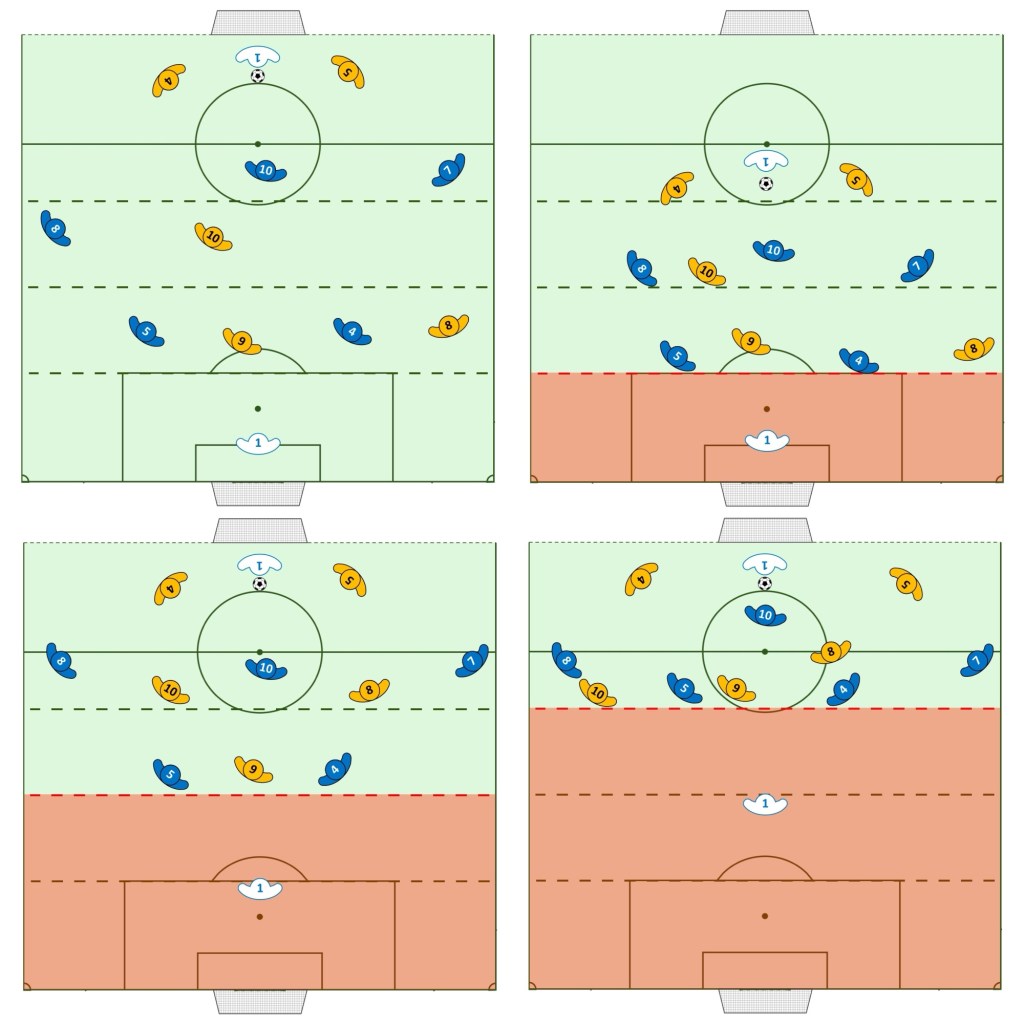
The image below shows a practice designed [by Aslan Odev] to draw attention to the opposition’s back line. By constantly changing which backline the players are using, they have to constantly readjust dynamically within the game, and find solutions to the ever changing problem. Within the practice, you will see players building, creating and finishing. Similar to the game, they are one and the same.
The Way Forward
Football isn’t a series of boxes to check—it’s a dynamic, unpredictable game that demands adaptable players and coaches. The best footballers in the world thrive because they bring something unique to the game, not because they conform to a predefined mold.
It’s time to abandon rigid structures and embrace the messy, creative, and individual nature of football. Only then can we truly unlock the potential of our players.
Amongst the Chaos

Control
Is our addiction to control destroying our most creative players? It seems we may have strayed further than a simple need for control of the ball; we want to decide every single moment, every movement, every position, every thought.
We want to control the player and their every move. Only, controlling each player’s actions comes at a price. We lose their perception of the game and, therefore, their identity and creativity in the process.
But where does our cry for control come from? We’re going to explore if positional play is the answer to developing creative and unique footballers, what the alternatives are and how to train players to think for themselves and find unique solutions on the football pitch.
Positional Play
So let’s start here, what’s wrong with positional play (PP)?
Positional play decides what the players do and when they do it. You may hear that through PP we give the players freedom within the rules we enforce, however, this is no freedom at all, for we have predetermined the answers from which the players can choose. This is not freedom, but an illusion of such.
Essentially, positional play attempts to maximise efficiency by limiting the player. The player must stand and occupy spaces on the pitch to affect the opposition’s defensive system, and then after receiving the ball, the players have a set of options from which to choose.
And through the rule of occupying predetermined spaces, we remove freedom of movement and therefore the freedom to create spaces through creative, spontaneous play.

So, when it comes to development, what exactly is the problem? Well, a PP system is ultimately decided by the coach. The system comes before the individual. However, if we are so determined to develop unique individuals, individual development can’t come second.
Being part of such a rigid system has many drawbacks, especially within the paradigm of development. There is no freedom of expression for the player, no original thought. The players become robots, they lose themselves. We stop our players from developing a unique identity. They lose what makes them special. We make them like everyone else.
And what’s worse is, this style of football, which hinders a young player’s development, is rife within the academy system and is spreading to grassroots. We have to ask ourselves a fundamental question, when it comes to development, what do we want to see?
A system which shows off some of our knowledge as coaches and will limit our players?
Or, a system built around the individuals within the group, allowing them to make decisions on how to build, how to create and how to score. A style of play which will likely empower and encourage new and unique ideas.
I know which one I’m after. And through modern interpretations of practice, if we break free from the norm, there is another way.
Pawns
The honest truth, though we may not want to hear it is this; positional play is a style of play to show the ego of the coach. The coach picks when and where their team attacks, which actions the players can take and ultimately limits the player’s decisions. It’s to show the knowledge of the coach, not the knowledge of the players.
One of the many problems with this approach is these predetermined attacks are scripted and once another team has seen the script, it becomes easy to stop. And if this rigid plan is stopped, then the players look around not knowing what to do until the break when the coach can take over again and offer them a new solution.
This is not how we are going to develop creative, intelligent footballers and if this has been a player’s whole football education, they have no way to adapt, to find a new answer, to find a way to succeed. The honest truth is, we set them up to fail.
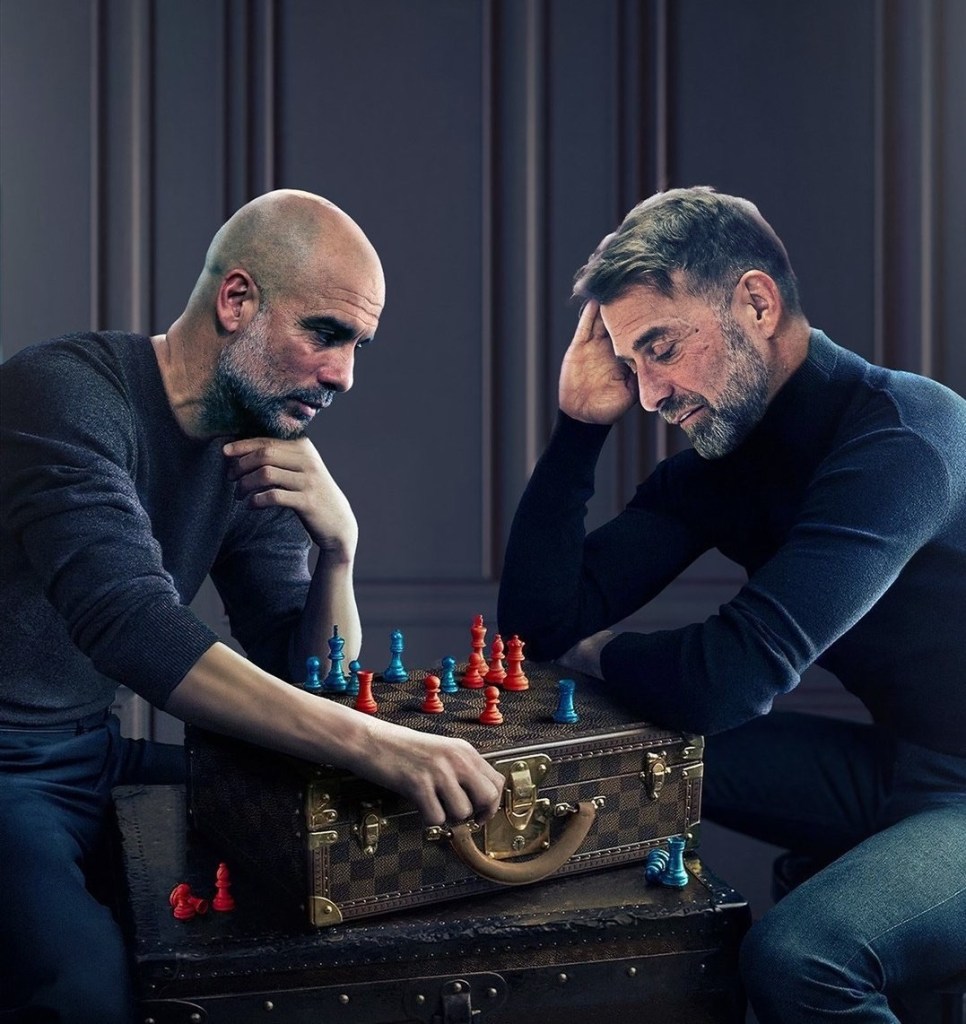
It’s becoming increasingly more frequent to hear the comparison between football and the game of chess. In chess, there is a chess player, who dictates the movement of the pieces. The pieces have fixed movements, and when can these pieces move? When the master decides.
But there’s a fundamental problem here, footballers are not chess pieces who can’t think for themselves and they do not need a chess master to govern their movements. In chess we give life to static objects by giving them purpose – rules in which they can move. In football, we’ve limited human expression into lifeless objects who are bound by the limits we enforce.
We limit our players into behaving one way, that suits the system and through this we lose individual character and creativity. This stems from two things, Pep Guardiola being extremely successful with his positional brand of elite football and our very own fears and insecurities.
We want control, our image on the pitch, our vision, we want to show what we know – but in this quest to show our own knowledge we’ve lost what is most important, the development and the knowledge of the player. This is, of course, the very essence of a development coach.

Freedom
We must remember that when controlling possession, building from the back and playing through the thirds there is not only one way to attack. Just as high pressing is not the only way to defend. These styles of play are not necessary to win games of football, nor are they necessary for the development of world class footballers.
You could argue that moving the ball more, having more possession will allow for more interactions and therefore more technical and skill based development.
I too believe more interactions are beneficial, however, this doesn’t mean we should enforce one version of possession football onto our players. Some of us might like shorter passes, players closer together for more interactions, however, in development, we don’t want to undervalue the long pass, we don’t want to undervalue stretching the opposition.
We must be open to all opportunities to attack and defend, and our job is to highlight these opportunities to our players, not instruct them. And it is for our players to take this information and act upon it however they see fit.
Only then will real development take place. This is the safe space we must create, where the players can try things we wouldn’t, and work things out for themselves. I can honestly count on one hand the amount of coaches at the top level that actually do this.
The Constraints Led Approach (CLA) constrains, manipulates and stretches the boundaries of practice to highlight problems the players may face in the performance environment (game day).
However we must be careful not to over constrain, or only highlight one aspect of the game. I have been working within the world of the CLA for almost a decade now, and something I have come to realise is that change and variation within practice is where the real learning happens.
Schöllhorn
Differential Learning
As my understanding of development and learning evolves, I am increasingly intrigued by Differential Learning. Differential learning is a motor learning method that was proposed in 1999 by Dr. Wolfgang Schöllhorn, and works around the premise that the learning of an action or movement is dependant on the amount of noise created (practice variability).
As discussed in a previous article written for theRaumdeuter, ‘We need to talk about technique…’, our aim as coaches should not be to reach for ‘the one perfect technique’, but instead for skilful adaptability. In other words, rather than perfection of particular techniques, we should aim for a wide range of variability of techniques – the idea is that this approach will lead to players being so adaptable, that they can overcome any problem put in front of them.
CLA & DL
Whilst I promote the use of the CLA and DL, it is important to understand that there are differences between the two and how we use them will determine how our players develop. Here are the main differences that have made an impact on my understanding:
DL
In DL, the idea is to create enough stochastic resonance (aka. noise/variation) as to not engage the frontal lobe of the brain.
The problem with engaging the frontal lobe, is that this is the part of the brain that plays a role in judgment, empathy and reward seeking behaviour and motivation.
Judgement, in football development terms, will lead to behaviour that will lead the athlete behaving in ways that will interrupt the learning process. For example, if an athlete attempts to dribble, and falls over losing the ball, they will feel judgement from their peers to maybe not try again.
Many of the brain’s dopamine-sensitive neurons are in the frontal lobe, dopamine is a brain chemical that helps support feelings of reward and motivation. So if the coach says something like, ‘Mujeeb, well done for switching the ball out of trouble there.’ This will engage the frontal lobe, the player will feel a positive hit from the dopamine, and begin to behave seeking more of the same reward.
Now Mujeeb will begin to behave as if tight areas are perceived as ‘trouble’ and big spaces afford the most opportunity. (What we will look at later is how there is opportunity in every situation on a football pitch) So if we praise a player blindly, it can lead to poor decision making in search for dopamine.
With empathy, maybe a player shoots and misses the target, there is a free player in the box who feels the ball should have been played across to score. The player will feel empathy for the missed opportunity and this will shape how they approach similar problems in the future.
We want to avoid engaging the frontal lobe in practice so the player will stay in a continuous process driven state. We do this through constant variation of the task, environment and individual boundaries. The athlete is to learn without correction or feedback. This is essentially Differential Learning.
Think of a baby attempting to walk, when they fall over, the frontal lobe has not reached the stage of feeling judged, so they just get back up and try again. They are in a constant state of process, a constant state of learning from within their own experience. This is the state that DL attempts to reach.
CLA
The CLA works on the premise that you can manipulate the task, environment and individual constraints to highlight a particular part of the game. The practice will offer affordances (opportunities to act) in line with the constraints you set, however the difference is these constraints are not changed as often. It is common to see a CLA practice’s constraints remain until the athletes find success.
These constraints, if left without constant change, will engage the frontal lobe, giving the players time to feel empathy, judgment and reward seeking behaviour.

Isolated Practice
The CLA requires representative design, the idea that for a representative practice, you need a ball, direction, an opponent and consequence. Where this breaks down is that there is no space for isolated practice. When looking through the lens of the CLA, isolated practice is not representative, and leads us to believe that there is no skill acquisition available within isolated practice. The problem is, we cannot say for sure that isolated practice does not contribute to an athlete’s skill acquisition at all.
Where DL differs, is that the method does not require opponents to support the athlete in learning. All it suggests, is that you need constant variation to not engage the frontal lobe.
Take an unopposed passing practice for instance, the practice itself offers little in the way of motor learning. However, through the lens of differential learning, it does offer something. There is often little to no variation within an unopposed passing practice, but, why do some coaches swear that it develops certain skills in players?
Because it actually does. But not for the reasons that coaches are often led to believe. One thing that the CLA and DL have in common is that repetition to reach a perfected technique does not improve a player’s skill level. Actually, through the ages of growth is where we see most improvement with drills like this, not because of the practice, but through the variation caused by growth.
In fact, doing almost anything with a ball whilst going through periods of growth will cause enough stochastic resonance to help the player learn. Whichever of these lenses we look through, this type of practice really is the absolute bare minimum when working with our players, I would absolutely advocate for using these as little as possible when compared with CLA or DL practice design.
Finally, there is noise in the CLA, there is variation, enough for players to develop much more than traditional coaching methods. However, if we want to develop the best and brightest footballers in the world, I think we can and should go further.
DL Finishing Practice
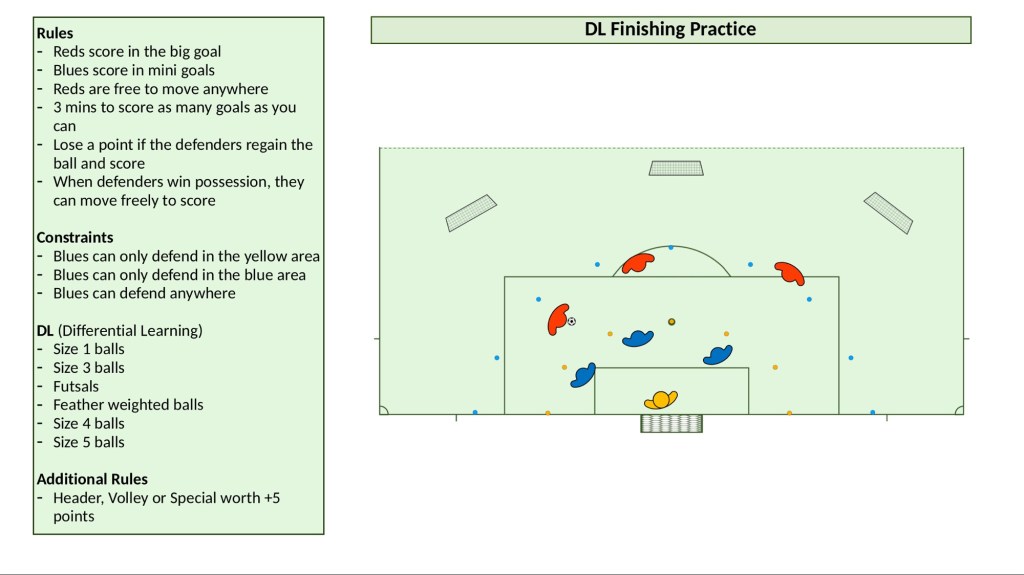
So what does a team based DL practice look like? Let’s look at finishing. Traditionally, finishing practices contain very little variation. Below is a finishing practice designed to add tonnes of stochastic resonance/noise/variation. You can adapt the rules of the practice as you see fit for your players. You adapt this practice easily to incorporate more or less players.
You can even do this with one attacker and no defenders, although there’ll be less stochastic resonance than what we would ideally search for, the variation from the different types of balls will support your athlete’s finishing development.
The idea is that the defenders are locked into zones to block, they can tackle if the ball enters the zone they are currently occupying. Again, the idea is to not engage the frontal lobe. So change the area size frequently.
What you are likely to find is players adapting in real time to the different environmental challenges from the balls and the opposition’s constraints.
I have been guilty myself of only highlighting one problem through the CLA, asking the players to repeat the search for a solution to one particular problem. And through this misunderstanding of practice design, I found that this isn’t enough to develop players to reach their highest potential.
For example, what happens when that problem inevitably changes on game day? We’ve practiced playing against a back four, now they’ve changed to a back three. The players become lost, and we have to step in to ‘guide’ them through a problem they’re not equipped to solve.
So, this begs the question, how do we develop individuals who can dynamically seek out deficiencies in the opposition? Who can identify where the gaps are appearing and how to create their own gaps to exploit. And how do we train this? Rather than the players following a rigorous set of rules, can we develop them to think for themselves?
Thankfully, yes we can. Below is a carefully constructed practice which helps develop player’s awareness and creativity. (Whilst viewing these practices, it’s important to understand that we are not looking through the lens of positional play, players do not have set positions they must occupy, but rather their positions are to be taken off of the position of the ball and the opponents.)
Build and Break
Below we will show a ‘build and break’ practice, designed to help players break apart basic defensive structures, in order to progress into more attacking spaces. This practice can be tailored to all age groups and any number of players. The rules are simple, get the ball from one end zone to the other.
The difference? Below pictures of the same practice with different constraints/boundaries being applied. The first constraint is that the blues can’t defend behind the halfway line. This will make them defend in a certain way, forcing the attacking team to act.
This is a keystone in constraints based coaching, constraining to afford. Essentially constraining the defenders so they act in a specific way, and therefore your attackers will act against that. As you scroll through the practice designs, new rules are applied; now one defender must defend behind the halfway line, then two, then three and so on.
Rather than just playing vs a defensive four, or a defensive two, the idea is to constantly change the opposition so the attackers have to self organise and work out solutions to new problems in real time, in game. These boundaries are to be changed every minute or so, this gives the attackers no time to relax and they stay in a constant state of problem solving, or as Wolfgang puts it ‘stochastic resonance’. This is what we are searching for, this is the developmental sweet spot.
Now, when it comes to game day, the players should be able to see and act upon whatever is in front of them. The idea is to ask them to constantly solve ever changing problems without the need for anyone to decide how to overcome these problems for them. Our job as the coach? Become obsolete.
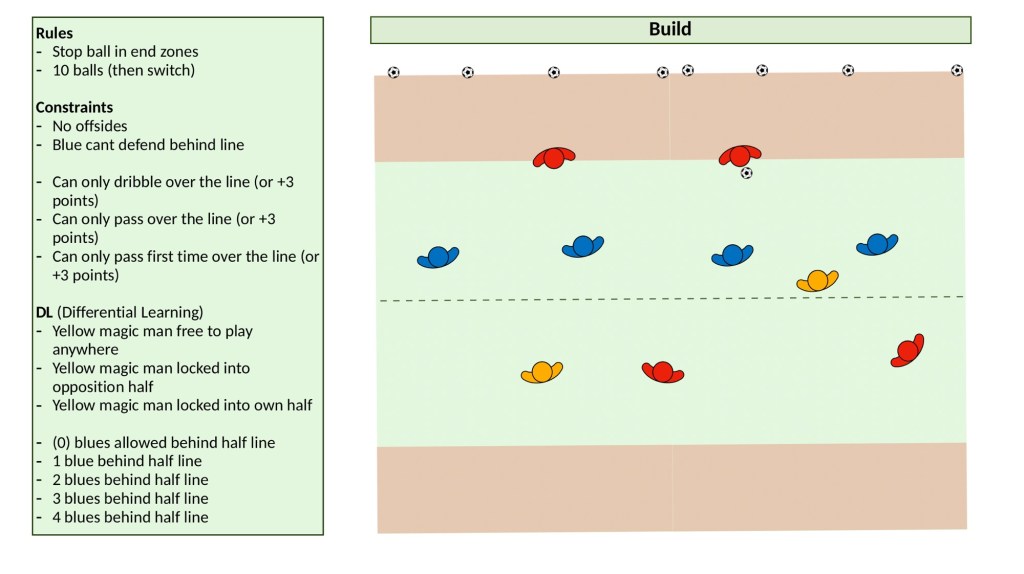
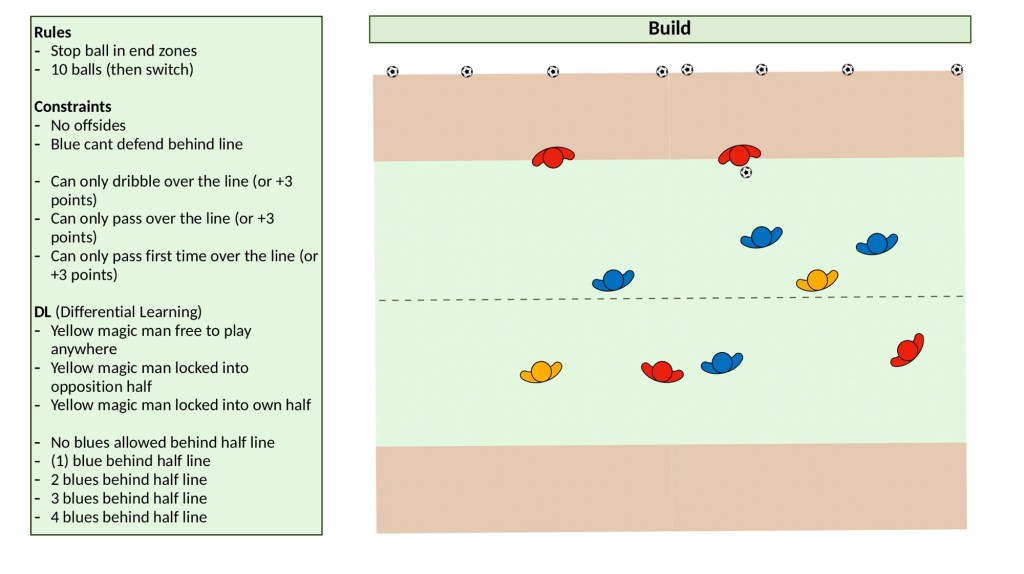

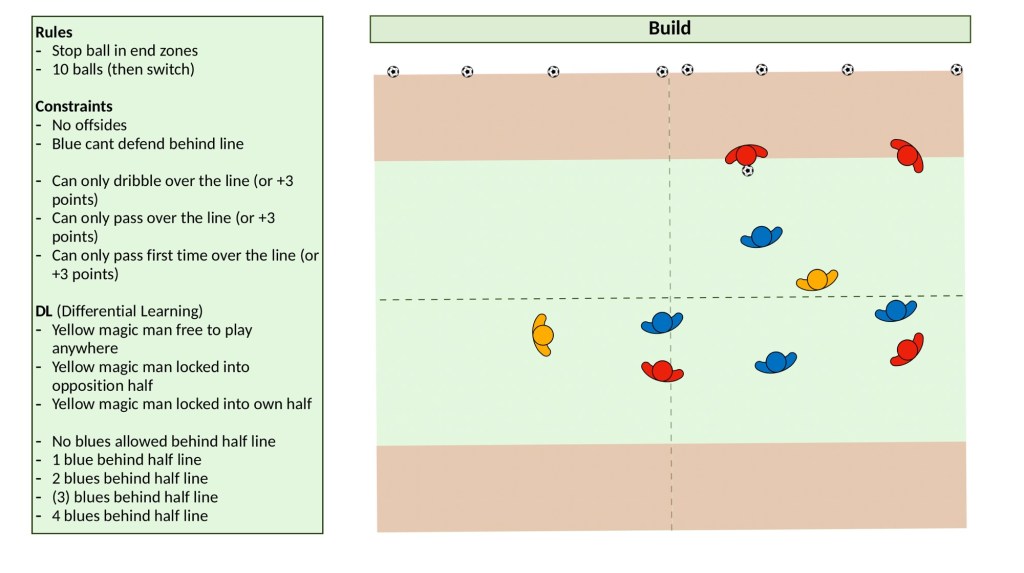
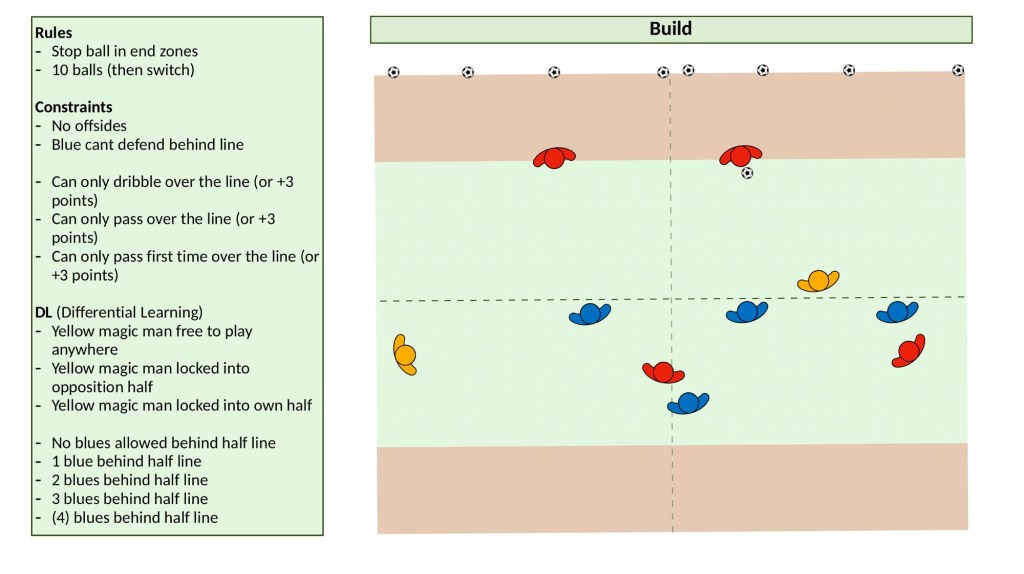
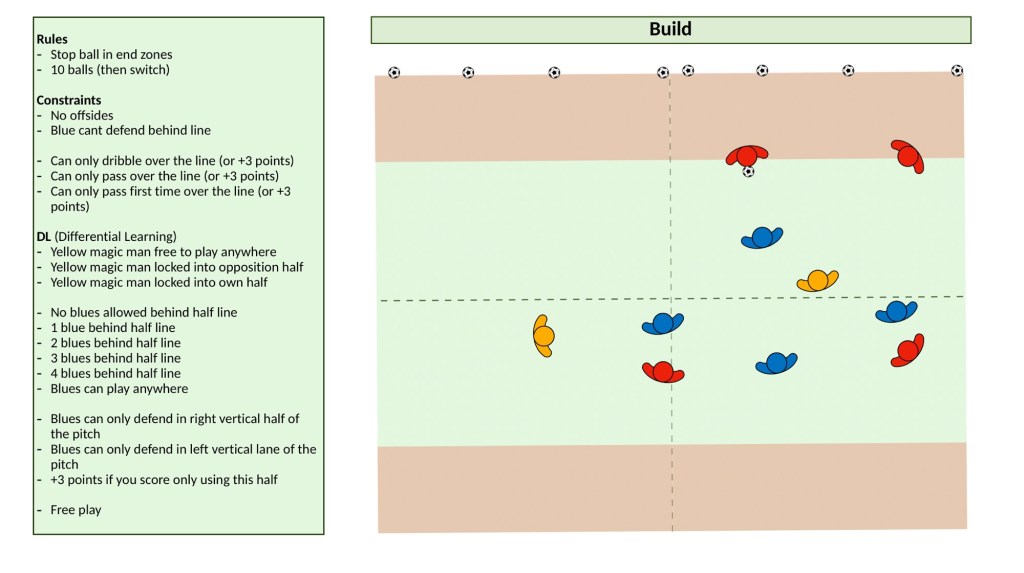
There are also additional rules above, such as ‘Blues can only defend in the right side of the pitch.’ Again, this will change how they defend and this will then change the behaviours of the attacking team. These rules are ideas to constantly change the environment.
All of these rules are to be added gradually, and changed often. Allow some free play as part of the block as well.
We may feel it necessary to allow short breaks for the players to discuss how they’ll overcome these problems. One nice idea is to give each team a ‘time out’ they can use in each block at any time. If we give them more than one time out, I think it’s important to make these shorter each time so they have to be very deliberate with their communication.
Now all that’s left is to sit back and observe how our players attempt to overcome these problems, be careful not to go in and ‘fix’. Observation is key. We must get to know our players and how they approach the problems set. I’m often surprised with what some of them come up within this chaotic form of practice.
Opportunities to Act
It’s important to recognise that most of the hard work as a coach is done in the practice design. There is no need to constantly move in and force our opinion of how the game should be played when developing our players.
If we create a rich environment, full of opportunities to act, our players will choose how to solve these problems without much need for us to step in, we are simply there to bring their attention to these opportunities.
Observing is the best thing we can do, then asking our players to consolidate their learning; ‘Teddy, I’m interested as to why you chose to do that in that situation, could you explain why you made that decision?’
In highlighting their attention to things you can see that they may have missed. ‘Sarah, I noticed something when you had the ball just now, did you see Toby in a lot of space on the right hand side? You don’t have to give him the ball, but just be aware that he keeps taking up some good positions.’ Sarah may decide to use Toby, she may decide to fake using him, or ignore him all together – ultimately, it’s up to her.
What we are trying to avoid here, is everyone using Toby in the same way. How every single player approaches each problem will be different and that is exactly what we’re after. Individual thought.
Now we’re a part of their learning. We’re helping them see, highlighting opportunities to act, but not telling them they must act in a certain way. We are collaborating with them. All that’s left to do is sit back and watch the cogs turn as they become more ‘attuned’ to their environment.
And remember, there are no RIGHT answers. To be able to coach this freely, without the shackles of right and wrong, we might need to bust some unspoken footballing myths.
Myths
To break free from the constraints of control, first we must destroy the unspoken myths of modern day football…
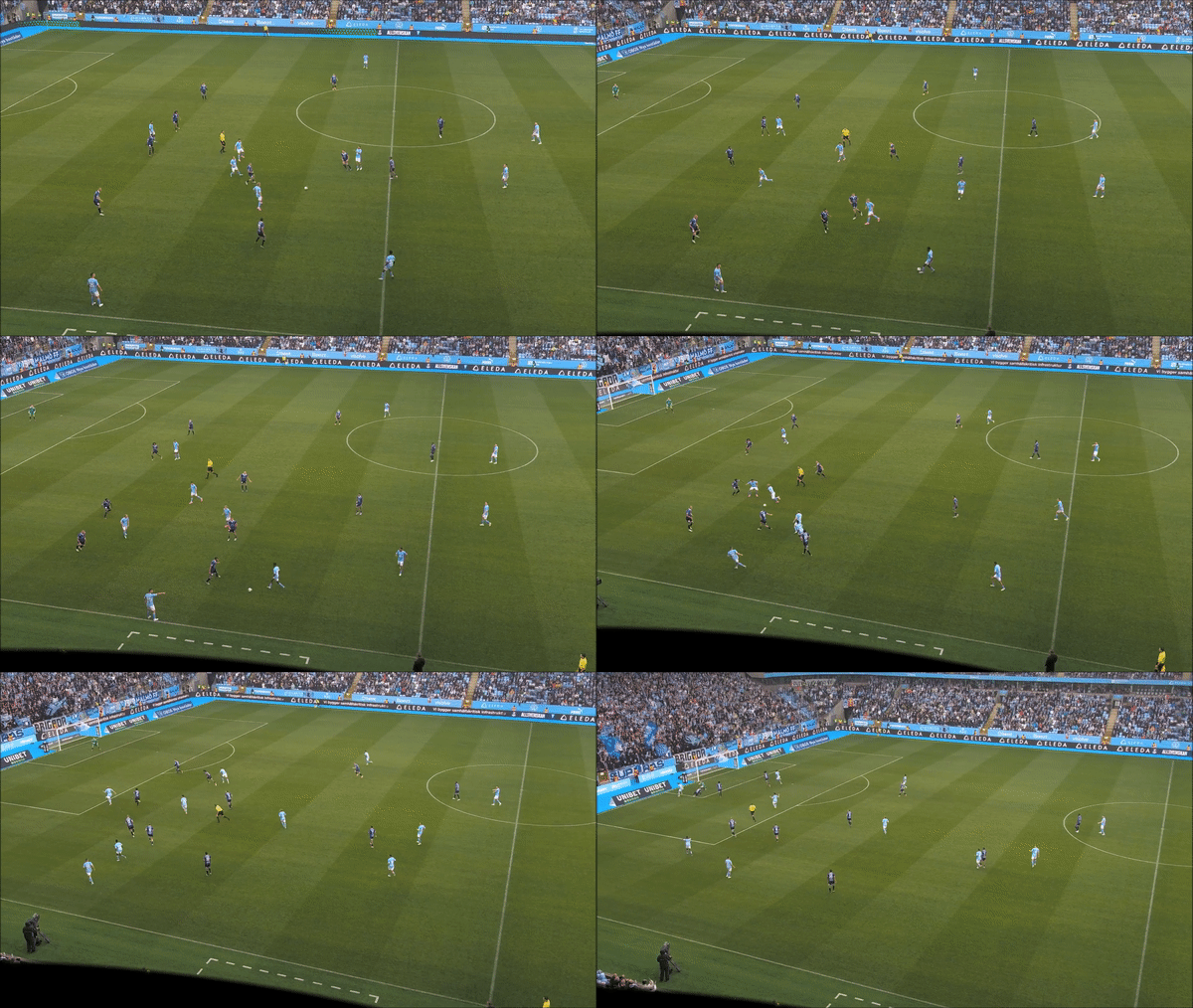
Switching Play: Switching play is a regular theme of practice within academy football. The internet is riddled with ‘switching play’ practices, all with the same basic message. ‘Get the ball away from the chaos.’ But, what if by moving the ball away from the opposition, we are also moving the ball away from opportunities to play and create?
There is no need to switch the ball out of tight situations. There, I said it. When players are free on the wing, we think that we need to switch the play away from the rest of the team and put our winger or fullback in a 1 on 1 situation alone on the other side of the pitch, regardless of if they are a 1v1 player or not.
We’ve all heard shouts such as ‘switch it!’ from a coach on the sideline, then a player ignoring that instruction, faking playing wide and creating a new opportunity to play forward in amongst the chaos. The coach then claps and tells them well done, despite two seconds ago demanding that the only possible answer was to play the ball ‘out of trouble.’
There is absolutely no need to switch the ball out of a tight situation, it is one of many options, but not the only option. Some players may be able to play through that tight area with clever fakes, dribbles, passes and touches. We must allow our players to explore all the options, not just one. Within chaos, there is also opportunity.
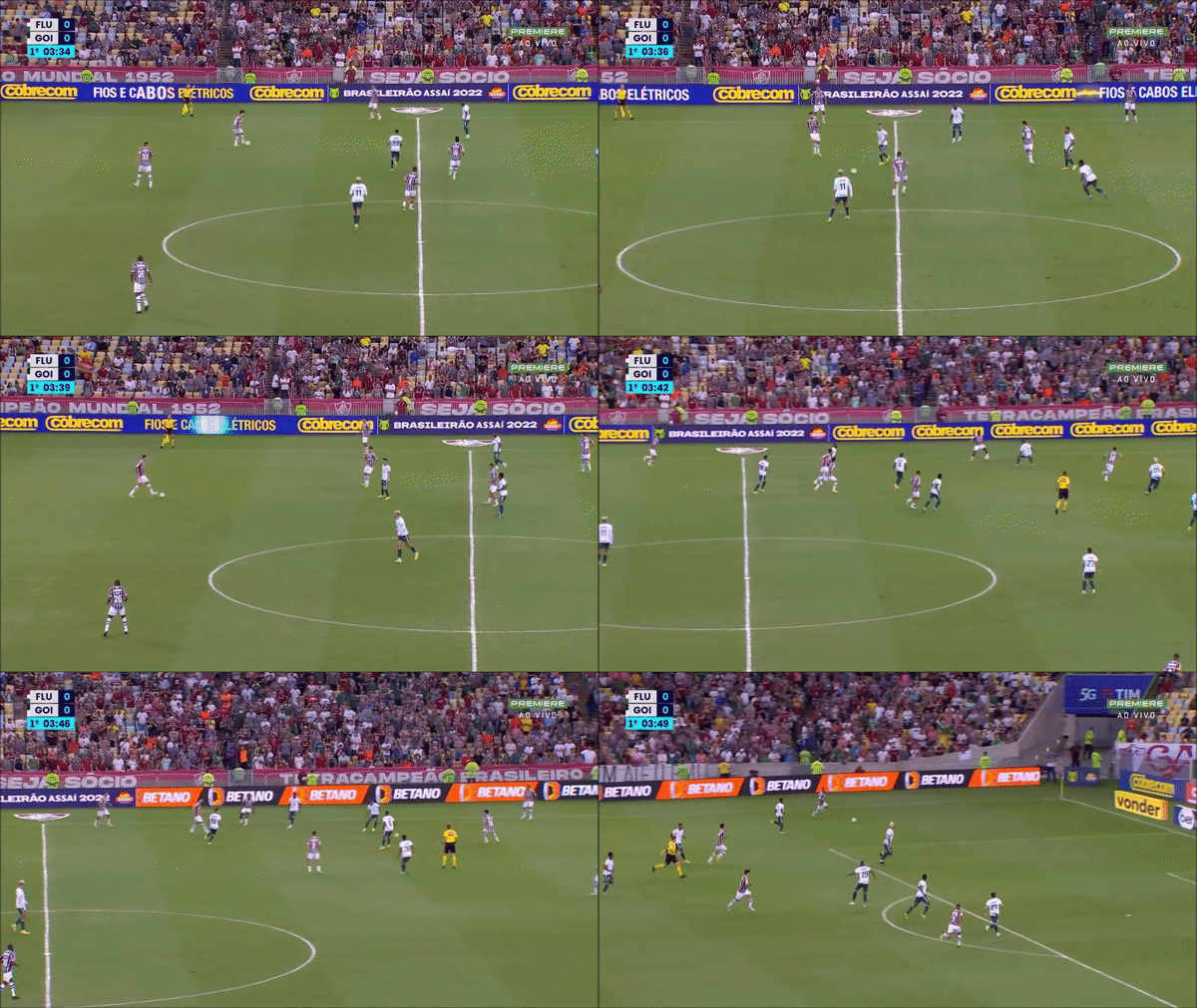
Maximum width: Maximum width is not necessary to create space in a game of football. There is a place for stretching the opposition – pinning back the fullbacks, and keeping the width in order to create gaps in the opposition to play through.
It seems logical, and as PP systems have evolved, they have had to incorporate a strong rest defence to cope with the loss of possession into spaces created by having our players so far apart and far away from the ball, this has birthed the rise of the inverted fullback. However, none of this is strictly necessary to be able to play controlling and attacking football.
Every coaching course you attend points to maximum width as an integral principle of the game. When nearly every coach steps in on match day, you will undoubtably hear the phrase ‘where’s our width?’ Or ‘make sure we’re high and wide!’
However, when you begin to look closely, this often hinders the players more than it helps them. I’ve often seen these rules demanded from players, and they stand there, lifeless, just waiting. They’re not involved in the game, and unfortunately, following strict instructions will not help them reach their full potential.
Just like with switching play, there is no need for having one player hug the touch line. Maybe if you have a player who likes to isolate 1v1, but as a general rule? Remember there are no rules, players have to be free to find what works for them. The players must be able to explore options other than one style of play.
How often, for example, have you seen a player attempting to move into a central space to receive a forward pass, and is immediately told they must create width for the team. Now the player has lost their curiosity for dynamic spaces. They now just stand where they’re told. And just with that one phrase, their curiosity is gone and so is their potential. What if they found a new space inside the pitch, got on the ball and created a scoring opportunity for their team? We’ll never know.
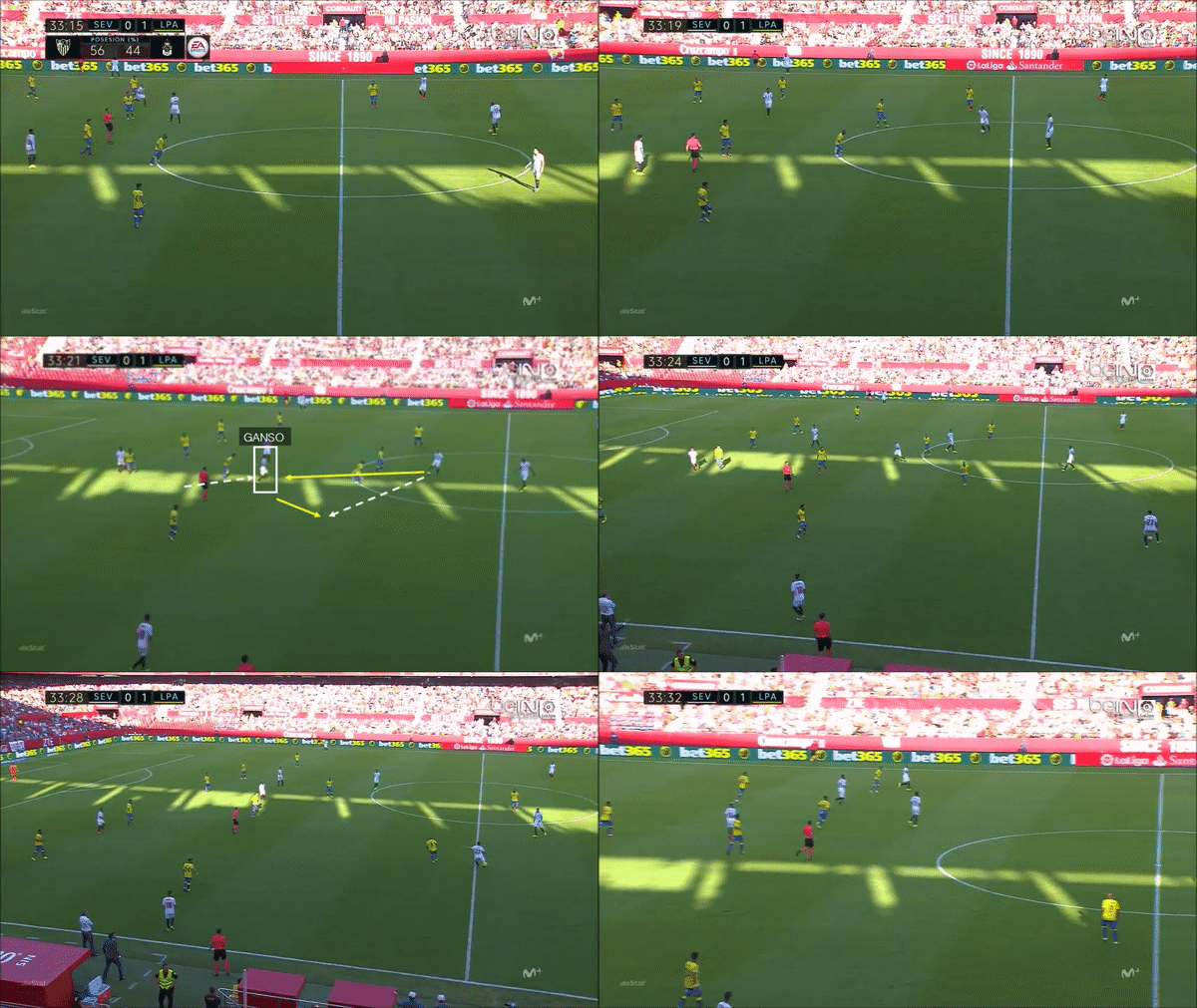
Relativity
So what’s the alternative? Well it doesn’t have to be so black and white. If you want to create gaps in the opposition, do you NEED maximum width of the pitch? Can you not create enough width around the opposition? What about minimum width? What would happen if we changed our coaching philosophy to incorporate relative width? Taking position off of the ball and the opposition?
We have come to accept that maximum width is a set principle in football. It is not. There are no rules. When the development of the player comes to the forefront, I say that the players should decide. And when we speak about the development of young footballers, they are being hampered by this over simplification of the game. Maximum width should be a choice of the player for a reason. If they can not make that choice and we make it for them, we are cheating them away from their full potential.
Let’s start a new principle: ‘Play where the ball needs you to be’.

Creativity is only needed in the final third: ‘Wait for the ball in these spaces and we’ll move the ball to you’: Another positional play principle. Stand here and we’ll get you the ball. Think about all the interactions you instantly kill by forcing players to do this. I’ve seen it with my own eyes, players wanting to drop out of midfield to pull an opposition midfielder out, creating gaps to play through. Instead, no, stand in there and wait.
We talk about creative players as if they only ever belonged in the final third, every player on the pitch should have the responsibility to create. Why can’t a centre back be the most creative player on the pitch?
We forget that creative players can exist all over the pitch. Players that were ball orientated. We kill them before they’re even born. ‘Stand here and wait for the ball’, is by far the worst phrase in football development. We tell the players how they should build, how they should create, how they should attack. What about the players that can create the opportunity, not to score or assist, but what about the players who can create the opportunities to build?

Break Free from the Shackles
When we set up a practice, it’s important to think about whether we are allowing the players to explore all of the options the game has to offer or whether we’re just imposing one way to play onto them.
When we hear someone say, ‘you must be high and wide!’, or ‘where’s our width?!’ Ask them ‘why?’ What about the opposite option to that, what about everything in between?
We must stop accepting these make believe rules as truth and begin asking your players to explore the game. Maybe they’ll come up with something we have never seen before. Something new, something organic.
Turn up the Noise
More noise, less structure. You want your players to build out against a front three? Ask them build out against a front 3, 2, 1 and 4. Watch, as every few minutes you change the opposition shape, they begin to solve new problems together. Watch the team work together and the new ideas unfold.
They’ve solved playing out against all of these different formations? Change the pitch size: Narrow, Long, Short, Wide, No Corners, No middle.
Change the task, often: Build without going around the opposition +3 points, build without going through the oppostion +3 points, Build without playing over the oppostion +3, free play.
Change these boundaries/constraints and change them often. Watch the players work hard to overcome, to learn what works for them. Watch as they create opportunities to win the practice.
It’s too quiet, turn up the noise and find the joy of true footballing expression amongst the chaos.
Part 2: Straight from the training ground
What needs to be in practice design for transfer of learning
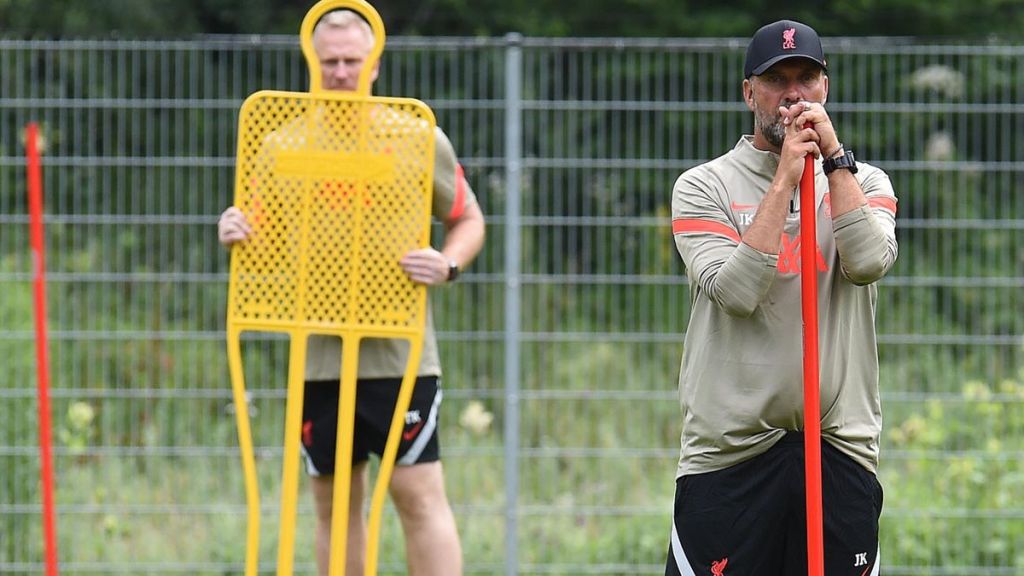
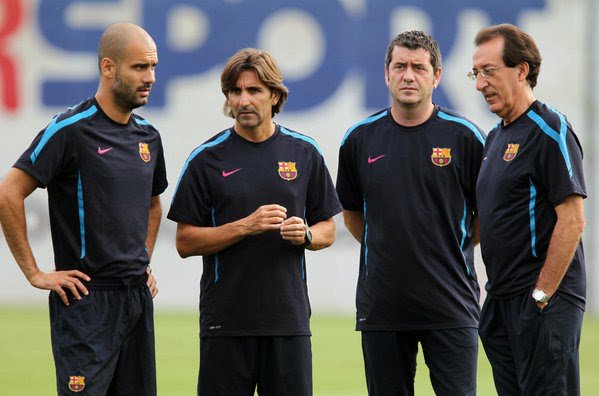

Building upon the insights shared in part 1, where we delved into the nuances of transfer (near and far) and design practices that optimise player learning for peak performance in competitions. In addition, we included theory to support our writing and practical examples to analyse where they might sit along the ‘Near and far transfer spectrum.’
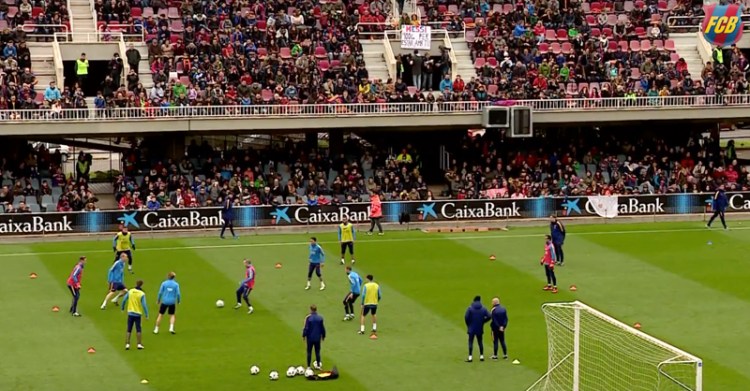
This sequel extends our exploration, shifting the focus to the practical realm of representative practice design. We’ll outline the four key components that contribute to crafting representative practices, fostering near transfer for players and developing adaptable skilful players. Anchored by ecological pedagogy, this methodology enriches our football practice planning with purpose and direction, always guiding our ‘how’ in the quest for effective player development.
Good ingredients without a set recipe
Imagine the game of football and all of its elements are a whole cake. Passing, dribbling, opposition, transition, size of pitch and everything else are the layers, toppings and fillings of the entire cake. When you go to have a slice of the cake you want to try the whole thing not just certain bits. This is what we are aiming for in ecological pedagogy. When we take a part of the game (a slice of cake), we want all of the key elements of the match (the whole cake) to be represented in our practice design. Then we can utilise constraints, challenges and/or objectives to highlight moments or focus on situations/scenarios of the game where the players will explore solutions both individually and as a group. The role of the coach is to prompt the players to think about what they saw before/during/after the action (attention), what they tried to do and why (intention) and then observing the learning process as the player adapts both of these after open questioning and guidance from the coach, their team mates and/or themselves.
Education of attention– a change to using and seeing a more useful, specifying source of information to control your movement
Education of intention– a change in the aspect of movement you are controlling
Calibration– change in the relationship between the two (attention and intention)
Being skilful is not a process of repeating a solution, it is repeating the process of finding a solution
Richard Shuttleworth @skillacq
Only using decomposed and traditional practices are like just taking the icing of the cake. For example, practicing one focused element of the game while losing all the other relevant parts that influences the player’s decision making. In a previous article, I explore how mannequins are not ideal when learning combination play while highlighting the variables that will influence a player’s attention, intention and action including teammates. opposition, ball and space.
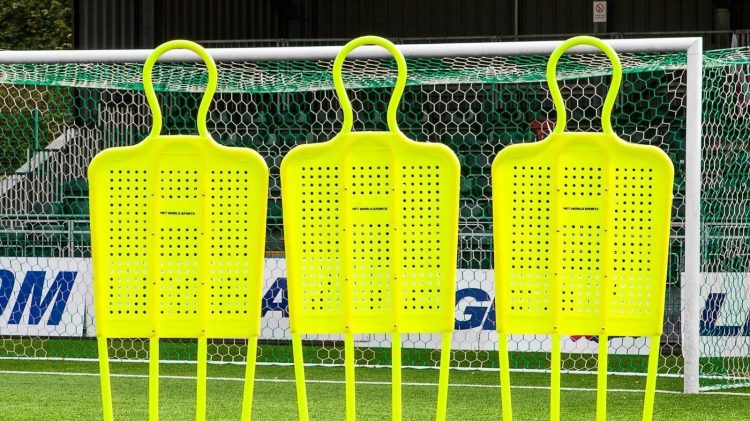
Utilise the constraints led approach and other ecological pedagogy and design practice to focus on one part of the game while leaving as many of the key elements of a match present.
What is needed in training?

Four components for a transferable practice
- Representative information
- Action fidelity
- Affordance landscape
- Emotional context
Representative information
So what is representative information? In football there is information on the pitch that will influence a player’s decision like where team mates are, where the ball is, where the opposition is and where space is. Players perceive the environment by picking up information to guide action (in accordance with their own action capabilities). In training, this information should be present in a relevant and similar way for there to be near transfer to match day. The players need to experience realistic force, direction and timing for an effective learning process.
The players need to feel and explore a representative environment to build knowledge in the game with contextual force, timing and and direction and that can only happen with representative information present in training.

Force can come from the opposition pressing to regain possession or the speed and trajectory of a pass from a team mate. The timing will be present through the movement of team mates and opposition as well as when a pass is played or the type of touch a player takes. Finally, the direction will be represented by the goals or end zone players for team mates and opposition to orientate themselves in defensive and attacking phases of the practice. In addition to this, specifying practice is important when taking a slice of the cake. Understanding a phase or moment of a match and trying to replicate those key elements in training will increase the learning for the players.
Action fidelity
In this context, action means movement, and fidelity means the accuracy that something is copied. So action fidelity in transfer of training refers to the degree that action executed by the body in practice is similar to competition. Movement solutions encompass anything the body can do, in football this would include the technique a player chooses to perform a skill, the co-ordination of running or changing direction, jumping to win a header and everything else.
So how can this influence our session design? Relevant force, timing and direction in the practice are key elements for near transfer and we can create these from the task, opposition, team mates, area size and equipment present in the practice. For example, the size of the practice area will change the affordances (opportunities for action) the players can explore. A bigger area will allow for quicker and longer running speeds as well as positioning and managing risk to a higher level. Whereas a smaller area will give different affordances, quicker decision making, more of a focus on body shape when receiving, timing and force of pass, first touch direction will be heightened and jeopardy increases.
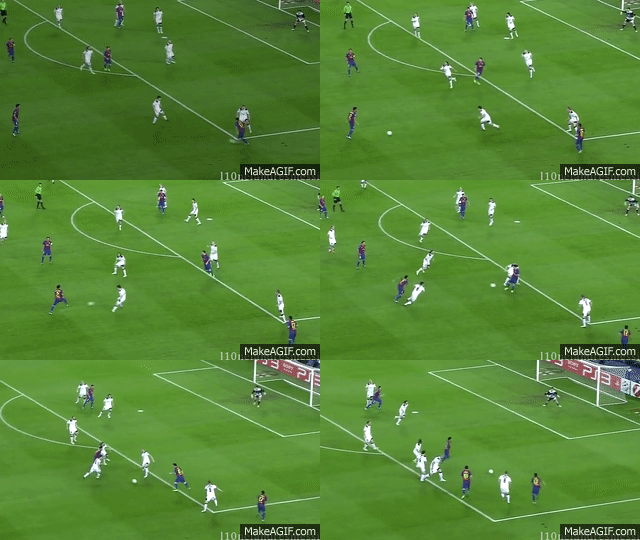
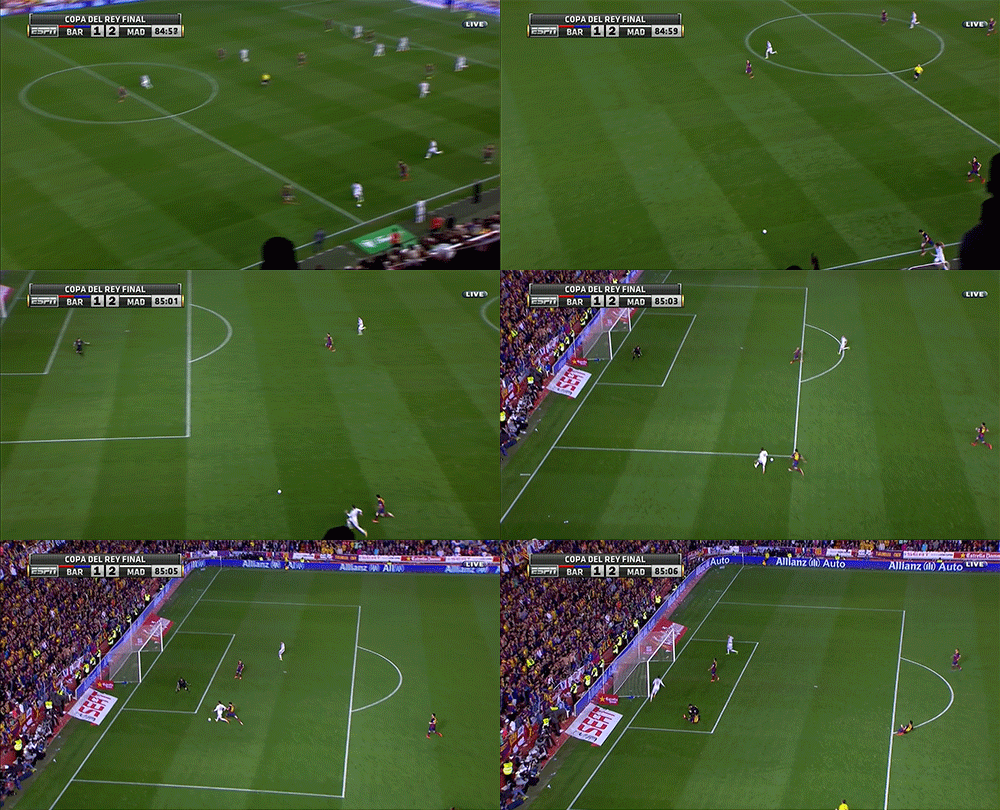
Affordance landscape
Affordance is the opportunity for action and the landscape is the environment the player is in (the pitch) including team mates, ball and opposition which will determine the space.
The environment needs to be dynamic and unpredictable, it is imperative the players experience the process of finding a solution and not given a predetermined answer. The environment should also be continuously adapting as the player interacts, i.e. the player not shooting first time and then having to adapt and look for a different opportunity for action. Affordances are appearing and disappearing because of how the athlete interacts with the current environment (controllable) and the changing environment – team mates, opposition (uncontrollable). Also, each athlete’s affordances are different and the practice should allow for independent differentiation. For example, a player who can dribble well will perceive different opportunity for action that someone who is a great passer of the ball. Choice and the opportunity for these actions need to be available for the players to explore and then the role of the coach is guide attention to a range of affordances to shape the player’s intentions.
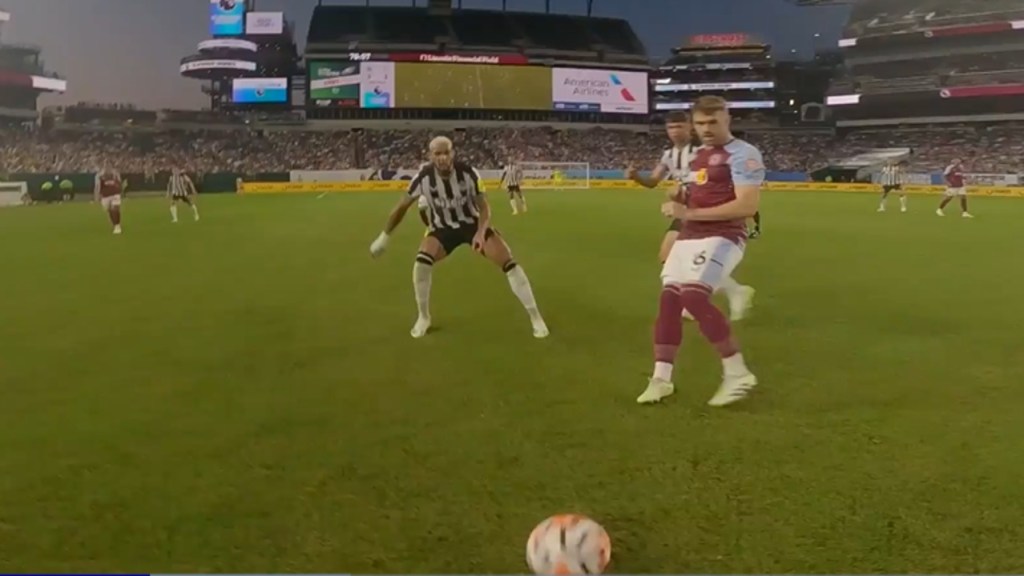
Practice design along with relevant constraints and challenges will provide an environment rich in opportunity for exploration. Remember we are trying to take a slice of the cake with all the layers, icing and toppings! There are ways we can scale back or increase the complexity and difficulty of the information through underload and overload design (adding or removing noise), i.e. 4v4 into a 4v2 for an in possession practice to give the players less noise, while keeping the relevant and influential elements of match day for near transfer.
Emotional context
We are trying to create similar (not exact) pressure and risk to evoke contextual emotion to match day. In competition, there is real failure and each decision has different value depending on the game state, the decision taken on match day will be better if the process of learning in training involves similar pressure and risk. We cannot replicate the pressures of a crowd or parents in training but through a variety of pressures the players will learn to be resilient and adaptable. This is what we are aiming for, players who can still be creative in a high pressured environment when the stakes are at their most important and the consequences of their actions mean far more.
Pressure, risk and jeopardy can be created and emerge in a plethora of ways and does not have to be exactly the same as the criterion task. We know players are inherently competitive and they feel failure if they misplace a pass regardless of the environmental pressures, our roles as coaches is to increase the noise (difficulty) in training so players are adaptable and resilient. Including extrinsic motivation like a trophy or a captaincy on the weekend is a great and fun way to increase desire to win in training but will also increase the value of each action and decision, keeping score is a strategy that is relevant and easy to implement especially within 1v1 or 2v2 scenarios and duels, setting quantitative targets to individuals for elements of intrinsic motivation.
Ultimately, we want risk and pressure present in practice design so players experience emotions relevant to competition in their learning process. We want resilient and adaptable players who can find success in every environment and context.


You can have your cake and eat it
Below are two practice designs that will look at how we can utilise the CLA in an 11 v 11 session and then in a smaller 5 v 5 + 2 game. Practice principles should be considered for both practices and should only be used as guides for coaches to adapt depending on where the players are in their learning process. The implementation of individual challenges and the adaptation of constraints is the art of coaching, understanding the needs of the players and what will stretch them appropriately is so valuable. The readiness to change, add or remove challenges is the skill of a good coach and being observant to how the players are interacting with their environment will provide the information required. Evaluating the practice design to ensure near transfer we need emotional context
Practice principles
Focus on being compact and setting traps out of possession
Organisation
- Blue team vs Yellow team
- Team out of possession- to defend their end zone player (Yellow defends yellow end zone player)
- Team in possession- to try and play into opposite end zone player (Blue passes into yellow end zone player)
- Game continues when end zone player receives the ball but plays into own team
- Restart points- goal kick, throw in (deep and high), centre spot and rolling ball from coach
- Use of score for competition, set a scenario e.g. 1-0 down with 10 minutes left in the World Cup final, winning team get a prize etc
- Individual strategies-
- ‘Captain of defence’ – player to take responsibility of organising the defensive structure (more than 1 player and can be in different units)
- Try to intercept rather than tackle- highlight and focus on approach and setting a trap
- Duels- pair players from opposite team and ask them to keep score of times possession is regained by a tackle or interception
Recommended constraints/challenges
- (IP) Try to play through the middle area and pass to opposite end zone = 3 points otherwise = 1 point
- (IP) Try not to play back into own end zone player / Can only use own end zone player once in same phase
- (OOP) Try to defend across 2 vertical lanes / Can only defend across 2 lanes
- (OOP) Try to regain possession in a certain lane or middle area (set a trap) and play to opposite end zone player= 3 points
- (OOP) Addition of horizontal thirds as well as vertical thirds for defending team to play higher
The whole cake with a twist
With an 11 v 11 game the representation to match day is close and the key elements are present but within this we can utilise the constraints led approach to highlight problems for the players to solve. In the practice below the focus is on how the out of possession team can remain compact while setting traps to regain possession, the constraints in place ‘OOP team to try and defend across 2 lanes’ will guide the group to being compact and shuffle across to deny space, this will encourage a good first press nearest the ball to prevent the switch, the in possession team are given the incentive of trying to play through the middle area for extra points. Both of these will guide attention for individual and group also neither are mandatory, this empowers the players to explore and retains the realism of choice on match day.
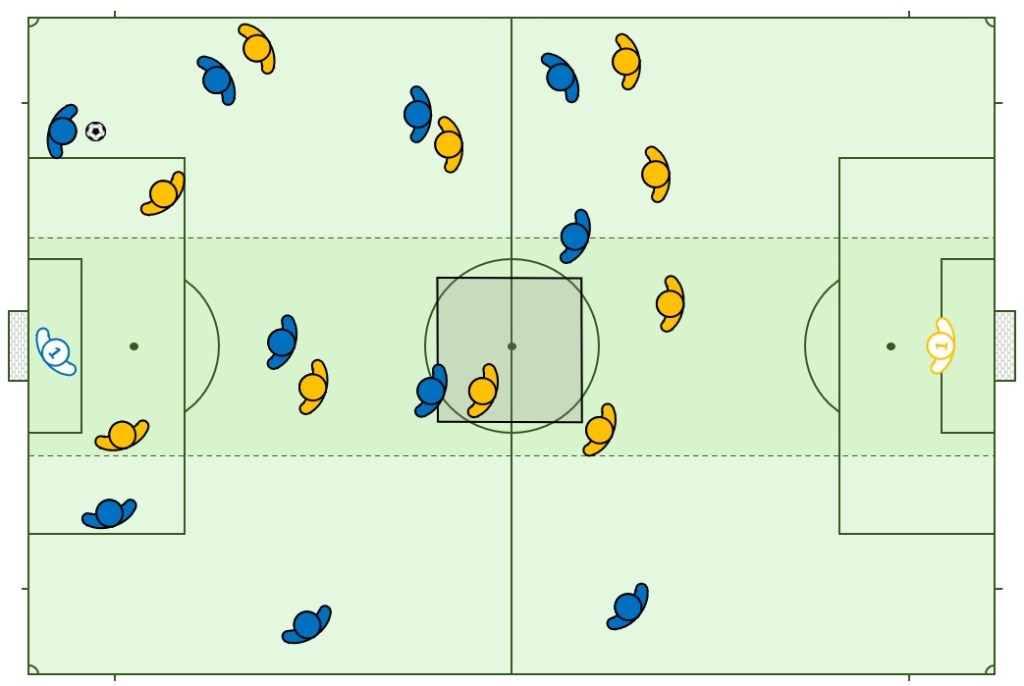
A slice of the cake
Smaller sided games will give the individuals more opportunities to find solutions but will obviously miss some elements of representation we would see on match day. No goal, no goal keeper, less players but the key elements are present for the learning process. The timing, force and direction to what they would face in competition are present therefore the affordances the players experience are close to match day.
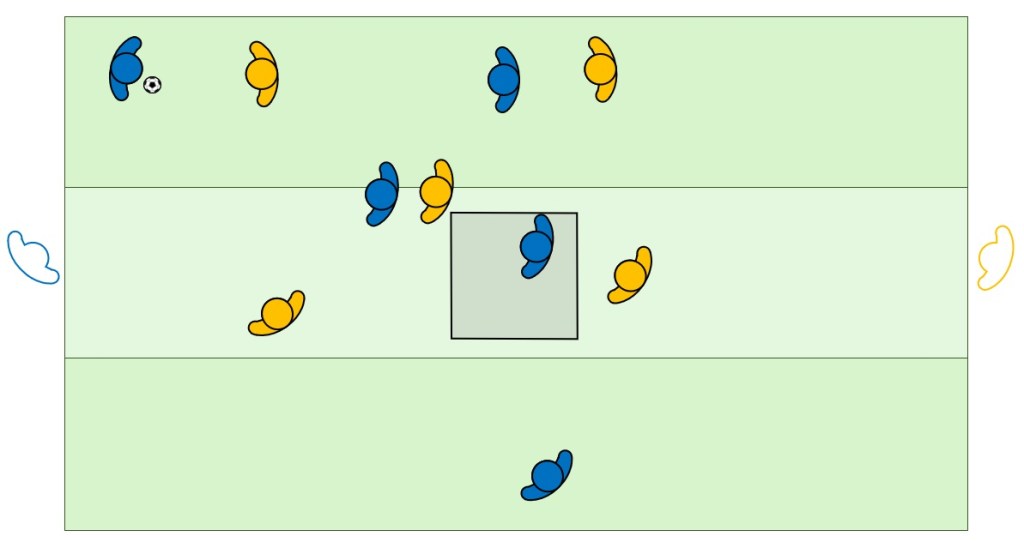
Below are some questions you can take with you and ask yourself about your own practice design. I use these as often as possible and will prompt my thinking towards a more representative practice during the planning phase as well as during and after the session has happened when observing or reflecting.
Questions to ask yourself about your practice and score out of 5 (1= low / 5= high)
- Does the practice/objective detail specific purpose? What is the purpose?
- Is the present information (B.O.T.S.) in play what it is like in the game?
- Does the practice require the player to make decisions?
- Does the practice require the player to adapt their intentions?
- Does the practice require the player to adapt their movement solution (skill/technique/action)?
- Does the practice provide an appropriate level of challenge to the players?
- Are the practice dynamics, the direction, the timing and the force like what is required in the game?
- Does the practice induce pressure or emotional reactions to the player?
Conclusion
Looking back to Part 1, transfer in the context of sports training, refers to the gain or loss in the capability to perform a specific task as a result of practicing a different task. There are two main types of transfer: near transfer and far transfer. Near transfer involves training tasks that closely resemble the actual competition, facilitating effective learning and performance. Far transfer, on the other hand, involves practicing tasks that have significantly less of the key elements from the competition, making it challenging for skills to transfer seamlessly.
The effectiveness of transfer depends on several key elements in practice design. Representative information is creating a training environment that closely mirrors the conditions of the actual game, including factors like space, teammates, opponents, and of course, the ball. The role of the coach is to highlight the player’s attention and intention through guidance and prompting thought then observing the player while they calibrate their cognitive and physical solution independently. Action fidelity emphasises replicating the movements and techniques used in competition during practice. Affordance landscape involves creating a dynamic and unpredictable environment that allows players to explore various actions and solutions. Emotional context aims to simulate the pressure and risk experienced in a real game, fostering resilience and adaptability in players.
Two practice design examples, one for an 11 v 11 session and another for a smaller 5 v 5 + 2 game, are presented. These designs incorporate the principles of Constraint-Led Approach (CLA) to create a training environment that promotes near transfer by including representative information, action fidelity, affordance landscape, and emotional context. The goal is to ensure that players experience similar timing, direction and force in training as they would in an actual match, fostering adaptability and success in various contexts.
Bibliography
Correira, V., Carvalho, J., Araujo, D., Pereira, E., and Davids, K., (2018). Principles of nonlinear pedagogy in sport practice. Physical education and sport pedagogy, 24 (2), 117-132.
Ep.468 – Representative Learning Design & The Ecological Approach to Transfer of Training, Rob Gray, The Perception Action Podcast
Special thanks to Dr. Mark O’Sullivan for advice and feedback prior to publishing
Part 1: Straight from the training ground
Improving the transfer of learning from training to match day through practice design
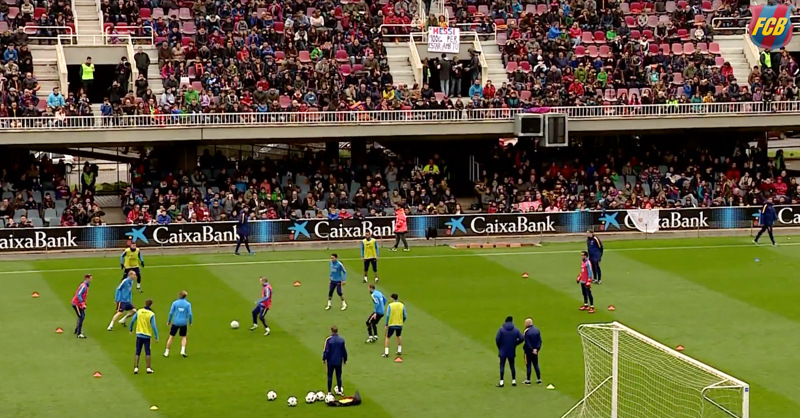
Transfer in sports training is a critical concept that examines the extent to which skills acquired in one context can be effectively applied to another. This process is vital in the world of sports, where athletes strive to enhance their capabilities and adapt their skills from training environments to actual competitive scenarios.
In football, the discussion on transfer is nuanced, involving near transfer and far transfer. Near transfer is when training tasks closely resemble the match, with the aim of ensuring a seamless transition of skills. Whereas far transfer involves tasks that deviate significantly from the competitive environment, requiring athletes to adapt their skills to unfamiliar and dynamic situations. We will explore these differences and how this knowledge can guide our practice design.
This learning of transfer extends beyond the physical actions, it also encompasses the cognitive and emotional aspects of the game. The way athletes process information, make decisions, and handle the emotional context of competition is crucial in determining the success of transfer from training. Additionally, understanding the key elements that influence practice design is essential for coaches striving to create effective training environments.
What is transfer?
the gain (or loss) in the capability to perform the criterion task as a result of practice in the transfer task
In other words, increasing (or decreasing) the capability to perform in a match/competition environment (criterion task) as a result of practice within a training/practice environment (transfer task).
Types of transfer in training
Near Transfer
training close to match day representation involves transfer and tasks that are similar (or often nearly identical) to competition
This usually occurs when the practice design in training is similar in representation to the game, making the learning process the most effective for performance. Already having knowledge of the skills in football makes learning a new skills easier. Coaches can aid this positive transfer by making sure the individual builds an understanding of the similarities between the two movement solutions (skills) and the environments they perform them in (training or match). An example of this is a football player using their knowledge of 1v1 skills against live opposition in practice and then transferring that understanding and movement solution (skill) on match day.
Far Transfer
training that is far away from match representation involves transfer and tasks that are dissimilar from competition
Far transfer is when the process of learning a skill does not expose the athlete to a variability of stimulus and, as a result, when they are in an unpredictable and dynamic environment (a match), the skill will require a different response (movement solution). For example, when a football player learns 1v1 skills against a mannequin and then tries to put that into a match situation where the defender will use a variety of strategies and force to destabilise and attack the player in possession. Has the player on the ball been given opportunity to learn to be able to adjust and adapt their skills to get success in training?
Highlighting affordances (opportunity for action) and questioning intention is key for players to develop their knowledge in the game along with dynamic and challenging ecological practice design.
Learning skills is a continuous process always in motion. The process of learning a new movement solution will be adapted from actions, experiences and ideas from the past, e.g. exploring a new passing skill will lean into information attained from their own experiences, what they have seen and what the task is. In addition to this, the development of the skills will also affect the solutions previously learned when used in the future.

Practices are not categorised into either near transfer or far transfer, all practice designs will be somewhere on the spectrum above. We can understand that where our practice design might be is based on how many of the key elements are present within our practice design. It is unrealistic that all of the elements of a match will be represented as it is very hard to replicate a game environment due to the many variables. These include the crowd or parent pressures that the players will face, as well as the unpredictability of the opposition to name just two. However, there are factors that we can control, and, as coaches, it is our duty to be aware of this.
What is everyone else saying?
Common elements theory (Thorndike, 1931)
The determinant of transfer was the extent to which two tasks contain identical elements: the more shared elements, the more similar the two tasks, and the more transfer there would be.
Thorndike, E.L. (1931) The fundamentals of learning. American Journal of Psychology
Instance theory (Logan, 2002)
Skills are highly specific to the events experienced during training. That is, unless an event has been experienced during training, a response to this event will not be skilled.
Logan, G.D. (2002) Automaticity and Reading: Perspectives from the Instance Theory of Automatization.
Appreciating the research and work done over the years will guide and help our understanding of transfer from practice to competition. Leading professors play key roles in how our organisations shape the coaching methodologies at the elite level in both performance and development sectors of football. Therefore acknowledging the importance of the work Logan and Thorndike have done is impossible to ignore.
Where do these sit?
Below are some session plans, figure out where you would put them on our ‘Far and near transfer spectrum’ shown below.
Practice 1 with progression – Passing Pattern
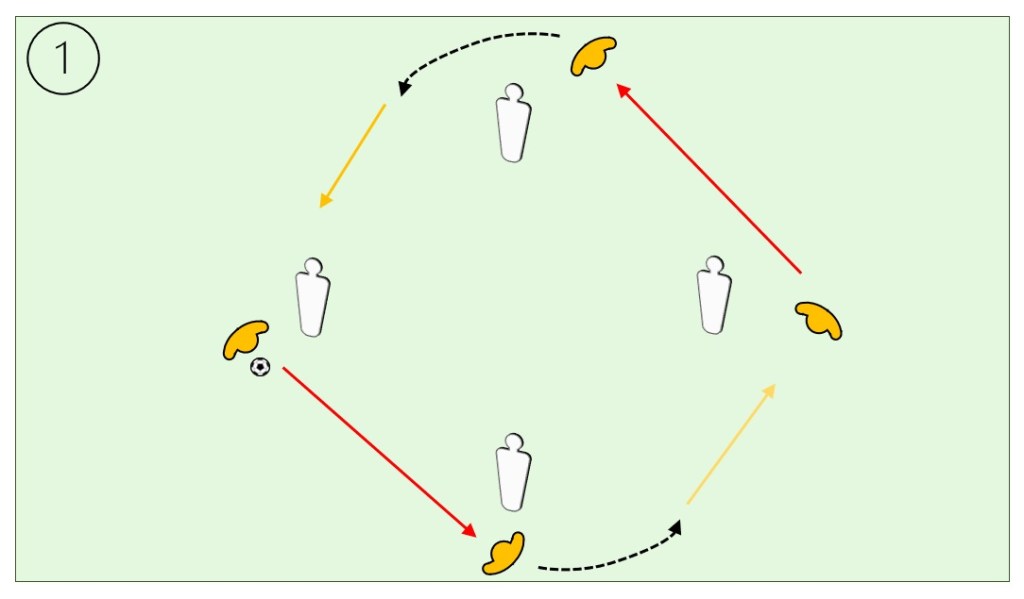
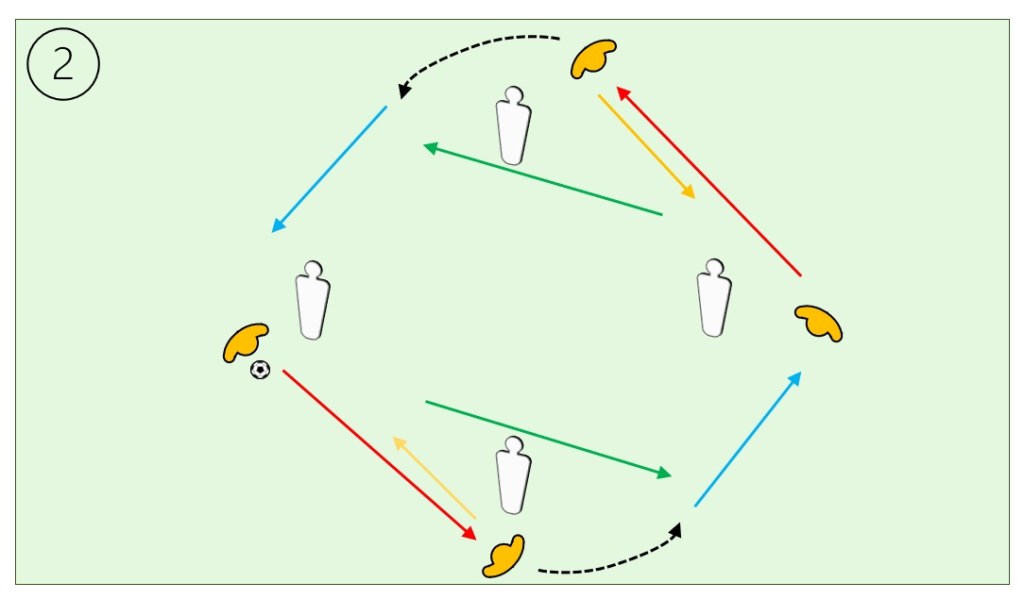
- Red line is the first pass / Yellow is the second / Green is the third / Blue is the fourth
- Players follow onto next mannequin
Practice 2- 1v1 to evade, entice or eliminate pressure
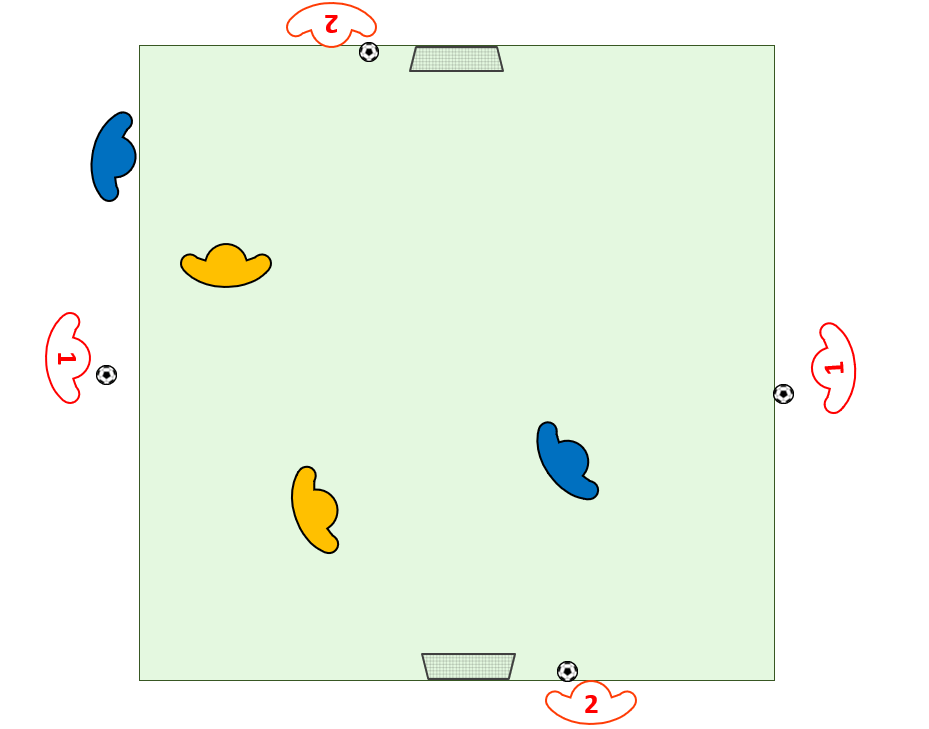
- White stays on outside / Blue vs Yellow in middle area
- Blue attack first and should try to receive from White
- If receive from White 1 they can score in either goal / If receive from White 2 they should score in opposite goal
- Blue stays attacking and Yellow stays defending / First to 5 goals for either defender or attacker then swap with pair from outside / Attacker should always receive the ball / Attacker should reset the 1v1 by exiting out the area each time
Practice 3- 5 v 5 + 4
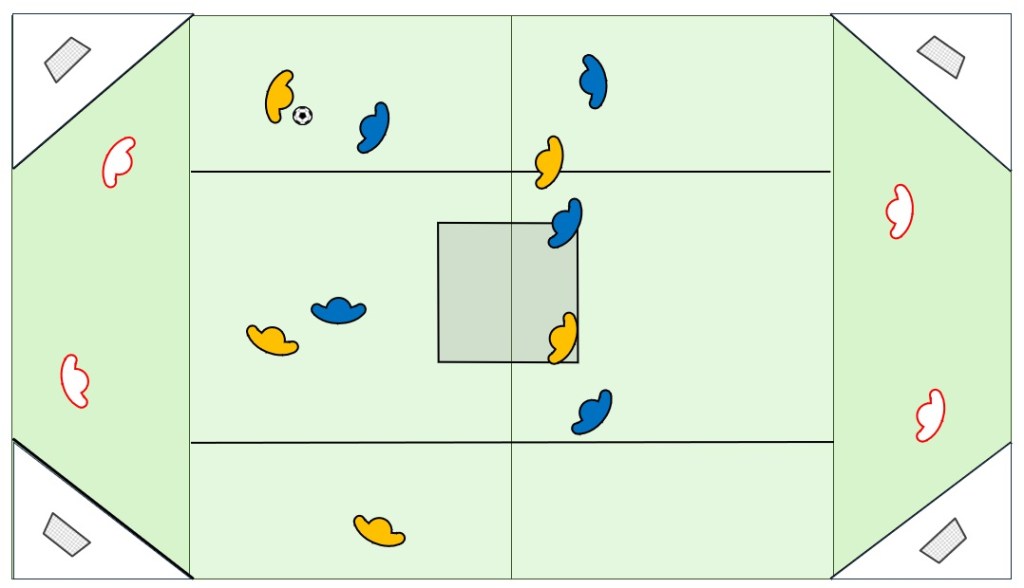
- Blue vs Yellow in middle area with end zones
- Blue team defends end zone behind them and attacks into end zone in front (same for Yellows)
- Red players to act as end zone players either strikers or centre backs depending on which team is in possession and the direction they are attacking
- To score the team in possession must play into end zone players to unlock the mini goals in their attacking end zone
- Progression
- Use of marked out thirds and/or middle square to guide attention for playing into different areas
- Red players must assist 1st time or they play out for the opposition
Using our knowledge of the elements and principles for practice design to give the players near or far transfer, where would you put the practices above? Where would you put some of your own practices?
The players need to be a part of sessions that require adaptability and this can only happen within an unpredictable and dynamic practice that is near to competition. Players should not be given an answer so should be encouraged to explore and find their own solutions. Utilising trial and error, guided discovery and opportunity to reflect coaching strategies are key for players to build their knowledge in the game. There is not just one way to find success in a football match and no situation is ever the same. With this in mind it can help guide our practice design and the affordances our players will interact with by doing our best to try and replicate match day as much as we can.
Good decision-making in football relies on strong cognitive functions, particularly executive functions like response inhibition, cognitive flexibility, working memory, and attentional control. For instance, when a footballer intends to shoot at goal during a scoring opportunity but faces an unexpected change in the environment (a defender blocking or the goalkeeper moving), their ability when starting the action of the initial shot and adapting to the situation is crucial. Recognising the importance of these cognitive skills, sports organizations globally are heavily investing in cognitive testing and development as a key aspect of talent identification and development in football.
The premise is that footballers who are adaptive tend to excel on the field, and this can be developed over time. We are trying to design practices that offer the players opportunity to improve their cognitive performance but this can only be achieved through near transfer practice. Our role as the coach is to empower and highlight the athlete’s attention and intention so they can self-organise and try again.
Part 2: Straight from the training ground
What needs to be in practice design for transfer of learning
In the second part of ‘Straight from the training ground’ we will explore what is needed in practice design for near transfer to occur and how we can ensure our training has all the key elements of competition. We will also go in-depth around the 4 components for transferrable practices as well as a list of questions to ask yourself about your own practice to reflect and help guide your coaching on the grass.
Click here for Part 2: Straight from the training ground
Conclusion
Transfer in sports training is the ability to apply skills learned in one context to another, crucial in sports where athletes aim to adapt training skills to competitive scenarios. In football, near transfer involves closely resembling match conditions, while far transfer requires adapting skills to unfamiliar situations. Transfer extends to cognitive and emotional aspects of the game and this should influence practice design.
Near transfer, close to match representation, involves similar training to the game, enhancing effective skill transfer and cognitive development. Far transfer, distant from match representation, lacks variability, asking athletes to adapt skills in predictable situations. Practices fall on a spectrum between near and far transfer, influenced by key elements. Coaches should aim for adaptability in sessions, utilising trial and error, guided discovery, and reflection for players to develop game knowledge. Football decision-making relies on cognitive functions and near transfer practice design is imperative to improve a player’s performance. Ensuring our practices have as many of the key elements represented as possible.
The goal is to design practices for near transfer, empowering players to improve cognitive performance through self-organisation. Coaches play a vital role in guiding attention and intention for the player and giving time for the athlete to calibrate and adapt these, replicating match conditions as closely as possible to enhance player adaptability and success.
Bibliography
Logan, G.D. (2002) Automaticity and Reading: Perspectives from the Instance Theory of Automatization.
Thorndike, E.L. (1931) The fundamentals of learning. American Journal of Psychology
Fransen, J. (2022). There is no evidence for a far transfer of cognitive training to sport performance.
Learning cannot be efficient
Why the demand for timed practices removes equity to learn in football
In the world of football coaching, there is a growing concern that the pursuit of highly organised sessions with timed and blocked practices may inadvertently hinder the learning process and limit the development of players. The belief that fast-paced, blocked practices are the key to success can undermine the equity needed to nurture a player’s skills effectively. In this article, we will explore why the demand for timed practices can remove equity from the learning process and how a more ecological approach can foster true development in football through understanding modern research and how society has shaped our expectations.
Equity vs. Equality
To achieve true player development, we must distinguish between equity and equality. While equality means providing everyone with the same resources or opportunities, equity recognises that each player has different circumstances and requires unique resources to reach a similar outcome. In football, this means tailoring coaching methods to suit individual needs, rather than applying a one-size-fits-all approach.
Taking time is better than time taking
Blocked and timed practices removes the equitable development of players. Each player is unique and progresses at their own pace. Some players may grasp a concept quickly and require additional challenges, while others may need more time to explore and understand. Timed practices fail to account for these differences in player development. Too often coaches have a highly organised session plan with clear timings for each section and they will follow this no matter where the players are in their learning. The skill of the coach is to know their players to a level where they can see and identify where they are in their understanding, noticing knowledge about vs knowledge in (of).
Below is one of our article where @jacobeliotpickles explores this topic:

When a practice or section has a predetermined start and end, coaches often feel compelled to cram as much information as possible. The success of a session is often judged by the amount of instruction provided. However, this approach does not allow players the opportunity to explore and learn independently. We cannot control when players will grasp a concept, and forcing information upon them can be counterproductive. Creating an exhilarating and complex environment for players to interact with will be enough for each player to develop their understanding and improve their skills, the role of the coach is to guide, facilitate and shine a light on positive examples.
Revisiting practices not only aids in consolidating and securing knowledge but also fosters a collaborative and empowering learning environment within the team. When players return to a familiar drill or scenario, it allows those who have a strong grasp of the concepts to step into the role of mentors. This peer-to-peer teaching and sharing of solutions is incredibly powerful for several reasons such as – enhance understanding, build leadership skills, and empowerment plus many more.
Revisiting practices and encouraging players to teach and share their solutions with their peers can significantly enhance the learning process. It not only strengthens players’ understanding of the game but also cultivates leadership, teamwork, and empowerment. The practice design can also increase in complexity with new constraints and challenges for unit, team and individual.
Where can the stopwatch shine?
Incorporating time constraints into coaching is an invaluable strategy that mirrors the dynamics of a football match. These time-bound scenarios compel players to make decisions that adapt to the evolving context of the game. They force teams to adjust their objectives and intentions in response to the time remaining in the match. This coaching strategy should be a key element to improve performance, and the advantages of integrating it into our training sessions are obvious.
Training sessions that simulate game scenarios under time constraints create a high-pressure environment for both teams and individual players to sharpen their problem-solving skills. For instance, consider a scenario where Team A is leading 1-0 with only 10 minutes left in the ‘World Cup’ final. Do they opt to sit back and defend deep to protect their lead? How will Team B strategise to score and level the game? How can Team A maintain effective possession and control the tempo while managing the clock? These challenges and questions naturally emerge in this environment due to the time constraint and score line, providing an opportunity for players and teams to think independently to find success.
Focusing on intentions, not outcomes
In football, maintaining high standards is crucial, but the focus should shift from outcomes to intentions. Coaches should prioritise understanding the intentions of the team and individual players rather than obsessing over perceived “good” outcomes. This approach will foster real problem solving while empowering each player to explore a range of ideas and solutions, we know there is not one way to play football so let the players explore that.
Society’s influence: Taylorism
Society often influences our expectations of what is considered “good” and football is no different. Efficiency, speed, and standardisation are highly valued, leading coaches to demand fast-paced, repetitive practices with set repetitions and strict time limits. This approach aligns with Taylorism, which emphasises efficiency and productivity but does not necessarily promote effective learning. Taylorism, also known as scientific management, was developed in the early 20th century and focused on breaking down tasks into their simplest components, standardising them, and rigorously measuring efficiency. How often do we see this in academy football?
Players are not products on the assembly line. Each player is a unique individual with distinct skills, strengths, weaknesses, and potential. The one-size-fits-all coaching ignores these differences which can lead to players feeling overlooked, stifled, and demotivated. It is essential to acknowledge that youth footballers come from various backgrounds, and their experiences, capabilities, and motivations differ widely.
Coaches are not factory workers. They are not simply responsible for ensuring that players fit a particular mold. Instead, coaches are mentors, motivators, and educators. Their role is to guide young athletes toward self-improvement, to foster a love for the game, and to help them develop both as players and as individuals.
But ecological coaching takes too long…
There are arguments that the constraints-led approach is a long-term learning pedagogy. However, studies have shown there is better development in learning and performance using ecological approaches compared to traditional prescriptive training methods over a short period of time.
The study by Deuker et al compared repetitive, decomposed training (linear coaching) when learning the “fundamentals” of dribbling and passing in football against an ecological approach using small sided games with relevant constraints (non-linear coaching) over a 5 week training period in 30 minute practices by UEFA B qualified coaches. After the 5 week training period results showed that the ecological training group improved more effectively even though the study used a decontextualised and isolated linear practice for testing.
“Train as you play”: Improving effectiveness of training in youth soccer players. (Deuker et al, 2023)
The major finding of this study indicates that even a “technical skill” can be improved more effectively by nonlinear training than by isolated technical drills.
Deuker et al, 2023
Without focusing on the benefits of learning a ‘technical skill’ in a ‘repetition without repetition’ ecological practice when many coaches will be adamant this is most effective in a ‘repetition after repetition’ isolated practice, the study was over a 5 week time period which would be considered short-term when learning and developing skills in football. In addition, the study using 30 minute periods to develop ‘technical skills’ is realistic to the contact time coaches will have to their players within their environments.
Conclusion
Achieving true player improvement involves distinguishing between equality and equity, recognising that each player is unique and may progress at their own pace. The allure of high-tempo training sessions is undeniable, but the emphasis on speed and standardisation can undermine the complexity of learning in football. Blocked and timed practices, often governed by the clock and overlook the individualised needs of players, hindering their development.
Revisiting practices and peer-to-peer teaching can provide an environment that encourages player empowerment and leadership. However, there are instances where incorporating time constraints is valuable. These constraints simulate real game dynamics, compelling players to adapt to evolving contexts, fostering problem-solving skills.
In football coaching, it’s essential to shift focus from outcomes to intentions. Coaches should prioritise understanding the intentions of players and the team rather than obsessing over predefined outcomes from their own expectations. Emphasising efficiency, speed, and standardisation in coaching may align with traditional management principles like Taylorism, but it doesn’t necessarily promote effective learning. Players are not products on an assembly line; each player is unique, with distinct skills, backgrounds, and motivations.
The study by Deuker et al dispels the notion that ecological approaches are only for long term development even when developing ‘technical skills’. It’s important to note that this research suggests a shift in focus towards the ecological approach can yield better results within a short period, challenging the conventional wisdom of repetitive isolated training.
In the world of football coaching, it is crucial to understand the need for equitable player development and how our practice and session design can either promote or diminish an individual’s learning. Be patient, be observant and allow for difference.
Bibliography
Deuker, Albert & Braunstein, Bjoern & Chow, Jia & Fichtl, Maximilian & Kim, Hyoek & Koerner, Swen & Rein, Robert. (2023). “Train as you play”: Improving effectiveness of training in youth soccer players. International Journal of Sports Science & Coaching. 174795412311727. 10.1177/17479541231172702.
Knowledge of or knowledge in?

Knowledge of
Our team has a game this weekend. The players need to know how to press the opposition. We have three sessions to make sure they know how to press correctly. It’s easy right? There’s plenty of set pressing structures out there; Man City with their out of possession 4-4-2, Newcastle with their extremely high front line, Bielsa with his man to man press. But which one is right for us and our team? Maybe we’ll press with a front three, maybe a front two, maybe we’ll have one of our attackers sit on the opposition’s no.6.
Whichever one we choose, of course it’s for us to determine as the coach. And we’ll press in this structure no matter who we play against. ‘This is how I want my team to press…’ we’ll say. We win the ball back a record number of times. The stats back it up, we’re an out of possession genius! But what does this really mean? Does this demonstrate the player’s knowledge in the game or does this demonstrate our knowledge of the game?
What if by prescribing a specific pressing structure, even if seemingly successful, is actually restricting our player’s adaptability and their capability to see problems for themselves? Is this what we want to develop in our players? Do we treat them as robots, where we input the solution for them to execute? Are they the computers and we input the code? As youth developers, have we got the notion of out of possession development wrong?
What if no set pressing structure is the right answer? Would we not rather the players could dynamically organise, whilst in the game, to set traps and win the ball back for their team? Are we trying to give the players the necessary tools to succeed in top flight football, or are we simply showcasing what we know as coaches? Does this benefit us, or does this benefit them?
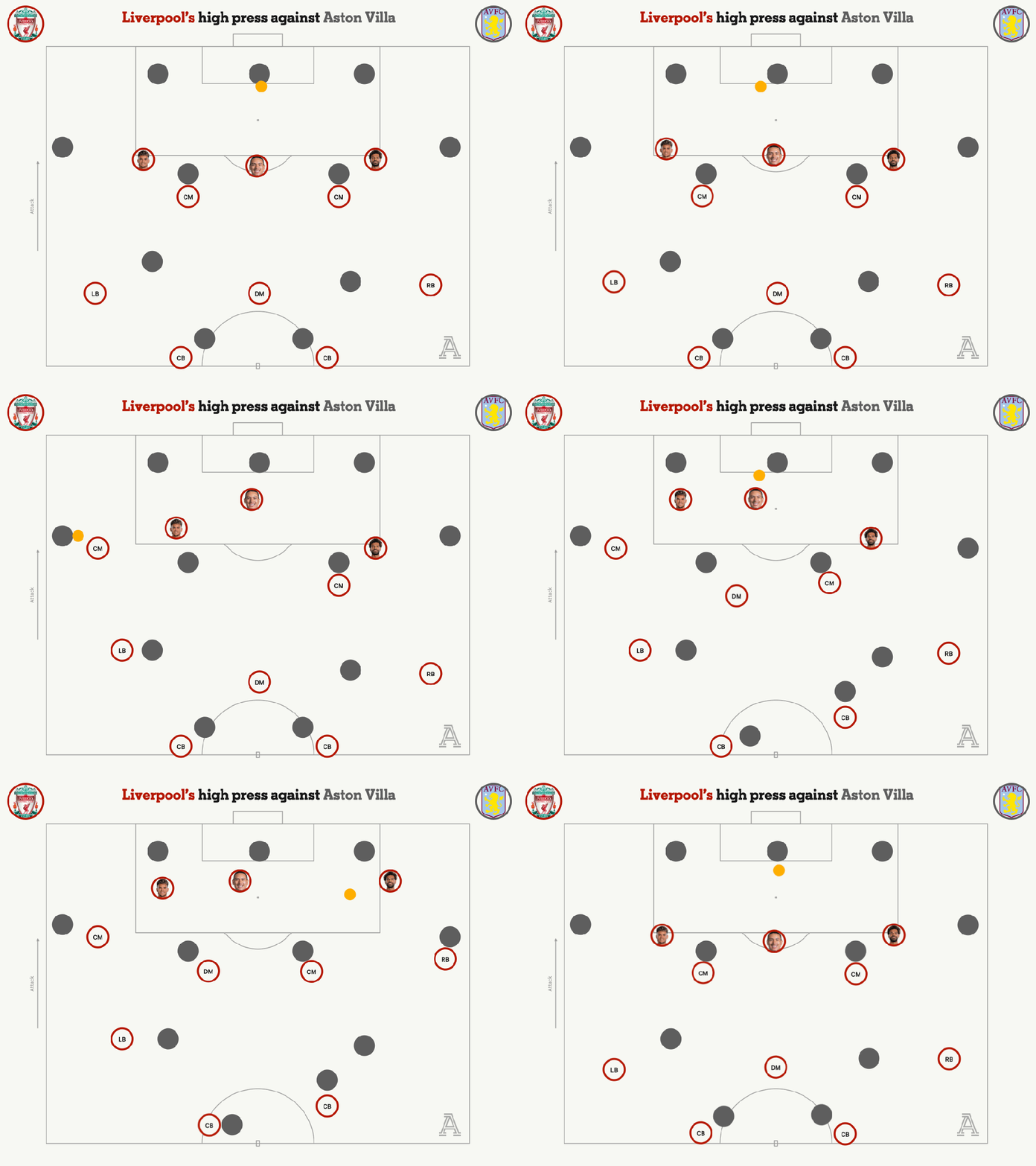
Success
In youth development this understanding of tactical solutions is great for us as coaches to have knowledge of. But we must be careful not to enforce this knowledge on the players as the right or only way to do something. There are infinite ways to defend and attack and our job is to make sure our players can recognise these in game situations and capitalise on them.
The pressure of parents, perhaps higher ups and peers in our coaching structure, all watching our team’s play on the weekend, is hard to ignore. We need them to know that we understand the game. We can’t have the players working through what they don’t yet understand. That would be too messy, and make us look like we don’t know what we’re doing!
We all want to feel valued and be looked at as successful. But what is success in youth development? I’m not sure it’s proving to everyone that we have knowledge of the game. And it’s certainly not players winning the ball back because the coach has told them where to stand and when to run.
Maybe real success is supporting the players in noticing how the opposition are trying to play and deceiving them to win back the ball. If we ask the right questions, and highlight the problems they don’t yet see, giving them space to come to a solution – this will not only make them more dynamic and adaptable, but will also develop their problem solving skills for years to come.
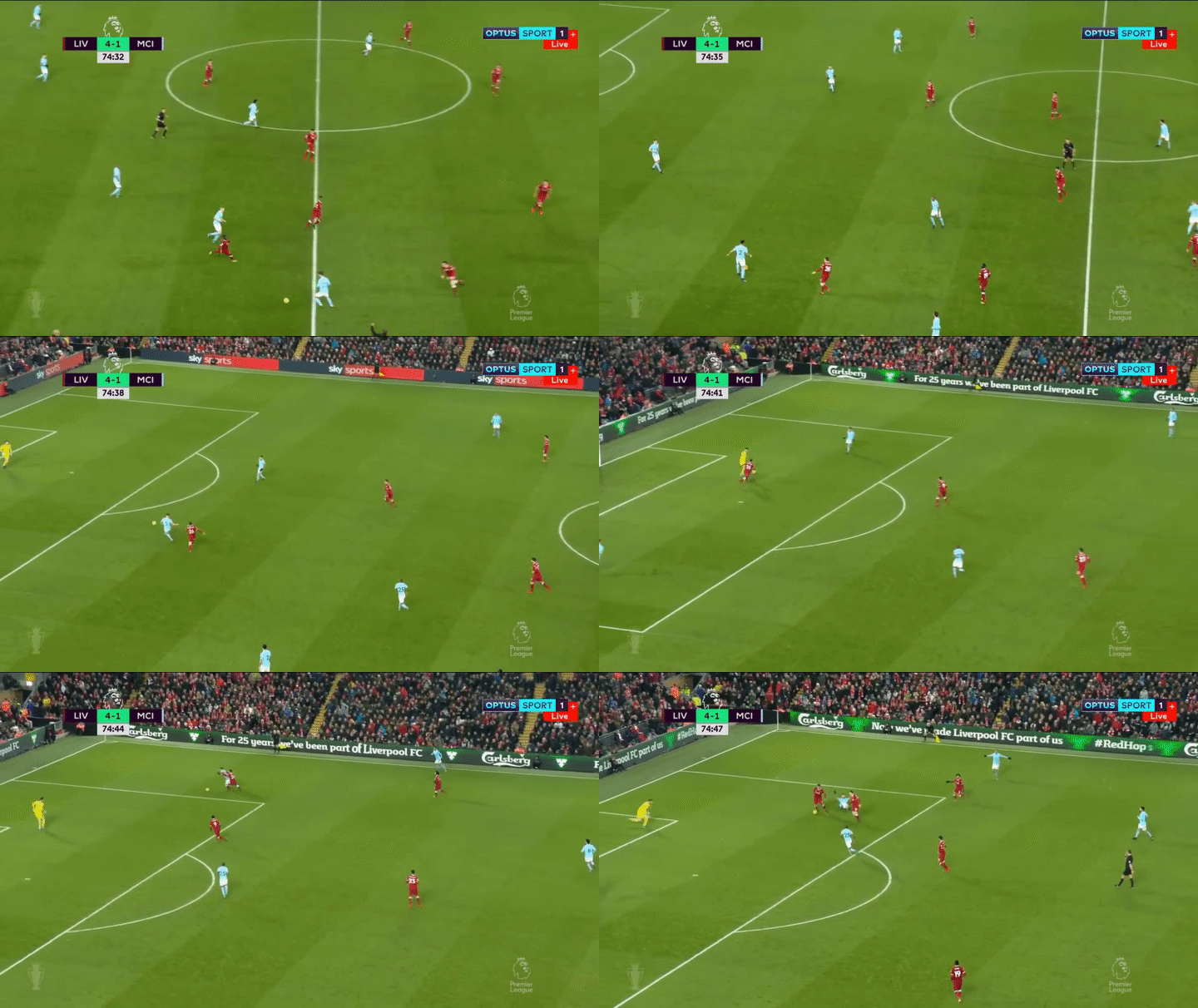
Right & Wrong
When developing young players, even as soon as u9s, there is pressure on the coaches to have their team look a certain way. We take control and tell them where to stand and what to do. We take the learning process away from them. So what’s the answer to this? Quite simply, we have to be strong enough to allow players the space to go through something we think is the wrong answer.
Confusion is actually a healthy part of learning. When a player is confused, this just means they are unsure of why a certain aspect of their game is failing. This is normal and often leads to motivation to highlight the problem and then to find an answer. If we give the players an answer first, they never feel this confusion, and therefore never find the motivation to learn.
So do we sit back and do nothing? No, but we have to be careful when supporting the players in the learning process. Highlighting problems to solve as opposed to solving the problem. Allow the players the space to fail, and then highlight what the problem was in the next individual or group conversation.
There is no rush in youth development. Allow them the chance to fix the problem themselves before we jump in and take the joy of learning away from them. They may even notice the problem and fix it through working together. They will then be more aware of this particular problem in the future. Maybe you’ll concede some goals, and maybe you’ll end up 6-0 down. That’s fine. We have to be comfortable being uncomfortable in the short term, for the players to flourish in the long term.
So with this new approach in mind, how can we support this long term development on the training pitch?
Knowledge in
How do we go about developing player’s knowledge in the game? How do we get them to a place where they can look at how an opposition team is playing, and decide where to set traps and win the ball back for potential goal scoring opportunities? How does this look on game day and how can we replicate this in training?
Firstly, we must step away from traditional instructional ‘there’s a right and wrong way to do it’ coaching approach. And move towards shared principles. Otherwise known as ‘shared affordances’. Maybe a shared affordance for the team is that we want to win the ball in front of the goal to set up goal scoring opportunities. Using this shared principle, there are now a myriad of ways to achieve this. And this will come down to how the opposition are set up, how they want to play and us noticing these problems in the game.
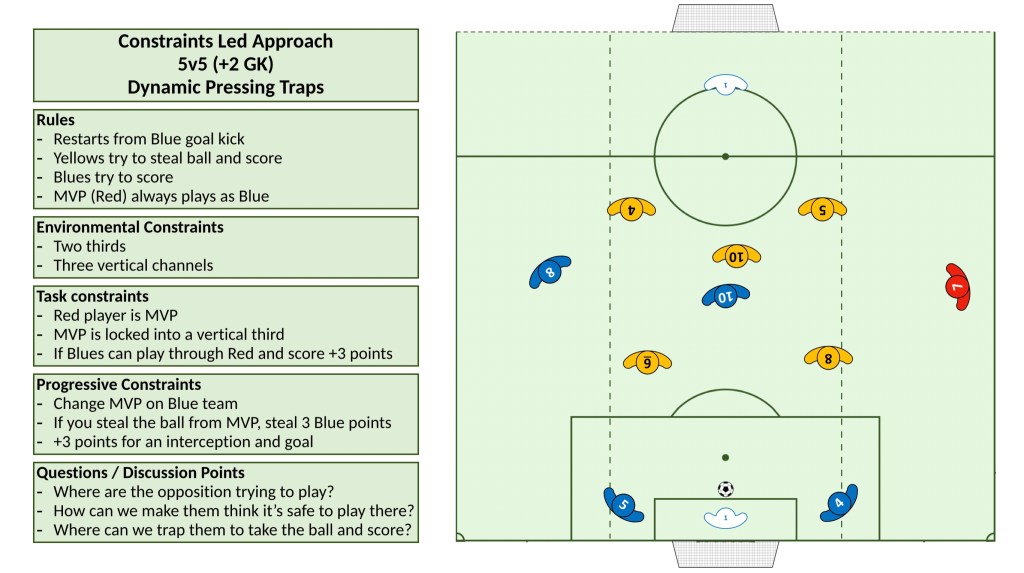
It’s important to figure out what you are trying to develop in your players. Ultimately, we are trying to improve their problem solving skills. We want to develop their ability to look at each unique situation and work together to find success. To do this, we must set them challenges and problems to overcome.
The above practice is aimed at doing just that. Blues are trying to play out from the goalkeeper with the aim to score. Red is not your usual magic player, they will only play for Blues. Blues choose a player to put on a red bib. The Red will play on Blue’s team, and if the Blues can play through the Red player and score, they will gain 3 points instead of 1. Red is your ‘MVP’.
What does this do for the out of possession team? Well, it gives them a problem to solve. The Blues are attempting to play through their MVP, however, can still choose not to use them if they deem them the wrong option. The set up is highlighting a potential game situation. The Yellows are now armed with the knowledge of where Blues would like to play, now it’s up to them to trap the Blue team, steal the ball and score.
It’s important to recognise, this practice is not designed to stop the opposition playing where they want, more to make them think they can play where they want and then have the ball stolen away from them in the process. The progressive task constraint of ‘+3 points for an interception and goal’ gives the players an extra challenge of intercepting the ball. Really making them think proactively about where the ball is likely to go.
Changing the MVP and the lane that they are locked into, brings a fresh yet familiar challenge. Allow the players discussion breaks, maybe disguised as half times. I like to do this when the score line is getting away from the team I’m working with, so they have a chance to re-diagnose the problem and overcome it together. This practice is not limited to outfielders, try making your goalkeeper MVP and see what the players come up with to trap them!
Lastly, if these challenges are being met, I would look to change some variables of the practice. The starting point: rather than a goal kick, starting with a pass back from midfield to a deeper player. Maybe from a throw. You can play with different versions of this to allow the same problem with a fresh outlook. Depending on numbers, playing with opposition formations will also bring a new challenge to the practice. Are they playing against a back four? A back two? A back 3? Changing the variables is something I would do when revisiting the session later in the week.
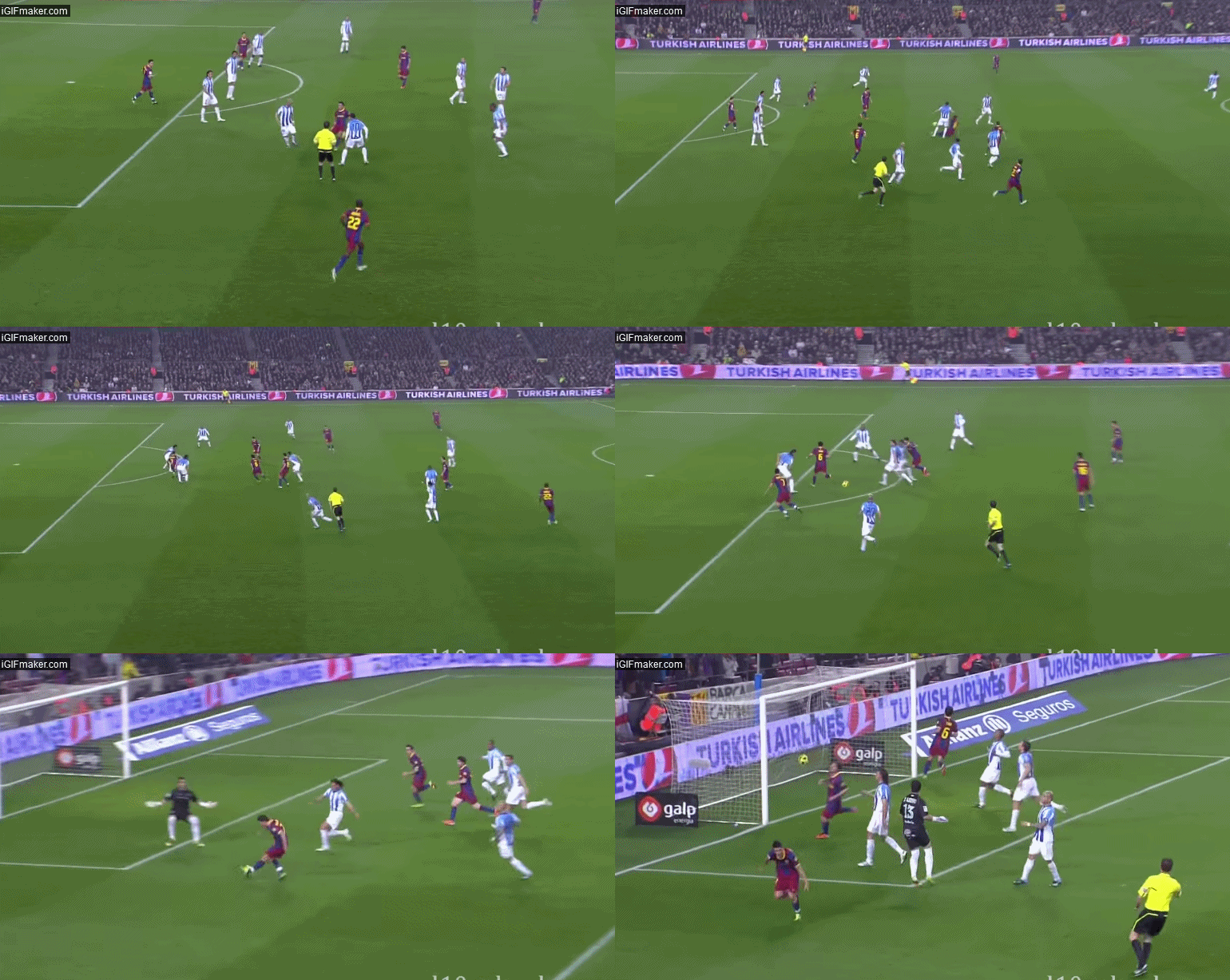
Inside or Outside?
Often a common coaching point discussed under the topic of pressing is, do you want your team to show the opposition inside or outside? My answer to this is, it depends on too many variables to have your team press in one specific way. I’ve heard too many times, that when it comes to coaching defending, it’s more ‘yes or no’ than attacking. I don’t agree with this statement.
There are infinite ways to defend specific situations and the context of each specific situation will demand using different tactics. This is why, if we want to develop the very best tactical minds in football, it’s important to set up a variety of problems for your players to solve. Every team you play against will play a different way and use different players more than others in build up.
Their individuals will also have different skill sets. What if one team has great 1v1 wide players and next team have a press resistant CDM. All of these variables will play a part in how your players approach the game. If you press one way, are you really helping your players assess the game? Are you helping them develop their knowledge in the game? Or are you showcasing your knowledge of the game?
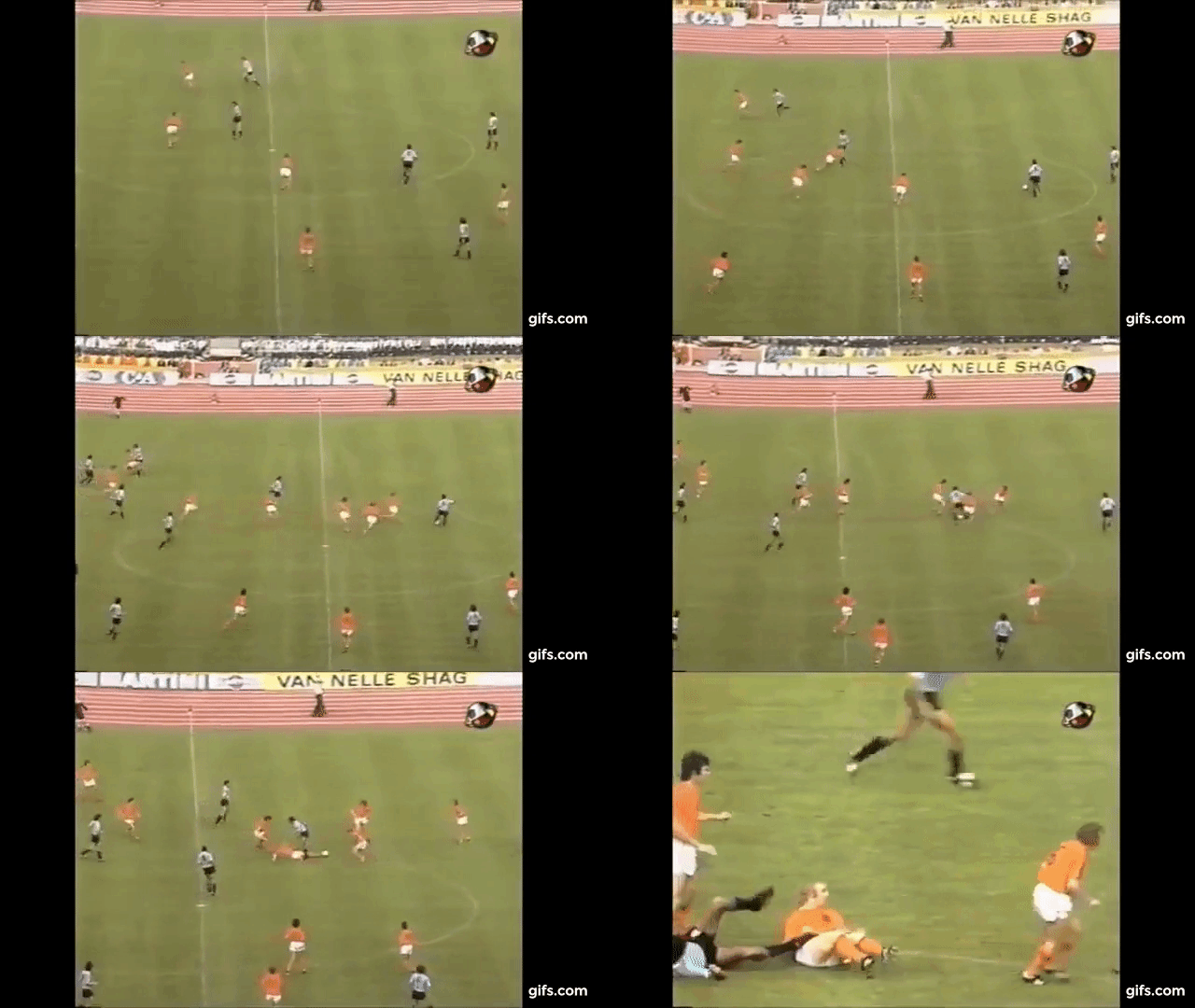
Game day
When it comes to game day, the pressure on coaches from parents and peers is more immediate. There’s a lot of pressure on the players too. They are expected to show what they’ve learnt in training that week. But what happens if we’ve prescribed them a set pressing structure and the opposition have found a way to continually bypass it? The players feel like they’ve done something wrong, but they’ve followed what we’ve asked of them to the letter!
It doesn’t look good for us either, the players on the pitch are, after all, a reflection of us and the training they receive. It’s very easy to then slip into a more controlling mode, telling the players exactly what to do so they look good in the short term, in turn making us look like good coaches. This, in my opinion, is papering over the cracks. So how do we help the players on game day?
Firstly, let’s start with what a player led press looks like. Here’s some questions to help your players assess the problems on the pitch and support them in finding some solutions.
‘Where’s the danger?’
‘Where are they trying to play?’
‘Who are they trying to play through/into/onto?’
‘Where are their gaps and spaces? How do we close them?’
‘What’s worse for us right now, they play through the middle, around the side or over the top?’
Maybe you’ve noticed something about one of the opposition players, for example the CB having a skilful long range passing ability. Feel free to highlight this as a problem and ask the players to solve it. As they move to put pressure on the CB, they may leave a player behind them free, now highlight that to the players. ‘How do we stop the CB having time to play those long passes and protect the area behind our first line of pressure?’
Now what’s important to remember here is that there is not one answer to these problems. We have to work through it with the players. We are there, not to solve their problems for them, but to highlight problems and then have them work through them together, as a team. Imagine you took this approach in training and games for three months. Imagine all of the experience they would have, playing against different teams, with different variables in their playing out structures and all of the unique individuals they’d have to assess.
The plan is to get to a point where you have as little intervention as possible. The players will start asking the question, ‘where’s the danger?’ And they will begin to notice how opposition teams want to play. They’ll highlight the problems to their teammates and have experience of how to deal with a variety of build ups. You will have supported the development of their knowledge in the game.

Tactical
Here’s what Steve McClaren had to say after moving to FC Twente and speaking to young players from their academy in the Netherlands in 2012:
‘‘…They teach young players at eight or nine years old how to solve problems on the field for themselves.’’
“I remember one young lad I had who was a 21-year-old. We wanted to teach him a bit of tactics and a bit of formation work ahead of a game. He spent 20 minutes talking through what he would do against this team. It was in such an intelligent way and exactly what we’d been talking about.”
“I told him that his presentation was unbelievable and that no English player I know could’ve done that. I asked him where he’d picked that up from. He explained that he’d been doing this kind of tactical work and intelligence work since he was about 11 years old. That’s the difference between the two cultures.”
We still have an opportunity to lead the world in our approach to developing tactically advanced footballers, and players learning this side of the game will only help improve the overall level of the players we’re working with in the long run.
Are we so committed to a top down, linear approach to learning that we forget the real meaning behind what we do as youth developers? Are we there to give the players the answer, so they look good on a Sunday morning or are we there to give our players the ability to adapt to ever changing problems – with or without us on the sideline.
The next time you design a practice for your players, ask yourself the question – Is this showing my knowledge of the game or their knowledge in the game?
The Immovable Object
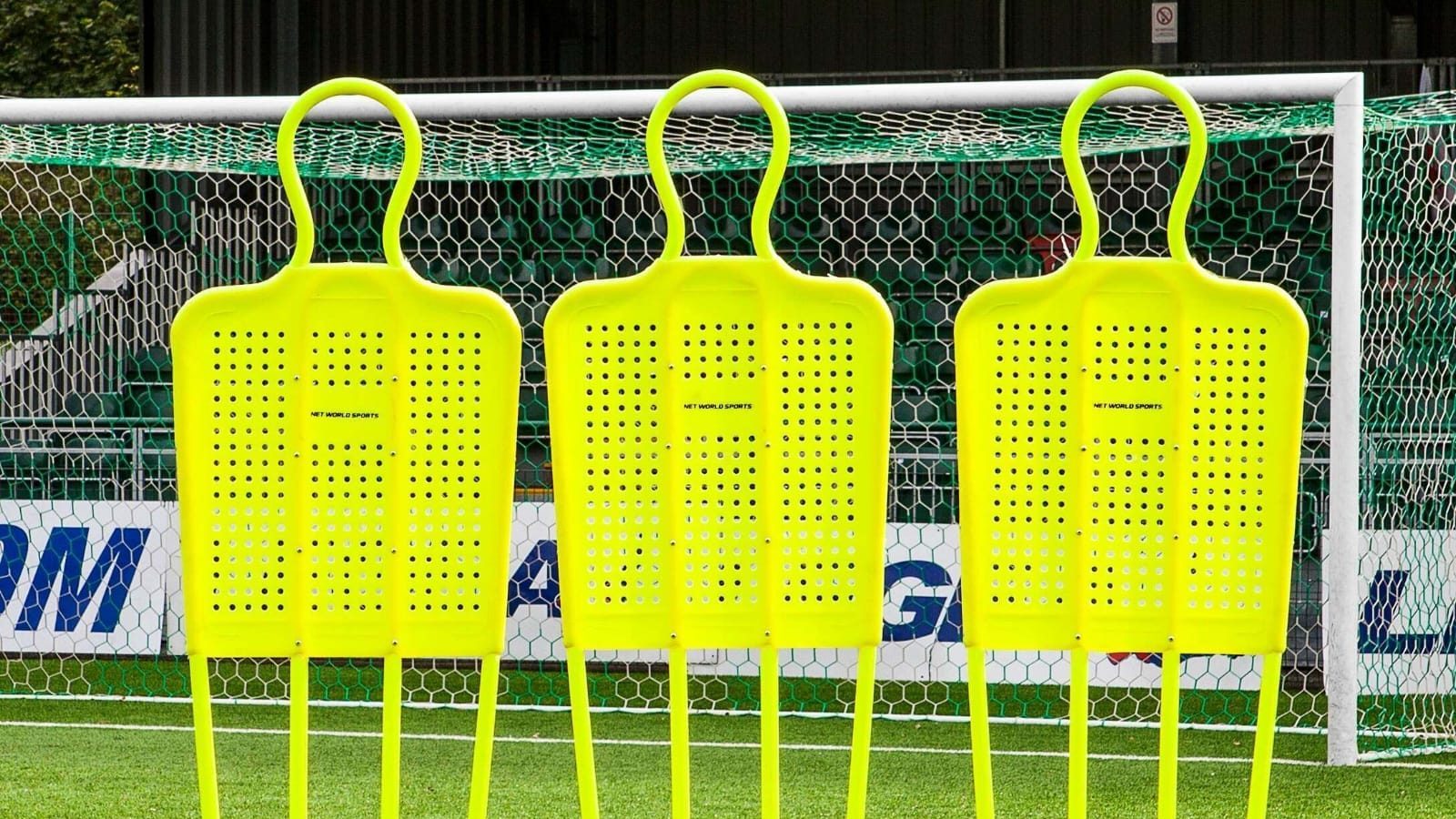
This was originally posted in September 2023, since then my learning has developed and my views have changed. Below is an edited version to align with where I am today on the 6th August 2025.
When we delve into the world of football, we find its beauty intertwined with the breath-taking synergy of teammates, orchestrating moments of brilliance to unlock even the most resolute defences. Picture a pair of midfielders passing through opposition, their connection seemingly telepathic. This fluid connection between players paints a vivid canvas where the team in possession flows and weaves their way toward the goal.
We aim to unravel how we can create an exhilarating environment, filled with opportunity and freedom, where players can be creative and discover the boundless ways to connect with their teammates during possession. Furthermore, we’ll journey into the realm of defining group patterns like the ‘one-two’ or ‘third man run’ as emergent structures, all while embracing ecological dynamics in our practice design.
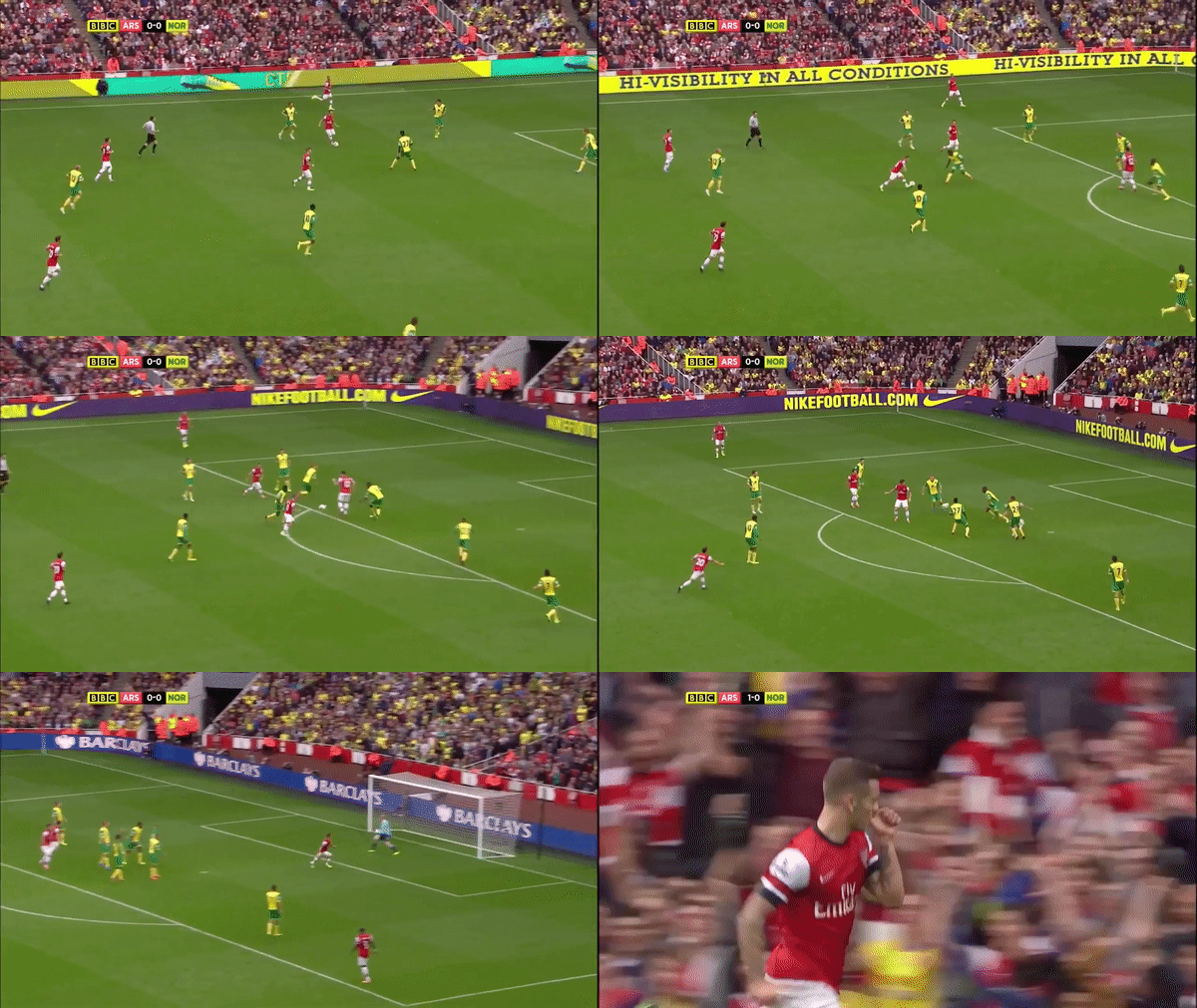
The infamous Arsenal goal vs Norwich City
Too often, albeit passionately, coaches will plan and deliver the topic of ‘combination play’ and ‘one-twos’ meticulously taught to the group through repetitive passing pattern drills, complete with lifeless mannequins and a barrage of instructions dictating when, how, where, and to whom to pass. Coaches shout deliberate commands, tirelessly correcting perceived ‘errors,’ demanding immediate ‘high tempo’ from the outset. Players are instructed on their body positions and the precise surface of their foot to be used when encountering a specific mannequin in the routine. They pretend there’s opposing pressure while constantly checking their shoulders hopeful the mannequin might have moved. However, such a structured approach takes away vital elements of adaptability and understanding from the athletes.
What do players experience in this example of exaggerated practice? They are limited to one way of passing, one predefined direction, a single method to configure their bodies for an expected return, and an unwavering insistence on fast passes. They are demanded to turn their heads left and right, regardless of the context. It is impossible to scan for clues, absorbing information about the defender’s body shape, approach angle, and speed—details that could inform adaptation. This method fails to mirror the complexities of the actual game, where players must think on their feet, solving real challenges posed by a dynamic and unpredictable environment.
What is an Emergent Structure in football?
An emergent structure refers to how players spontaneously organise themselves on the pitch during a match. It’s about their positioning, movement, and coordination in response to the ball, the space, the opposition, and their teammates. This structure is not predetermined; rather, it emerges organically as players react and adapt to the evolving dynamics of the game. It’s a dynamic and ever-changing pattern that takes shape through the interactions of players on the field. Examples include the ‘one-two’ and the ‘3rd man run’, but football’s global tapestry reveals various emergent structures, from the ‘tabela’ to ‘toco y me voy’ and ‘escadinha’ in Brazil mentioned in one of our previous articles:
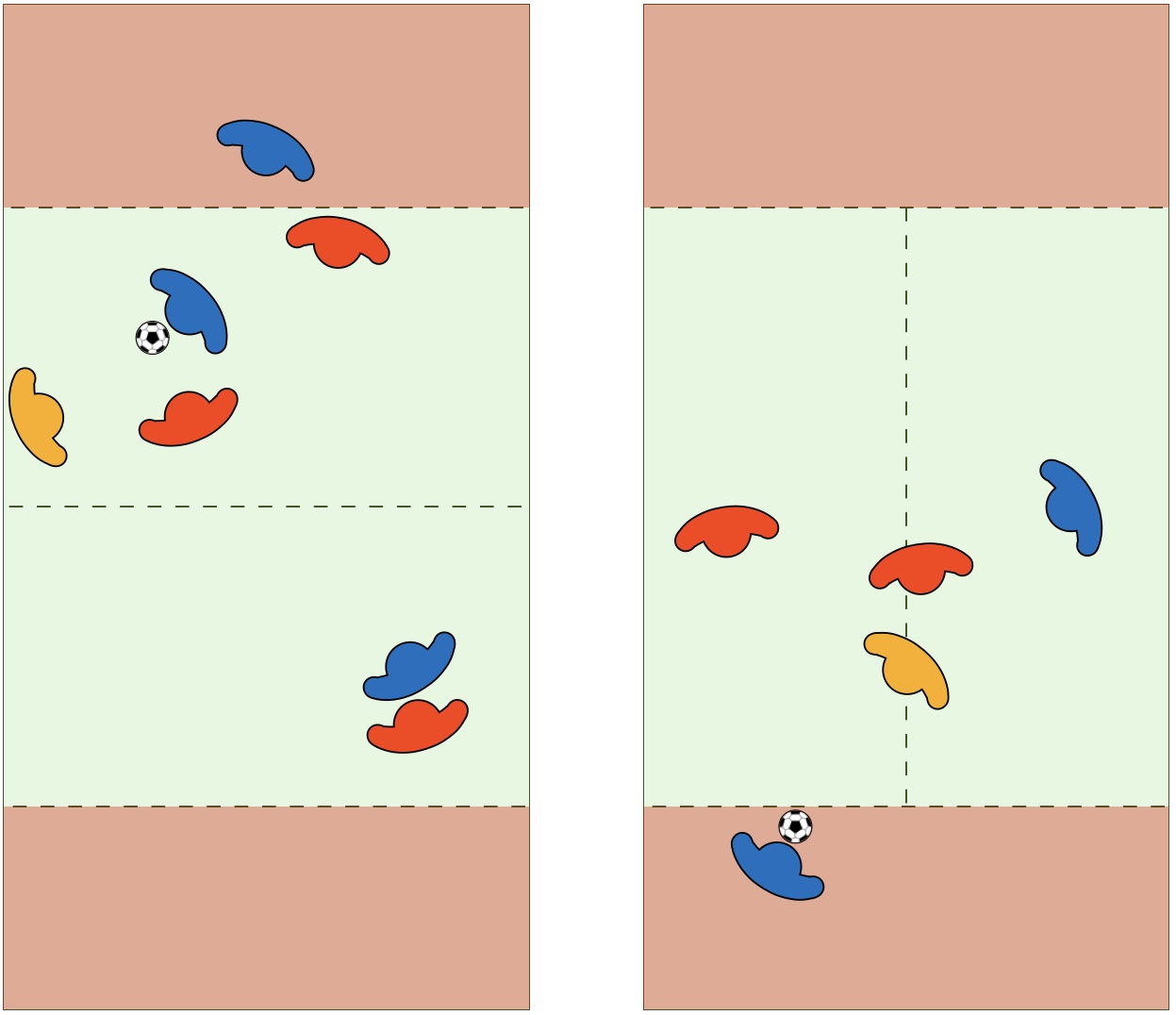
To truly develop emergent structures like the ‘one-two,’ ‘up, back, and through,’ and ‘3rd man run,’ we must embrace an approach that acknowledges the dynamic nature of football. The coach can’t dictate every movement; instead, players must be given the freedom to adapt and innovate. It’s the players themselves who are in control of these emergent structures on the pitch. In reality, these structures evolve and adapt based on the constantly shifting variables of the game, including the opposition’s movements and the unique qualities of each player.
They are dependent on the participants and how they recognise opportunity to connect with each other, they will make decisions based off where the opposition is, where space is, where the ball is and where their team mates are and these will be constantly changing throughout the match.
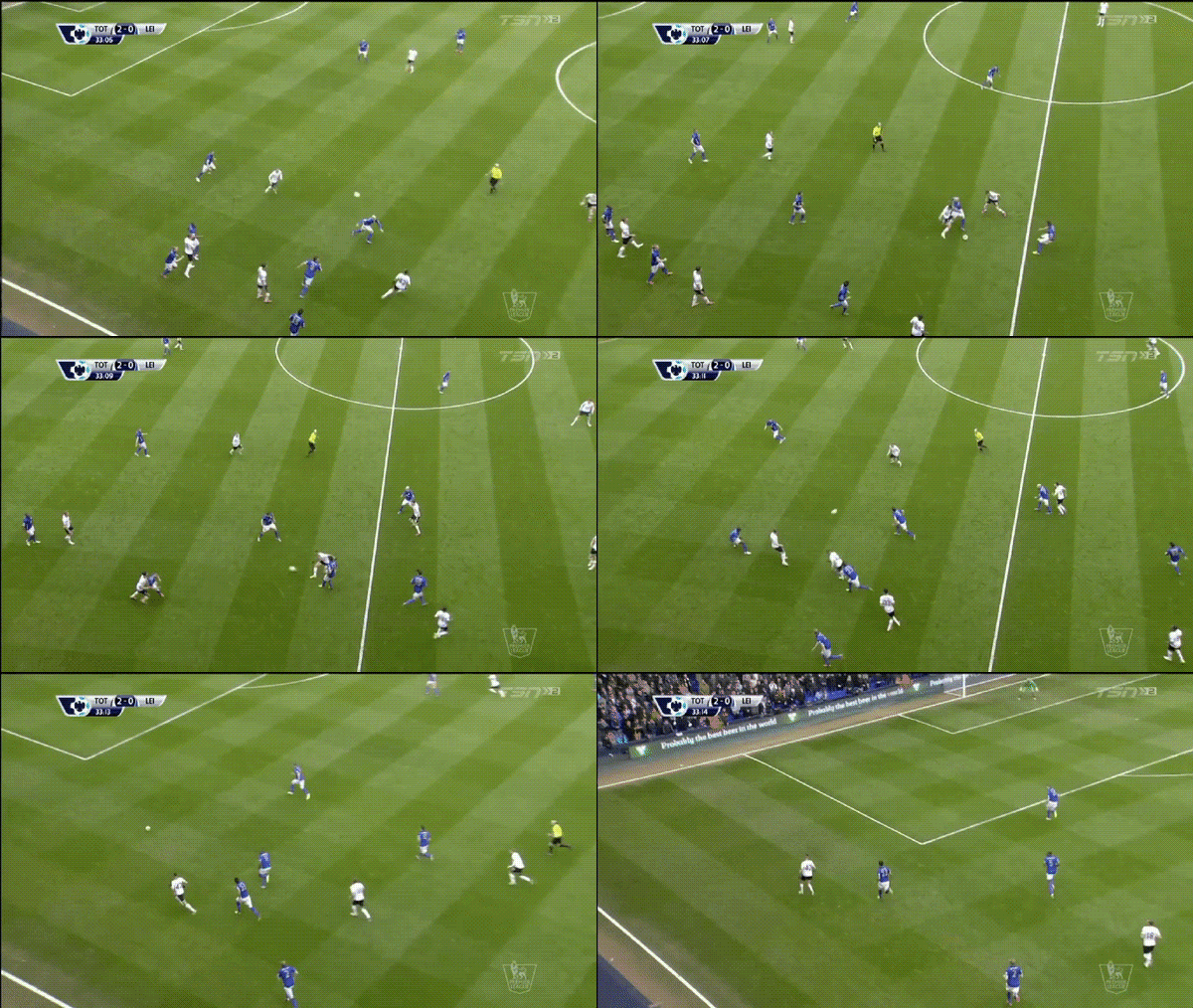
Tottenham Hotspur 3rd man run vs Leicester City
These emergent structures are rooted in the players’ recognition of opportunities to connect with one another. They make split-second decisions based on the positions of opponents, the ball, and their teammates, and these decisions are in constant flux throughout the match.
The potential for an emergent structure exists in every moment of the game. For instance, a one-two only requires two teammates and a ball, regardless of their location on the pitch. How they execute the one-two depends on various factors: where the ball is, where the opposition is, where their teammate is, and the overall game context. Are they advancing the ball or escaping pressure?
In contrast to the rigid practices that attempt to pre-plan every move, we should strive to create training environments that mirror the richness, complexity, and challenges of real football. This means moving away from a deconstructed version of the game that molds athletes into a linear, homogenised style of play and thought. Athletes should be able to adapt to a variety of movements and situations, responding dynamically to the ever-changing game environment. Ensuring the representative information is always present ball, space, opposition and teammate.
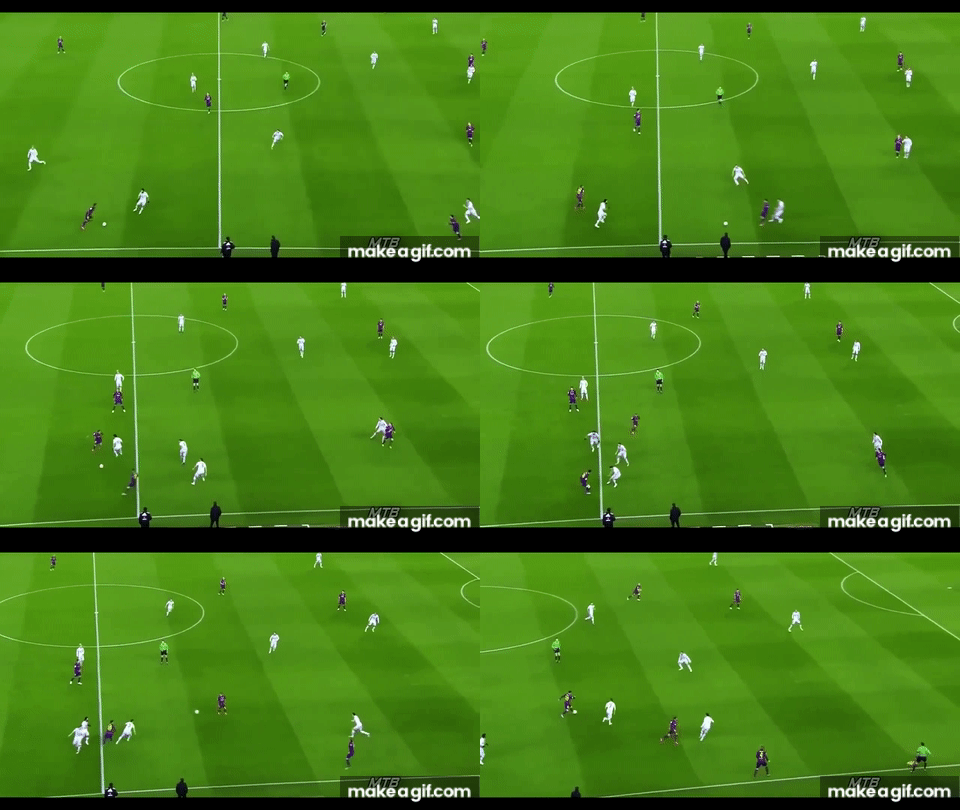
Lionel Messi and Dani Alves showcasing one-twos
Take, for instance, the fluid and unpredictable nature of players like Dani Alves and Messi in the image above. They excel because they are acutely aware of each other’s positions and readiness to receive the ball. They adjust their tempo, choosing between quick and deliberate play based on real-time observations. While their positional training plays a role, the presence of dynamic opposition is a constant stimulus. Whether the opposition is numerically underloaded, overloaded, or balanced, it influences how these players adapt their movements and decisions.
Emergent structures are shared patterns that develop through perceived opportunities
What can the Ecological Dynamics Approach do for me?
So, how can the Ecological Dynamics approach benefit us? Using this lens in session design provides an environment brimming with opportunities and challenges, fostering player self-organisation. Emergent structures naturally develop, and the relationships between teammates flourish. Players must gather information to recognise pressure from dynamic opponents, prompting constant adaptation of intentions and actions. The opposition, in turn, learns and begins to anticipate in-possession patterns, pushing for an evolution of emergent structures. Players analyse and adjust their body shape, pass type, speed of movement, and direction, all in response to the ball, space, teammates, and opponents.
The more often players are exposed to situations rich in these elements, the greater their repertoire of potential solutions becomes. Coaches play a vital role in creating and highlighting these moments through diverse session designs and a range of player interactions, interventions, and coaching strategies. Going beyond representativeness can aid in their development. Understanding the relationship between a coach’s planning and practice design before training as well as their behaviours, language and adaptations live in practice can lead to purposeful and deliberate learning for both coach and player.
Repetition without repetition
‘Practice does not mean to mechanically repeat the same solution to a given task, but, to repeat over and over, the process of solving the task itself.’
Bernstein, N. A. (1967). The coordination and regulation of movements
Repetition, without mindless redundancy, should be a hallmark for all practice design. When designing coaching practices, the aim is to create an environment where players explore a variety of emergent structures to find success. Ensuring repetition of the process of problem solving occurs naturally, driven by a dynamic and unpredictable game environment.
It is crucial that players have the opportunity to gather information and assess to prepare their solutions intentionally. For example, consider the scenario where players in an end zone stay patient on the ball, giving those on the pitch time to reorganise and strategise. When players explore new ideas and strategies, they should not feel rushed or judged; the emphasis is not on ball speed but on gathering information (seeing/hearing/feeling) in play and building connections with teammates. The priority is making the “best decision” rather than the “first decision,” recognising that this will vary depending on individual abilities and the situation at hand.
There is no limit to the actions and ideas the in-possession team can employ to achieve success. Coaches should not look for a specific outcome; instead, the conditions and challenges serve as problems for the players to solve, prompting players’ attention toward potential emergent structures and relationships they can build. Opposition is essential to allow for co-adaptation between defenders and attackers, pushing attackers to evolve both individually and collectively.
Furthermore, teams should be given the opportunity to discuss the challenges and conditions within the environment, facilitating idea-sharing, reflection, and exploration. This can be accomplished through coach-provided objectives or talking points, but the players themselves should be the primary contributors to the discussion.
Practice design
This is one of my favourite topics to focus on in coaching. The returns are always amazing and the players are empowered to problem solve individually and as a collective. The practices below have been adapted many times by myself as well as collaboratively with other coaches to become what it is at the moment, and I hope they will continue to evolve within your environment. I utilise both differential learning and constraints led methodologies which underpin all of my practice design, both of these fall under an ecological dynamics approach.
Below are some examples of the practices I have used to encourage emergent structures (combination play) with premier league academy players.
The practice principles are present in all 3 examples below and should be consistent throughout. Below each diagram are the unique organisational and constraints or challenges for each type of session design.
Practice principles
Organisation
- Scoring zone is beyond the active offside line or to End Zone player
- To enter the Scoring Zone or find the End Zone player it must be done with a first time pass over the halfway line/into scoring zone/into end zone player
Potential progressions
- Use of different equipment- size 4/futsal/size 5 etc.
- Must play an ‘over’ pass over the halfway line/into scoring zone/into end zone player
- Must play a ‘through’ pass over the halfway line/into scoring zone/into end zone player
- Must play an ‘around’ pass over the halfway line/into scoring zone/into end zone player
- Under head height only
- More points scored if pass is over/through/around
3 v 3 + 2
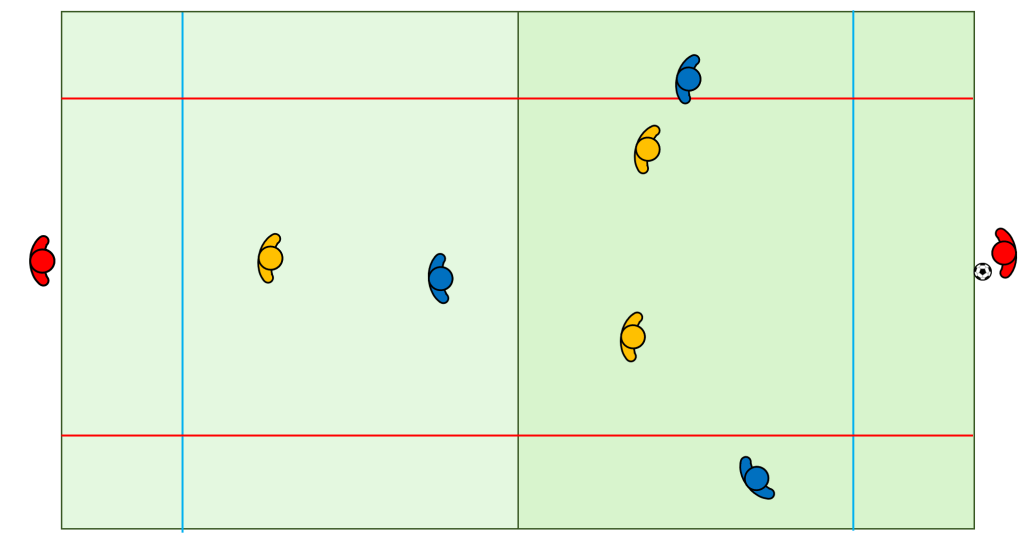
Organisation
- 3v3 + 2 (end zone players)
- Area is set up with 3 pitches- Red (long and thin), Blue (short and wide) and Black (long and wide)
- Randomly the coach/players will call out a new pitch in play (practice should not be stopped)
- Team in possession should alternate between each end zone player
11 v 11
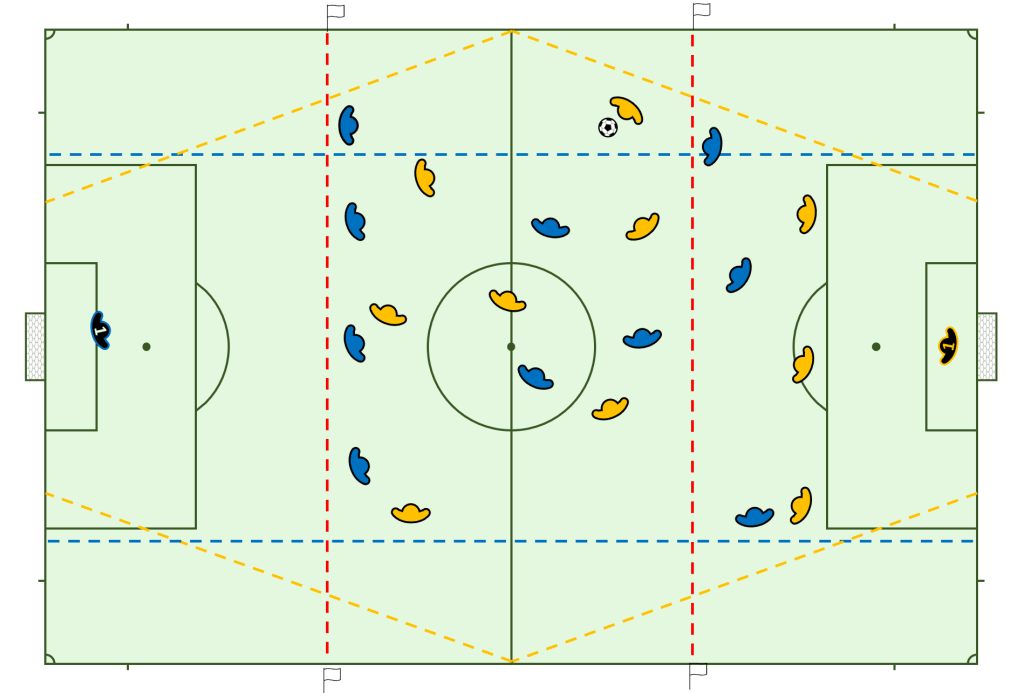
Organisation
- Pitches available are Red (high defensive line), Blue (narrow pitch), Yellow (diamond pitch)- each pitch increases the value of either over/through/around through combination play
- Potential conditions and challenges
- First time pass across offside line or halfway line
- Number of first time passes (in attacking or defensive half) = additional points if a goal is scored
- Team in possession must alternate direction of pass – horizontal or vertical
- Can not pass to the same unit (forwards/midfield/defence) and/or must alternate between units with each pass in defensive half
Conclusion
The beauty of football lies in the breathtaking synergy between teammates as they navigate the pitch, outwitting opponents and creating emergent structures that define the game’s fluid nature. Coaches play a crucial role in fostering an environment where players can explore limitless ways to connect with their teammates in possession.
Traditional coaching methods often involve repetitive passing pattern drills with rigid instructions, prescribing every aspect of the players’ actions. However, these practices fail to capture the essence of emergent structures in football. Emergent structures, such as the one-two and the third man run, are spontaneous patterns that develop from shared affordances and the ever-changing dynamics of the game.
To nurture emergent structures, coaches should utilsie an ecological dynamics approach in their session design. This creates an environment rich in opportunity and challenge, encouraging players to self-organise and adapt. Players must scan for pressure from dynamic opposition, forcing them to adjust their intentions and actions continually. Encouraging athlete-environment symmetry, to become a skillful performer they need to establish a relationship between themselves and their environment and not based on their knowledge or any pre-made decisions, closely linked to perception-action coupling.
Repetition without repetition occurs naturally within an ecological dynamics practice due to the game environment and relevant conditions. Prescribing solutions is counterproductive; players must have the freedom to explore and discover the best decisions based on their unique abilities and the evolving game situation. Understanding that athletes best perform when they can self-organise within a dynamic environment and adapt their movement solution to their attention and intentions.
In this approach, gathering information (seeing/hearing/feeling), assessing the game state, and patient decision-making take precedence over speed. Players should strive to make the “best decision” rather than the “first decision,” recognising that success may vary depending on personnel and the situation.
Opposition is essential for co-adaptation between attackers and defenders, prompting constant evolution in players’ intentions and actions. Furthermore, creating opportunities for teams to discuss challenges and constraints fosters a collaborative environment where players can share ideas and reflect on their strategies.
In embracing Ecological Dynamics Approach, coaches empower their players to become adaptable, creative, and intelligent footballers who thrive in the ever-changing landscape of the beautiful game. Ultimately, it’s the players who are in control of the emergent structures on the field, and the coach’s role is to facilitate their development through thoughtful session design and guidance.
We need to talk about technique
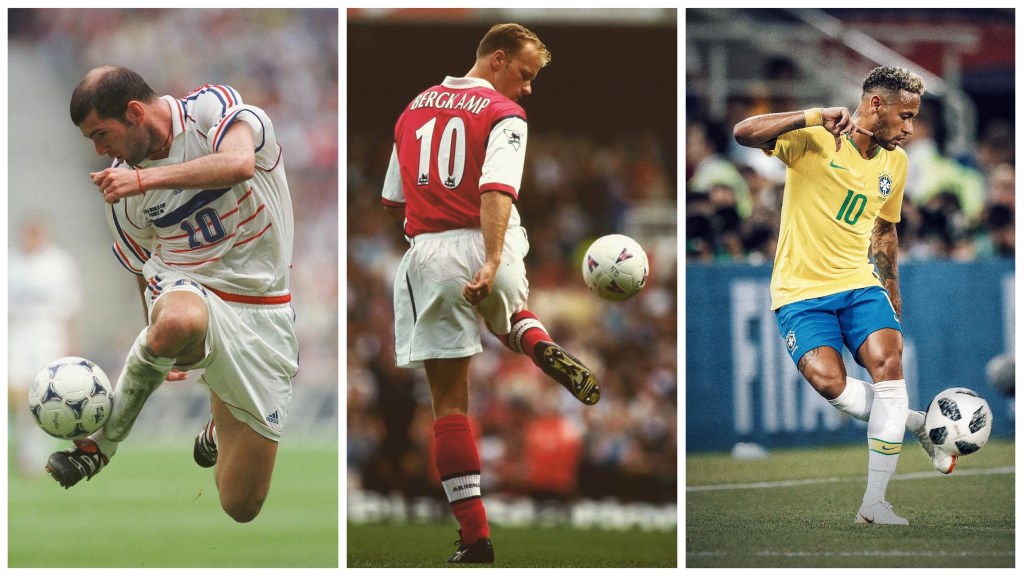
There is nothing better than witnessing the perfect touch, a ball plucked out from the sky and stopped dead in it’s tracks. You hear the crowd in awe, that’s what we pay our money to see. For the special players, it’s a regular theme; Marcelo trapping a ball that’s flown from 50 feet in the air with the sole of his foot, Neymar with his trademark behind the leg touch, Mahrez receiving a wing to wing switch.
This is what we’ve come to know as ‘technique’, the aesthetics of individual play and we’re in love with it. And what better way to improve this individual aesthetic style than to drill it into our players. Repetition after repetition. So, why then when it’s drilled so much, is it still so rare to see?
Young players around the country pay hundreds, if not thousands of pounds per year to improve their so called ‘technical ability’. The internet is riddled with 1v0 practice, high speed touches around mannequins and cones and shooting into an empty net. This all seems fine on the surface and surely the more our players repeat the drill, the better they’ll be. But does this actually make our players better at football?
The view of ‘the more you practice and the more experience you have in something, the better you’ll be’, seems a logical one. However, what if we are forcing our players to repeat something so far removed from the actual game, that it actually doesn’t help, it hinders?
What if our misunderstanding of what technique actually is, underpins the work we do with our players? What if the technical training that has become a main pillar in the way we develop our young footballers, only really acts as a placebo for learning and improvement. What if consistently drilling players in movement patterns builds co-ordination and confidence, but not a lot else?
We’re going to break down what technique is and how we should go about developing it.
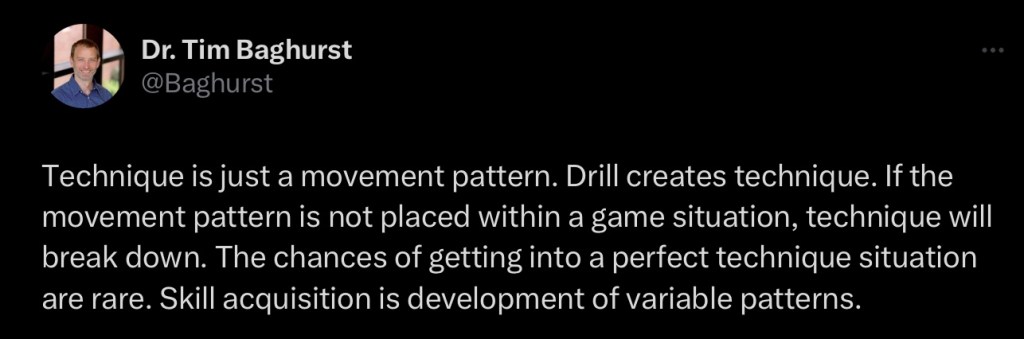
Patterns
Often when we talk about ‘technique’ we are actually talking about movement patterns or action capacity. Movement patterns are those prescribed movements which we impose on the players in an isolated environment and then expect them to notice the opportunity to use them in a contextual environment later on. Patterns such as; receiving side on, passing patterns, 1v0 ball manipulation, turns and beat the man moves. Learn the pattern, input the pattern. The problem is, we forget about the where and the why.
I’ve seen so many young players drilled in receiving back foot, side on and then on game day, not look around them and lose the ball. They’re then greeted with shouts from the sideline of ‘scan!’ It’s time we took more responsibility with what we do in the practice environment and how this affects what the players do on game day. If you don’t practice receiving vs opposition in training, how will the player ever be able to cope with this in the performance environment?
Action capacity is the range of which a player can perform an action, for example, when talking about ball striking, we are not talking about how a player can strike a ball in a variety of ways, we are often talking about how a player can play a 50 yard pass or shoot from range. The capacity of this player’s action underpins what he\she can do when it comes to opportunities to act in the performance environment. If you can play a 50 yard pass, and your teammates can not, new affordances (opportunities to act) are available to you.
So aren’t developing these prescribed patterns and action capacities important? Yes and no. Having the ability to rake a ball from one side of the pitch to the other is a good asset to have, however not necessary to be a good player. A good player will find ways to open opposition defences regardless of their action capacities and individual constraints. And the same goes for prescribed turns and passing patterns, they are not essential for developing a top level football player. What is important is that players notice opportunities to be functional.
These movement patterns and action capacities are usually trained unopposed, out of context. They act as a placebo for the player. Maybe because the reps can be counted. ‘I’m 100 touches better than I was yesterday.’ However, the quality of the information in these practices is not representative of game day information. We are not preparing our players for their performance on the weekend.
So how do we expose a player to opportunities to develop an action capacity? Fortunately, it’s not very hard to do this in a contextual environment.
For example, if you want to improve the action capacity of an individual’s passing, just make the pitch longer or wider – depending on what you’re other aims are. Make the distances bigger, then the players should self organise to complete the task set. If they aren’t looking for these opportunities, you can highlight that there is space to play further on, and challenge them to take the next few opportunities to play into those spaces.
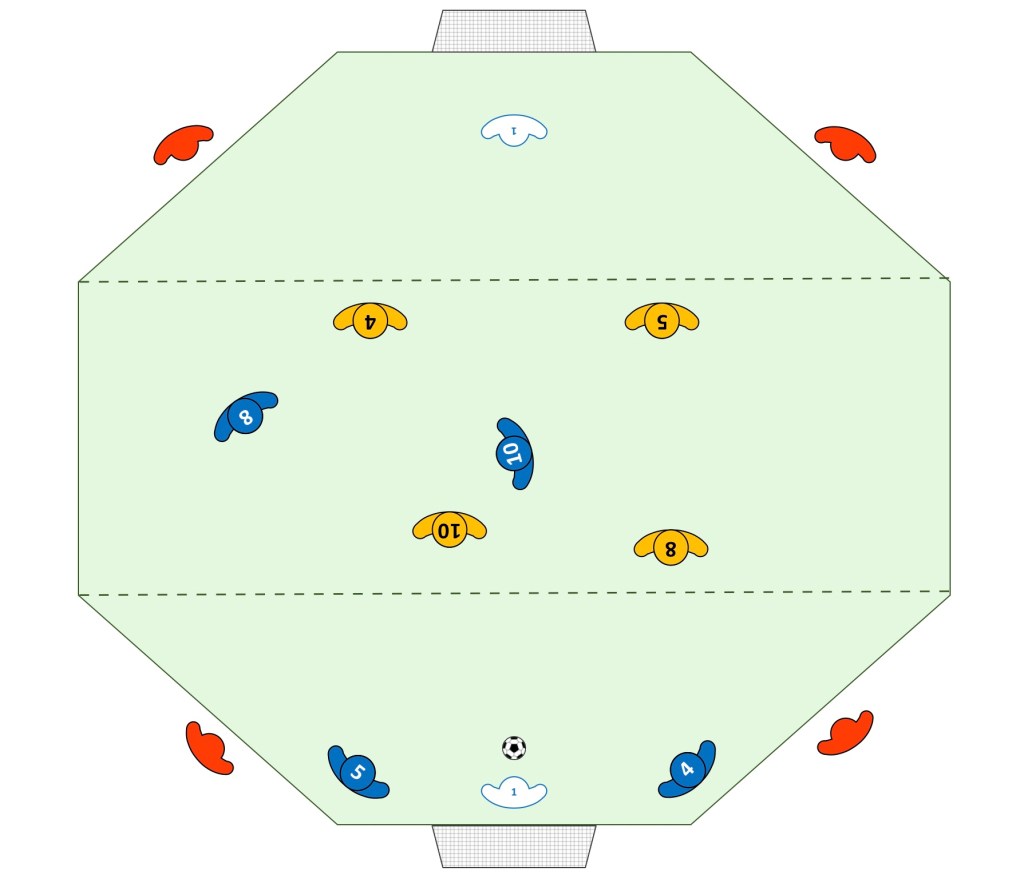
In the above practice, 4v4+4(+2GK), players are asked to score in anyway they deem necessary. They can play around, through or over. The offside lines for each team are on the 2/3rd lines. Red team is there to assist opportunities to score, but do not have to be used. The idea is to develop a variety of scoring opportunities. You can award extra points for different types of goals and for different types of assists.
The development in action capacity for longer range passing comes from the distance of the practice. Red players are always free, if the GK or players at the back have time and space on the ball, they will usually attempt to find these players. The frequency of this action can be improved by awarding more points for a red player assist. This is just one example of how easy it is to develop action capacity within a contextual environment.
Skill
Here’s a hot take for you, our players today are less skilful than previous generations. Sounds crazy doesn’t it. In a world where technique is at the forefront of academy training and where we believe that our players are more technical than ever, I’m suggesting that players on a whole are actually less skilful. The likes of Messi, Suarez and Neymar are all but the last of the dying era of skill, as we usher in a new era, the era of efficiency. The era of the Machines. The artists of football are seemingly lost amongst stats, outcomes and results. Is developing our players to be more efficient, actually causing individuals to be less skilful?
If a young person today were to look at Zidane’s goalscoring record, they would think he was an average player. Those of us who saw Zizu play know there was something different about him. His level of skill and the joy he brought through variability. Look at all of his touches, goals, assists and dribbles. Every one, more different from the last.
Would Zidane have been a better player if he was more efficient? If we had streamlined his game and increased his statistical output? If he had waited for the ball to come to him, if he didn’t dictate the tempo of play, if he didn’t hold onto the ball?
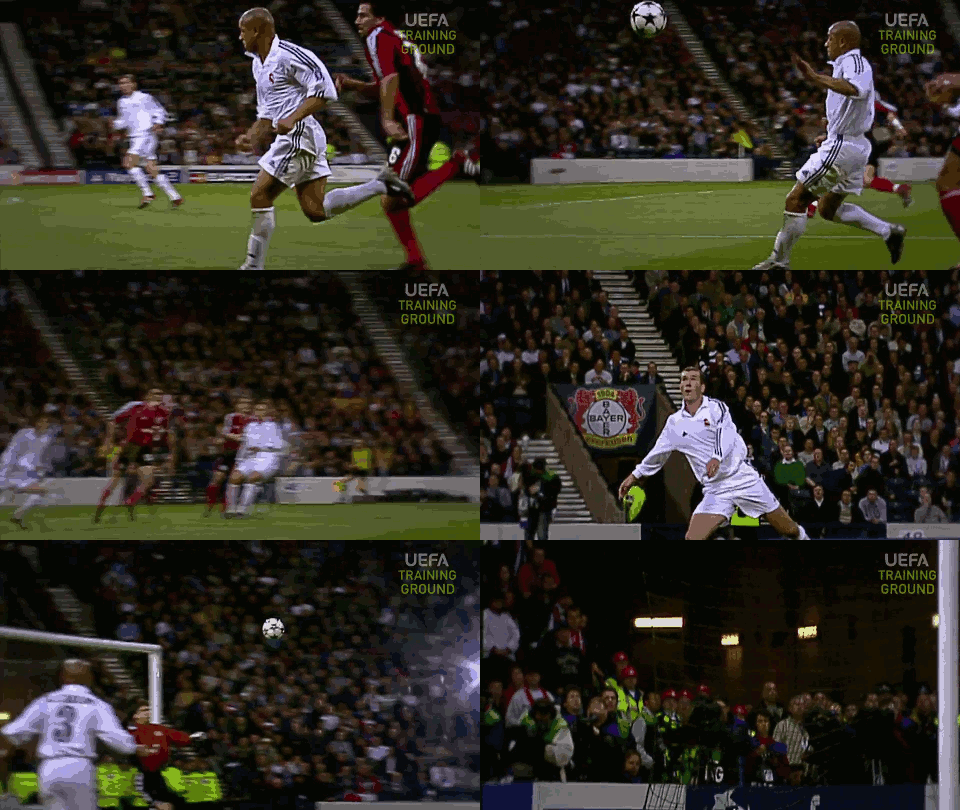
Skill is the use of functional action to solve a problem. In other words, using a variation of techniques to overcome physical constraints (eg. athleticism), psychological constraints (eg. fear, confidence) and tactical problems. With this in mind, to standardise and isolate ‘technique training’, to perfect one specific technique, will not help your players become more skilful. The art in developing technique, is to improve the range of solutions to achieve a functional goal. The more the players are asked to search for answers using different techniques, the more adaptable they’ll become and the more skilful they’ll be.
But how will they improve on their aesthetic technique? Over time, whilst practicing in contextual environments, player’s will improve their consistency in varied techniques. The more they practice and use these varied techniques, the better they’ll get. The more they practice in context, the more they will be able to use these skills and techniques in a contextual performance environment. So maybe the view of more reps is right, but its more reps in context that’s the key.
Play
We would all agree that there has been a huge decline over the last few decades in child centred play. You only have to walk through the local park to see that pick up games are almost a thing of the past. And has the lack of unstructured play led to a decline in skill? The joy of park play is that there’s no one telling you what to do, you have to figure out how to win against your friends. As Legendary manager and FIFA’s current chief of global development, Arsene Wenger, mentions in a recent interview with the Independent:

Almost every academy in the country seems to spend time on ‘technical work’. The considered increase in technical ability since the 90’s seems to suggest that this technical work is and should stay as a pillar in the development of our nation’s players. But are today’s players that much more technical? If you go back and watch the best teams and players in world football through the ages, you will see hundreds of high quality technical outcomes. Are we truly being led to believe that Roy Keane, Zinedine Zidane and R9 couldn’t play in today’s game? As Roy would say, ‘do me a favour’.
The tactical side of the game has also improved significantly, as has the defensive side, meaning it’s harder to break teams down and score goals. It would seem that adaptable players are needed now more than ever. To add to this, the pitches that are played and trained on now allow more opportunity for passes to be made on the ground. Perfectly flat, no bobbles. Has all of this led to, not an improvement in technical ability, but an actual decline in skill? Have we substituted adaptability and skill for standardised pattern play?
What if the poorer playing surfaces of the 90’s actually meant you had to be more skilful as a player? More bobbles, more ball’s stuck in the mud, more aerial balls to control. More unpredictable problems to solve. Long passes were more frequent and are harder to produce accurately and to control. What we see when we look below the surface, is a high level of variability. So the question looms: is technical variety actually more important than technical repetition?
Now, I’m not suggesting we go back to long ball, ‘play into the channels’ football, but do I think that, in terms of skill, that our training has become standardised. Everything on the floor, in the same way. You hear it all of the time. ‘Back foot!’, ‘side on!’, ‘fizz those passes in on the floor! No bobbles!’. The question I pose is, has this linear standardising of football training, coupled with the decline in play, made our athletes less skilful? And how do we counteract all of these environmental and social changes to develop more variable and skilful players?
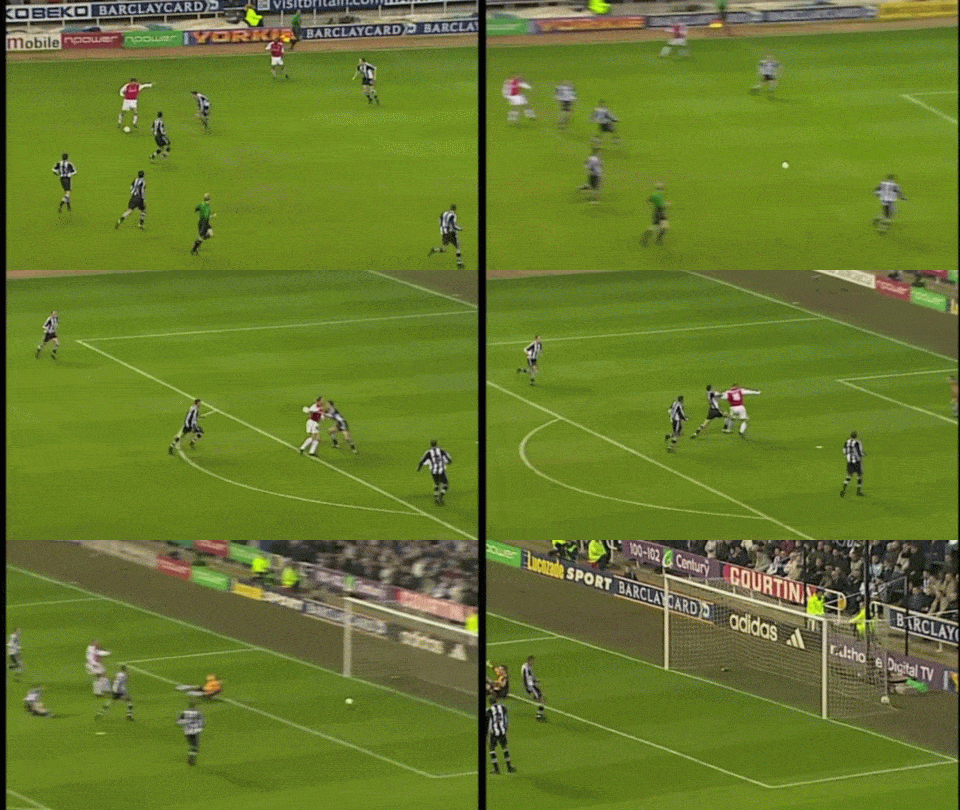
Perfection
Johan Cruyff famously said, ‘technique is passing the ball in one touch, with the right speed at the right foot of your teammate.’ Looking at this quote, the action of a one touch pass can never be the same. Do you need the technical repetition of a non-variable, one touch passing drill around cones/mannequins or do you need direction, opposition players getting in the way – defending a goal, team mates creating new gaps and spaces and consequence if you lose it? One replicates the conditions necessary to practice one touch passing, and the other does not.
The ball, gaps and spaces decided by opposition players and teammates, where you want the ball to go, the area of the pitch, conditions of the pitch, the constraints of the individual (height, athleticism etc.) and more will all play a part in a the perfect first time pass never being the same as the last. Football is highly dynamic and variable. It’s ever changing. No first time pass can ever be the same. So it’s time to ask ourselves the question: do we develop our players in variable, ever changing environments?
Majority of the training I see is around constant repetition of an action. Repetition after repetition: to repeat the same movement pattern again and again. Within this type of practice design, there is minimal if any technical variability. As we’ve now established that technical variability is more important than technical perfection, how do we look through this new lens to design our practices?
Repetition without repetition: The repetition of the search for a solution. Variability here is encouraged in the search for a functional solution to a set task.
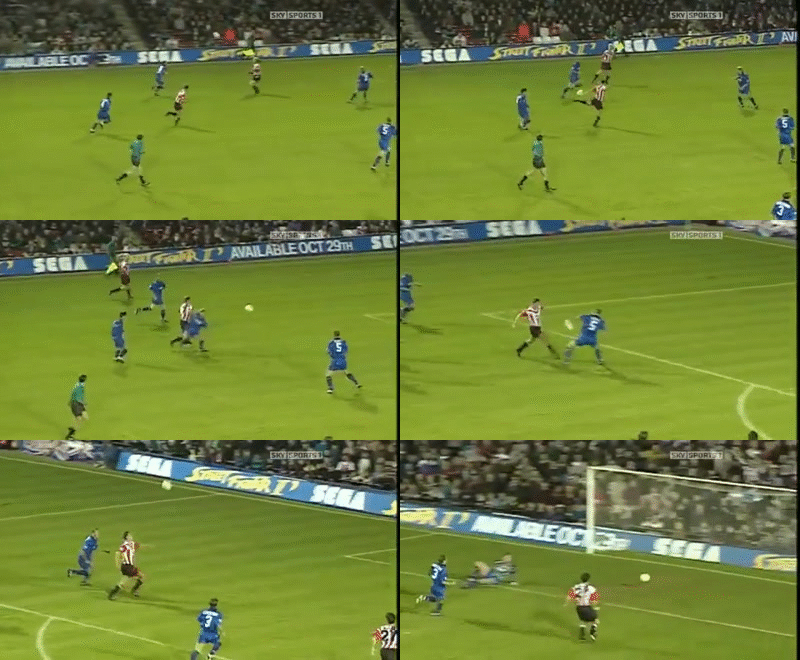
Skilful Adaptability
Let’s challenge our perception on what we should be developing in our athletes when it comes to technique. Rather than expecting players to consistently reproduce the same action, let’s focus on our players being skilfully adaptive. It’s not so much the perfecting of a particular action, it’s having a variation of techniques to be adaptable. If you have an abundance of ways to do something, you should be able to solve the problem in a variety of ways.
Our Job as a coach is not to fill the players with our prescribed knowledge and movement patterns. They are not receptacles to be filled and it is not our job to fill them. Instead it is our role to create a dynamic environment where players are free to problem solve and it is our job to highlight opportunities to act (affordances) that they might have missed to do so. So how does this look in practice?
Ball Manipulation
Let’s start with ball manipulation. The first thing to understand is what ball manipulation actually is. Manipulating a ball on game day, is to move the ball in a variety of ways to keep it away from opposition players, or to move through, over and around opposition players into new spaces. So when our players practice, we need to make sure that this is replicated. But what should this look like?
When we think of ball manipulation we think of everyone with a ball – a great start. We then think of players touching the ball with different parts of their foot numerous times in a set pattern. Of course touching a ball multiple times is better than not at all, but unfortunately, this type of practice isn’t really related to the performance environment (game day). So how should we go about improving individuals ball manipulation technique within context?
The short video above is an excellent breakdown of why opposed ball manipulation is going to help develop your player’s manipulation of the ball and why isolated versions of ball manipulation practice aren’t. In the isolated practice, there is no stimulus (something that evokes a specific functional reaction) to act upon. In other words, there is no reason to manipulate the ball, with no stimulus to perceive and act upon, there is no relevance to the performance environment.
The idea is not more touches, but better touches. Quality over quantity. More of the wrong thing will not help your players improve. If you want your players to be masters of the ball, have a play with giving each of your players a ball and having opposition in the practice. This should create more variable and realistic situations for your players to solve.
Turns and Beat the Man Moves
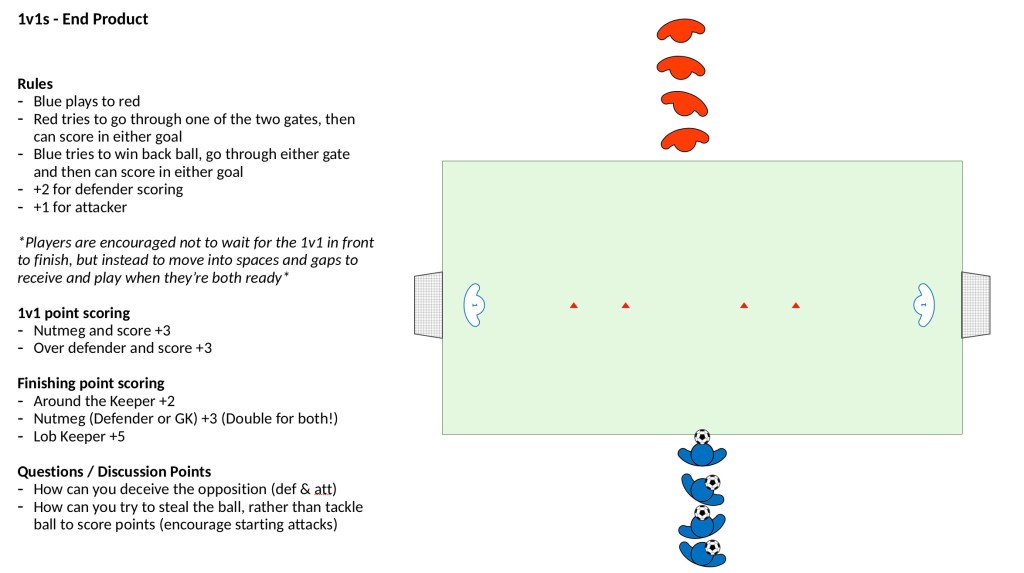
In the above practice, players are encouraged to beat an opposition player to move through one of two gates. When they do so, they can score in either goal. The option of two gates leans into the player on the ball using disguise to off balance the opposition player. And the option of scoring in either goal leans into using disguise and functional turns to get a free run at one of the goals.
‘But if they don’t know how to do a Cruyff turn, how will they do it in the session?’ The answer is that they might not and that’s okay. More importantly they might turn in a way you’d never imagined possible before. And that’s the key, allowing them space to be creative, you can’t force creativity into players – they must be given room to express themselves functionally.
It’s not about which skills they use, more so if they are completing the task in a variety of ways. The important information is for them to perceive the available space, the speed and trajectory of the incoming defender and to score a goal. If they do this, they can use any skills and turns they come up with in the moment.
Combinations/Passing Patterns
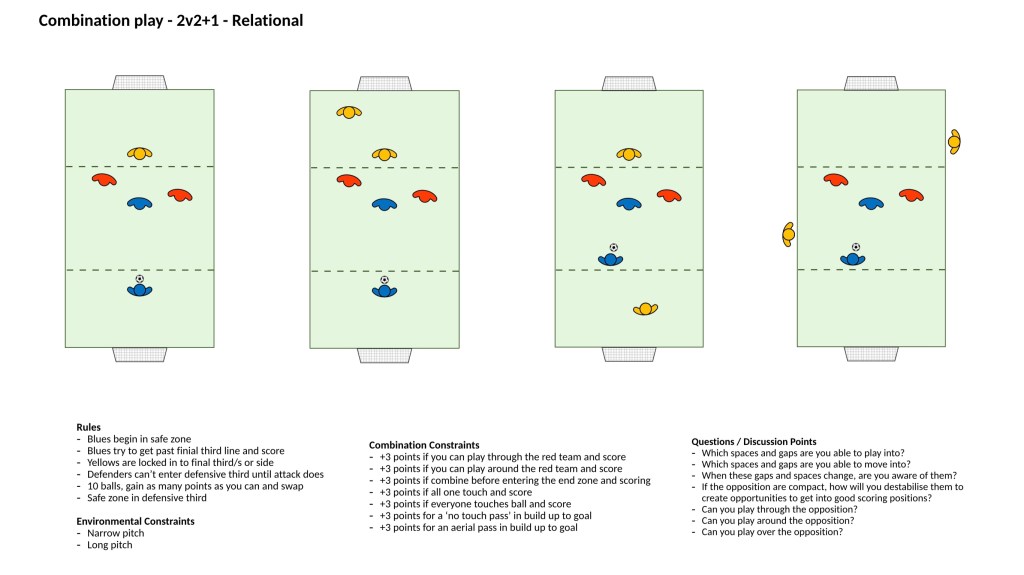
The above practice is a constraints led approach to combination play and an alternate to traditional pattern play. Players are encouraged, because the pitch is narrow, to combine with each other, and find solutions to move the ball to the final third and score a goal. Encourage the players to look for emerging gaps and spaces and ask them to move the ball through, around and over into them, and then to move into new emerging spaces and gaps themselves.
You can add extra points for anything you believe the players are lacking eg. +3 points for an aerial pass in the build up to a goal. Or +3 for a no touch pass. There are more ideas like these on the session plan and should not all be added at once, but gradually depending on your observations for what the group need.
Third player runs will always emerge when there is the use of a target player that can’t score, as the task set means they have to support the target player when they get the ball. You do not need to force a third player run pattern into existence for it to work on game day. You don’t even have to use the phrase ‘third man run’, just ask the players to look for gaps and spaces to support players ahead of them. They will do the rest.
In traditional pattern play practice, you will see practices like the one below:
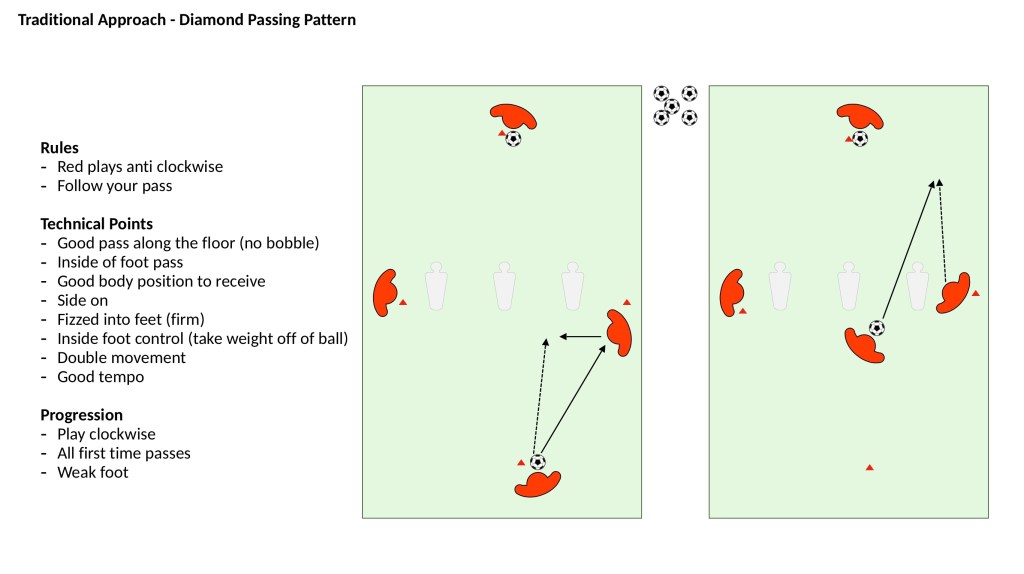
The passing pattern practice above has a number of problems when we look through the lens of technical variability. Lots of touches? Yes. Lots of touches in context and in relation to the game? No. There is no nuance in which to change the style of pass you might need to progress the ball, no understanding of relative timing and space and, because of the lack of stimulus, little to no variation in techniques to achieve the task.
The usual justification for this type of practice is the amount of repetition and it’s ‘all about the detail you put in’. The skill of the coach is shown through what he asks his players to imagine. However, if you’ve got a team there, ready to practice, why imagine when you could allow them to actively experience the relative information themselves? This type of practice seems to be more about a coach showing their knowledge of the game, rather than developing the player’s knowledge in the game.
If you want your players to notice opportunities to act within the performance environment, this type of practice is by far the least likely of the two to help them. We can be far more skilled in our design of the environment and task. Rather than force the action, let’s look to design the opportunity to act, allow the players to experience and explore these opportunities.
Receiving
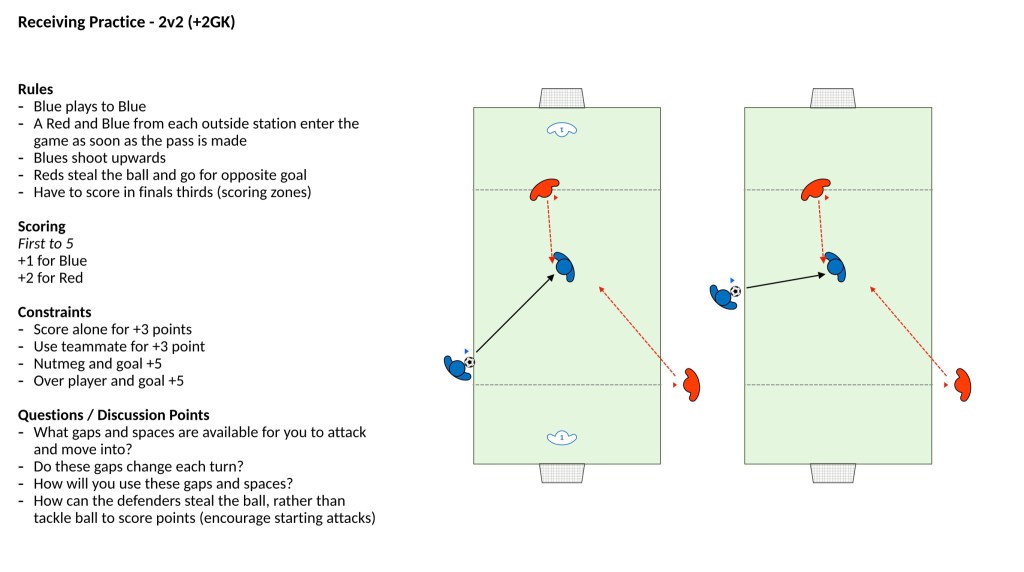
Receiving is not just the ability to receive the ball side on, back foot. There are an infinite amount of ways to receive a ball, and this all depends on the opposition and teammates creating new gaps and spaces to play and move into. The above practice is a constraints led approach to receiving. The players start in pre determined positions and as soon as the ball is played, everyone is free to move. You can add as many players to this as you want, and even let it develop into a match, with this as the kick off/restart.
The beauty of this practice is that even though the starting positions are the same, the defenders will adapt to stop the attackers in different ways every time the game is restarted. Therefore there is a large amount of variability that the attackers have to adapt to. It’s cat and mouse, the defenders will defend, the attackers will adapt, the defenders will then adapt to the attackers and so on. Receiving is all about awareness and adaptability and this practice is full of both.
Rather than forcing your players to receive the ball front or back foot, ask them to find a route to goal. Challenge them to do this on their own or with the help of their teammate by adding more points for each. Variable techniques will emerge with them attempting to be functional. The starting positions can be changed, ask the players to move their starting positions and see what different problems this creates for both sides.

Quality, not Quantity
Lastly, some coaches may suggest that the amount of repetitions or the actual amount of touches is why you should use a traditional approach to develop technique. However, I would rather a really great technique to be applied ten times in context, than to force 100 touches out of context. We should look for Quality not quantity.
We are obsessed with the idea that more is better. And maybe Malcolm Gladwell and the 10,000 hour rule is partly to blame. I would consider reading David Epstein’s Range: Why Generalists Triumph In A Specialised World. Epstein’s work brings into consideration that with very few exceptions, 10,000 hours of the same thing doesn’t lead to mastery, in fact, playing a variety of sports will lead to more unique movement solutions.
If we want to develop the brightest, most creative and innovative players in world football; we need to develop their ability to assess and exploit space in their own individual ways. And remember, it is not repeating the same action again and again that will improve our players, it is repeating the search for an action.
Variability in technique is what makes a footballer ‘technical’. With more variability, there are more keys to attempt to unlock the safe. Technique is not what we think it is, it is not the search for technical perfection – more so the search for technical variety.
Let’s stop the obsession with making our players more ‘technically efficient’ and start taking steps to help them become more skilfully adaptive.
Toco y me voy & Escadinha CLA practice
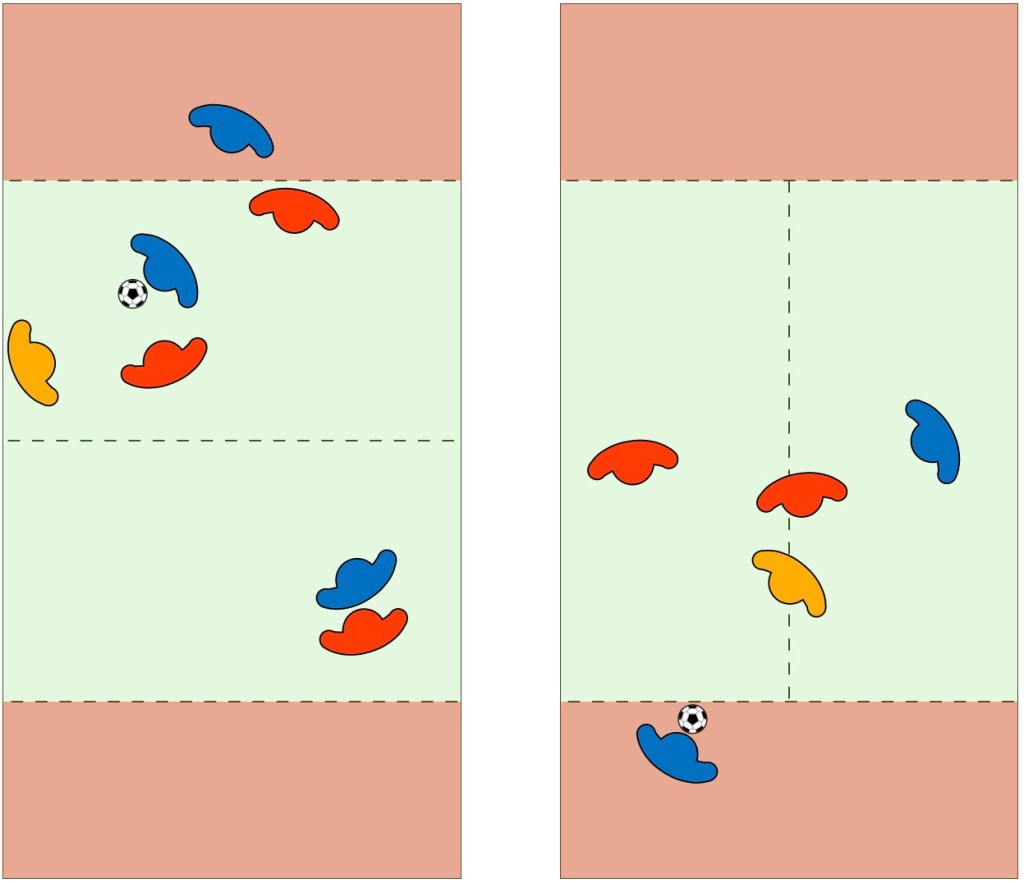
Relational play is becoming ever more popular and thanks to the likes of Jamie Hamilton’s article, ‘what is relationism?’, our understanding of these emergent patterns within the style is ever improving. But how do we coach them?
Firstly let’s have a look at what each of these interactions look like in practice.
‘‘Toco y me voy means ‘I play and I go’. It is the immediate movement of the player following the release of a pass.’’ – Jamie Hamilton
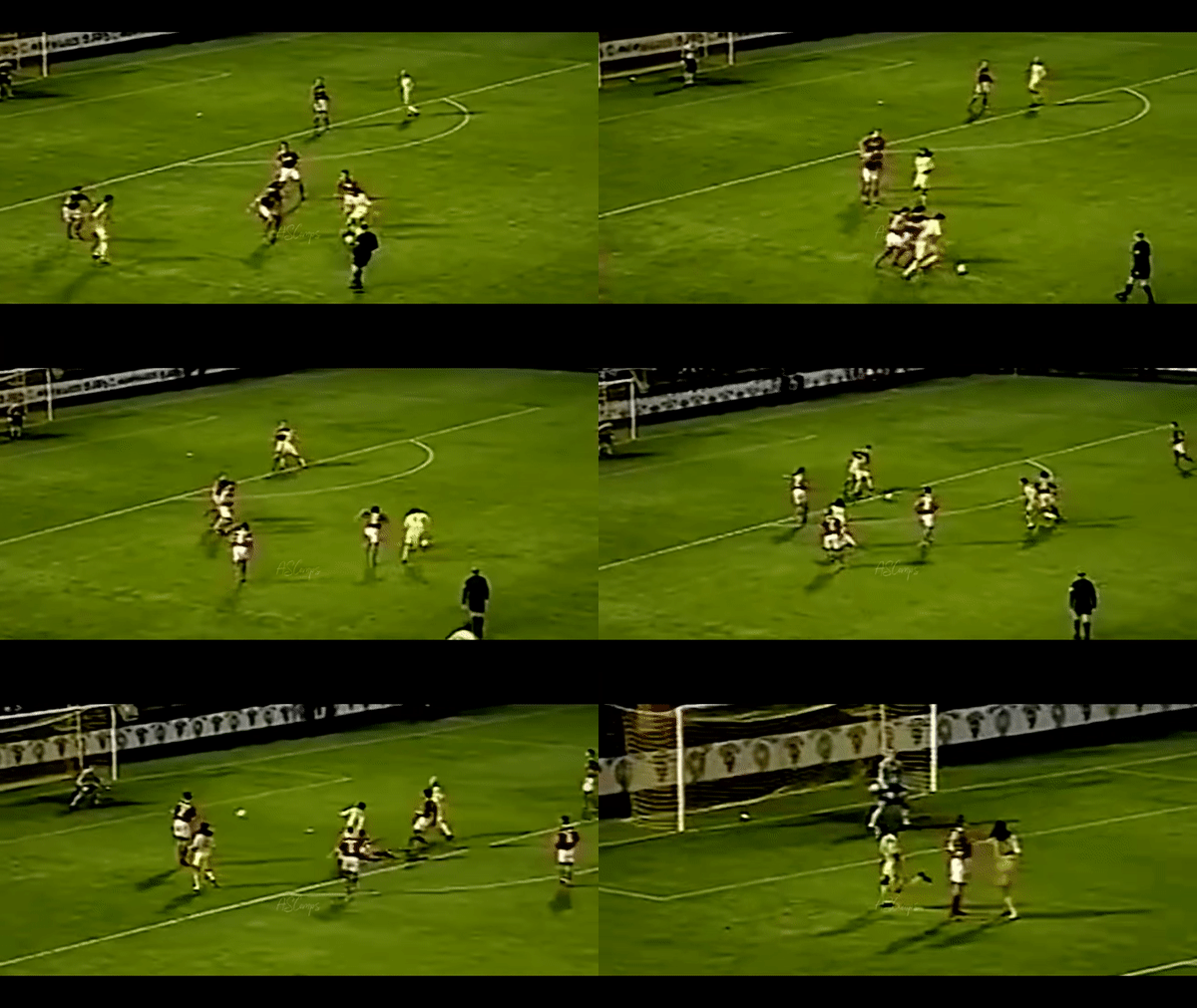
Escadinha is a diagonal structure, in which players use to ‘climb’ up the pitch.
‘‘The ability to identify Escadinhas reveals doors where before there were only walls’’ – Jamie Hamilton
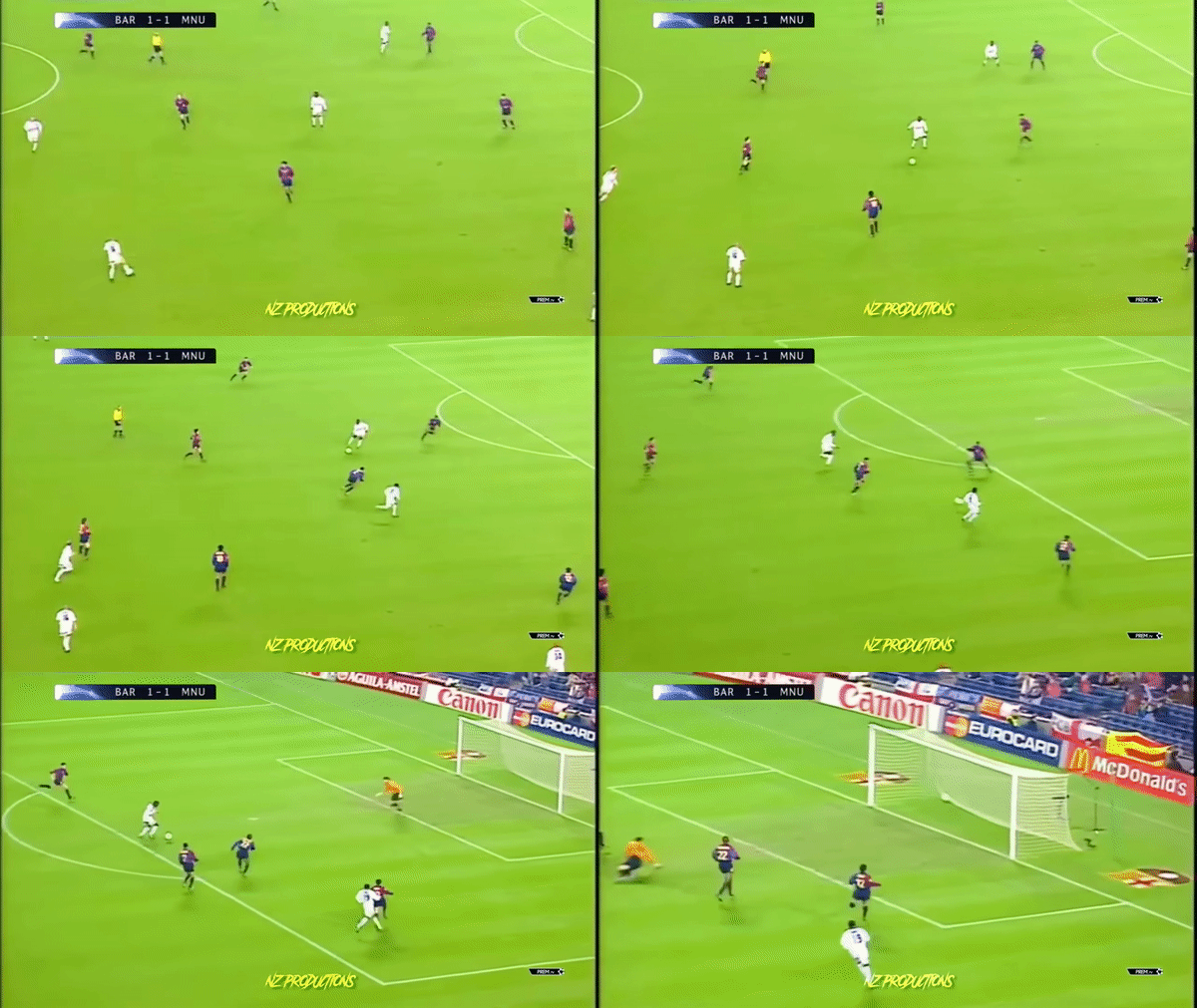
These opportunities emerge through players being in close proximity to one another and in of the ball. But how should we coach these emergent interactions?
Below is a constraints led approach to toco y me voy and escadinha. It is important not to force these patterns, as the patterns are emergent and different every time. We may be tempted to ‘coach’ them in a traditional passing pattern structure, however that would not sit well with how these patterns emerge and are formed in the performance environment.
Instead, we are looking to create an environment where these structures will emerge. It will be up to the players to find solutions to win the game and notice opportunities for toco y me voy and escadinha.
A narrow and long pitch size is used for more progressive play and the constraints on the left are there to be added gradually, not at the same time. They are there to be used as and when you and your players need them.
Different halfway lines have been added for different defensive structures to emerge, giving the in possession team different problems to solve.
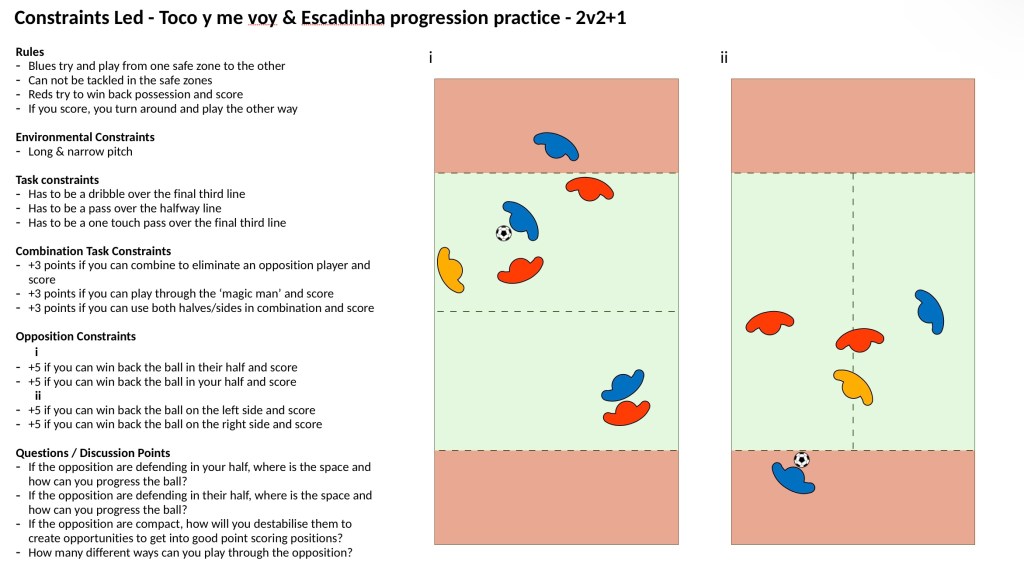
If you want to know more about relationism, toco y me voy and escadinhas, I highly recommend Jamie’s article below:
 the Raumdeuter.